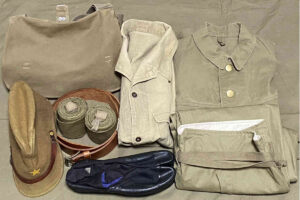
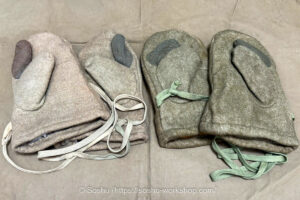
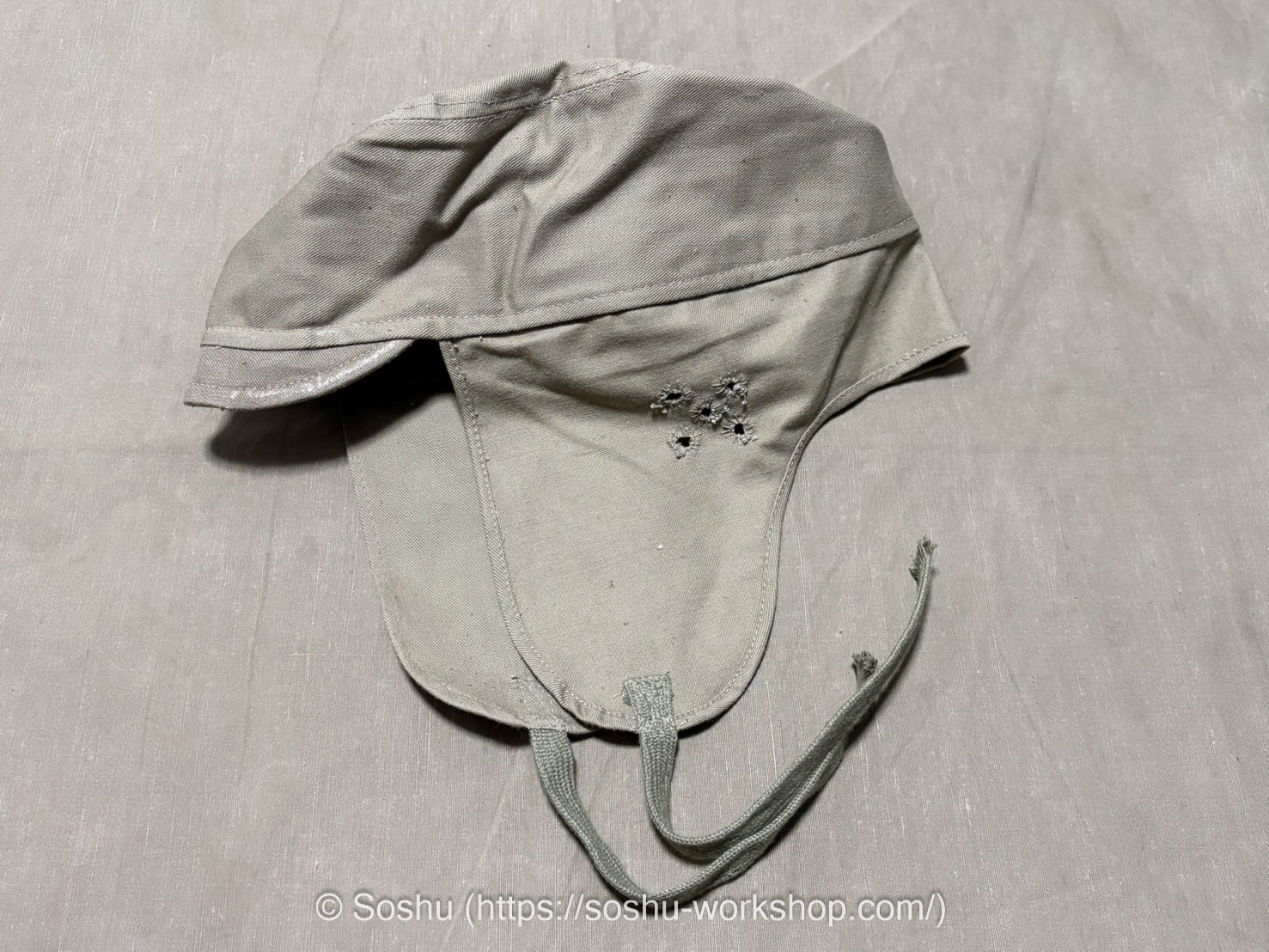
The item introduced here is the Work Cap worn by tank crews and maintenance personnel of the Imperial Japanese Army. It was worn together with the Type 1 Work Uniform and the Tanker Overalls (their Japanese name, 第二種作業衣袴, literally means “Type 2 Work Uniform” and makes no mention of tank crews, but I call them Tanker Overalls here because that is the more common name overseas). Drawings of it also appear in “Revisions to the Specifications of Uniforms and Equipment under Article 5 of the Army Uniform Regulations”1.
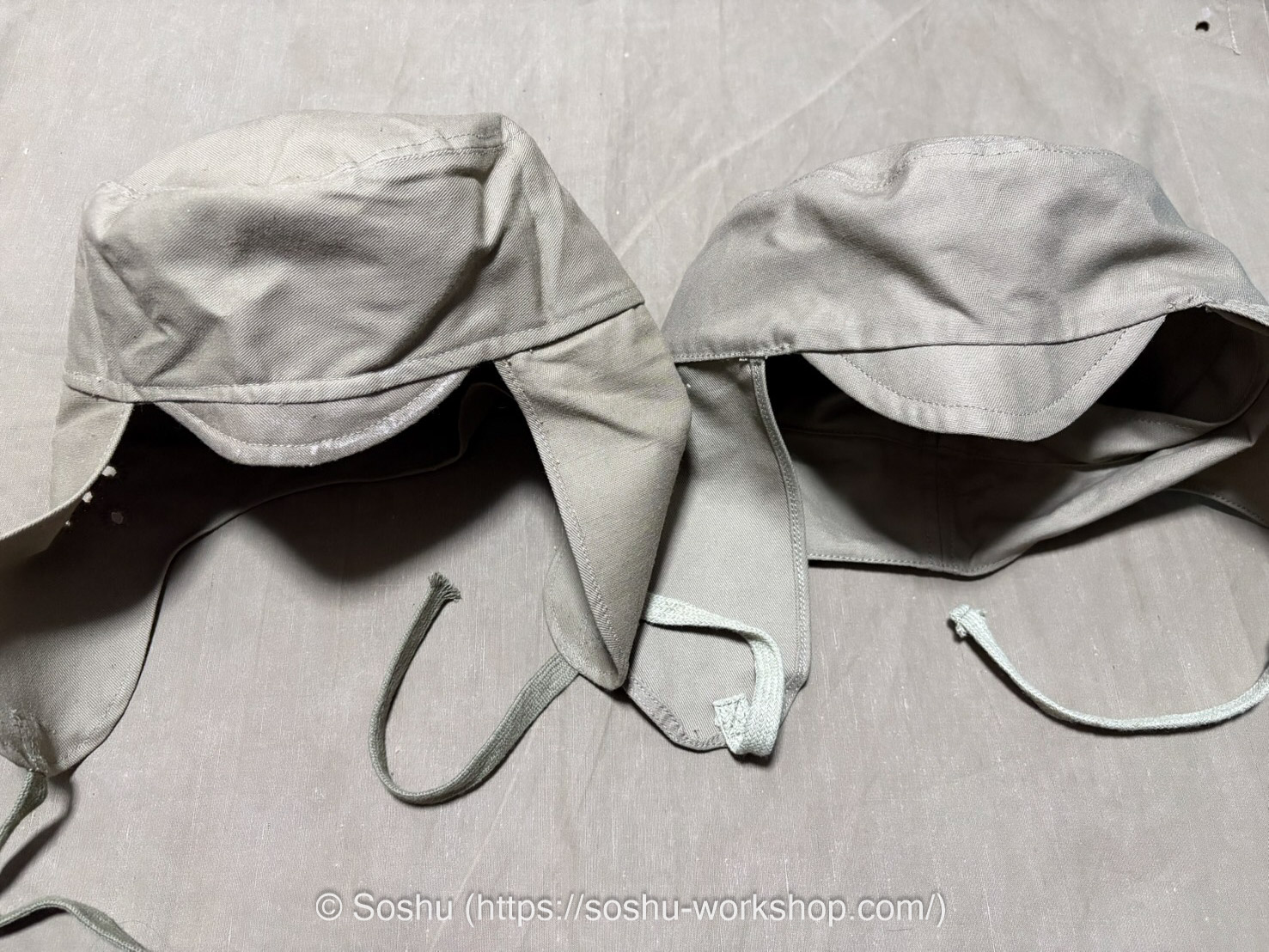
HIKISHOP sells a replica of this Work Cap, so in this article I compare an authentic example with the HIKISHOP replica. Unless otherwise noted, the authentic cap is on the left and the replica is on the right. At a glance, the replica is quite well made.
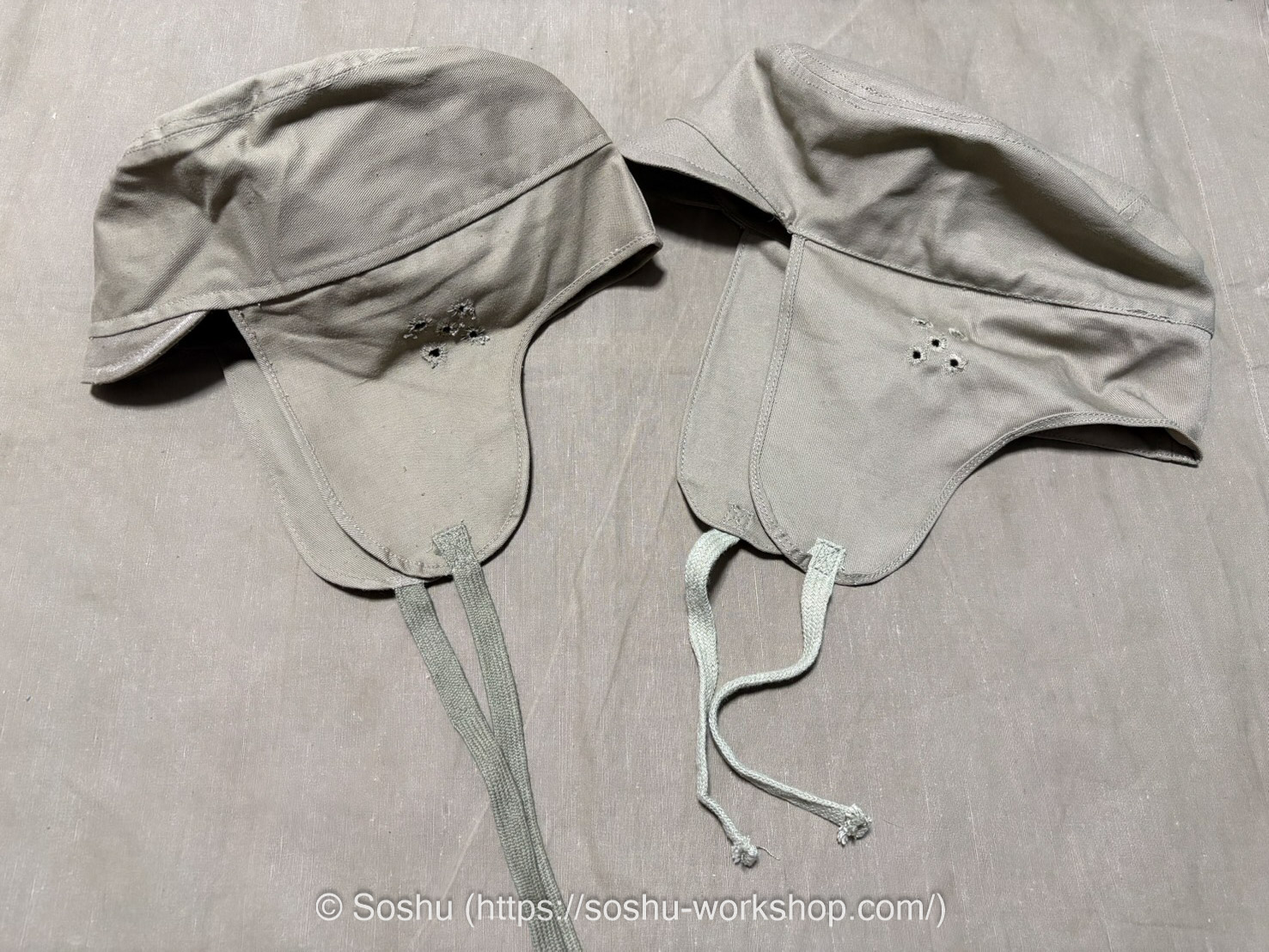
Viewed from above. The authentic cap is a medium size and therefore somewhat smaller, but nothing about it looks out of place. The fabric colors differ slightly, though the difference is hardly noticeable to the naked eye or in photographs.
Viewed from the front. The visor on the replica is considerably larger—when the two are placed on top of each other, the replica’s visor is roughly twice the size of the authentic one.
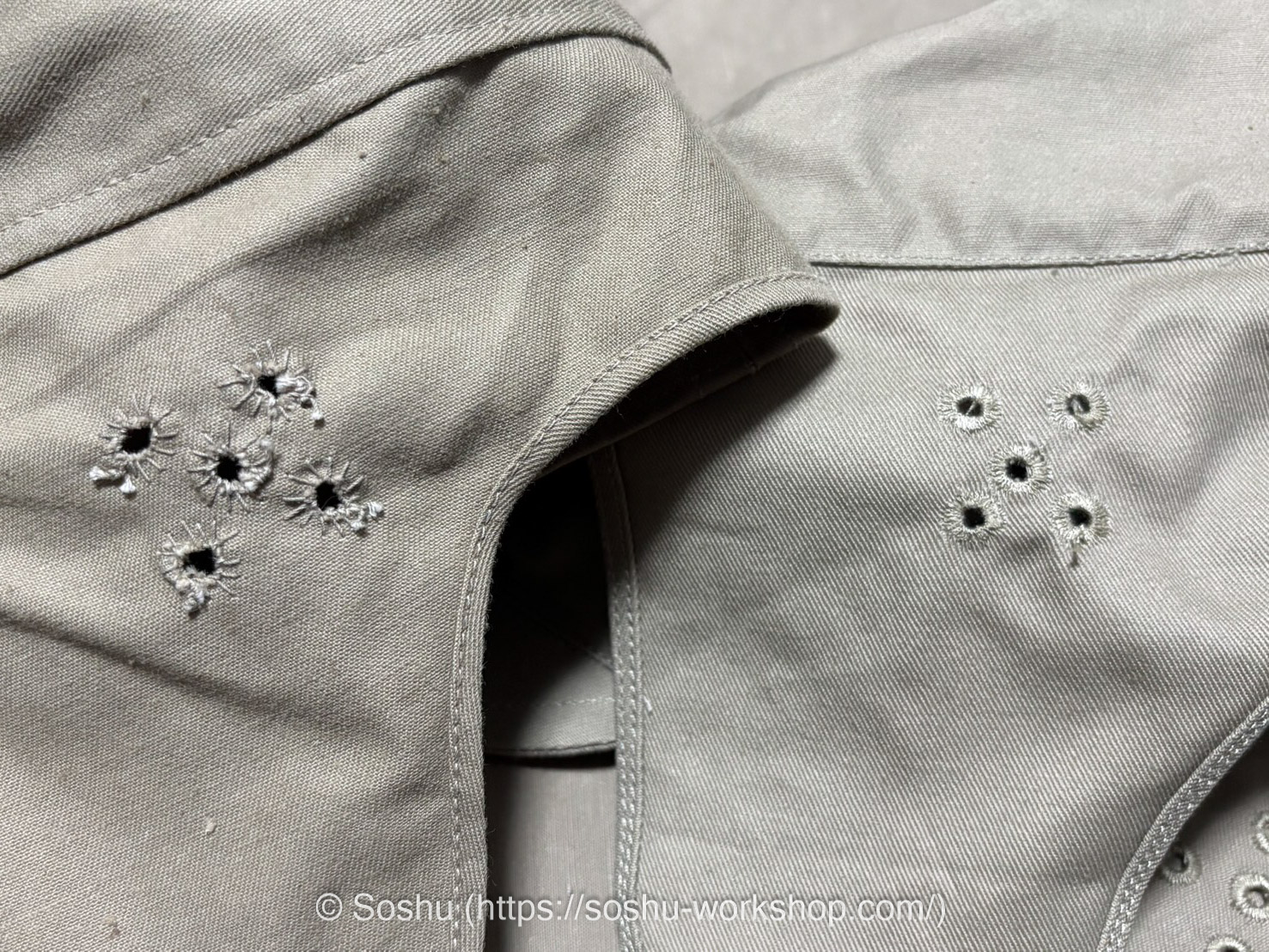
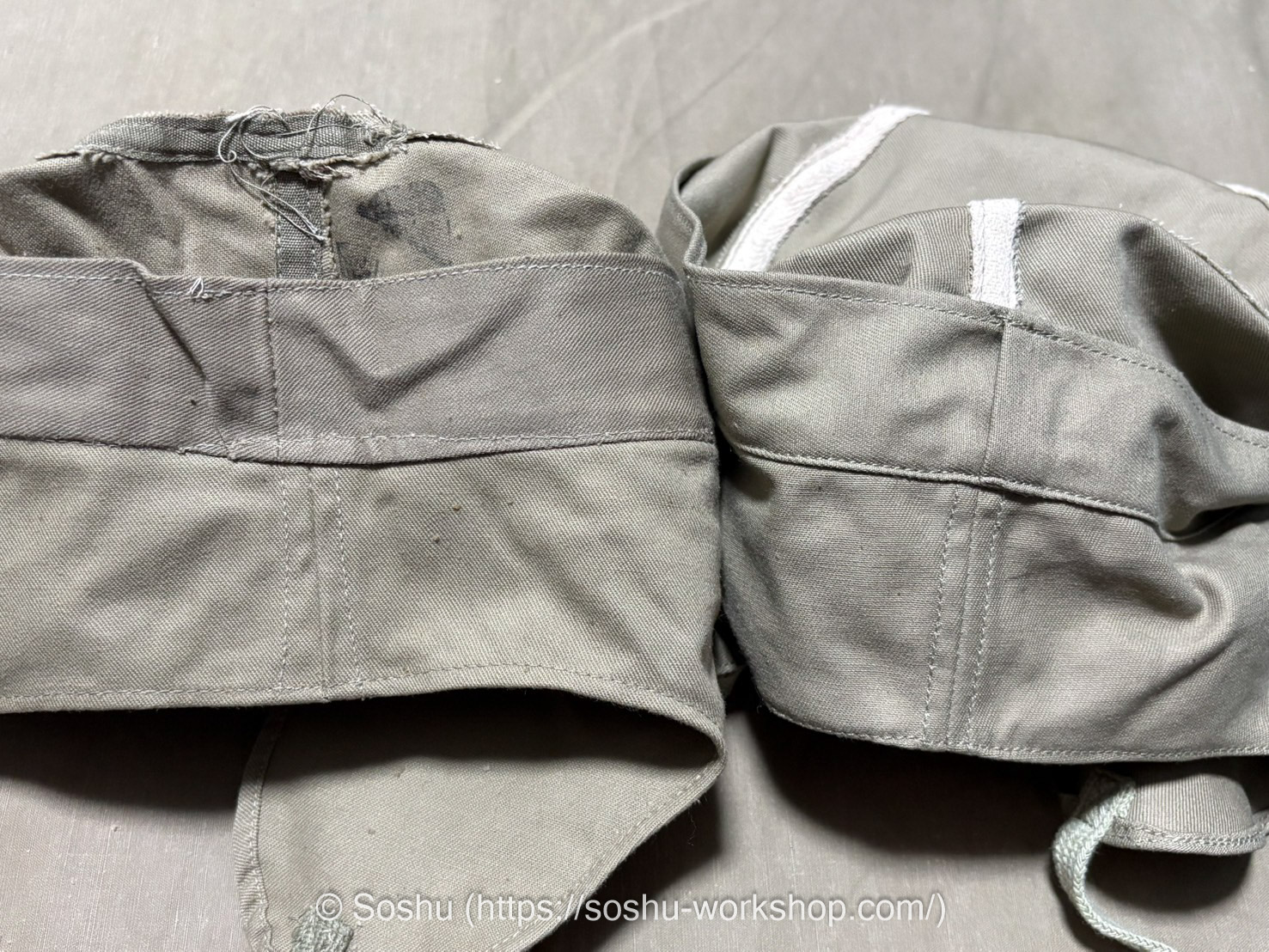
The finishing of the holes at the ear section. The replica has machine-sewn eyelet stitching, while the authentic cap is roughly hand-stitched. Knots are also visible from the outside.
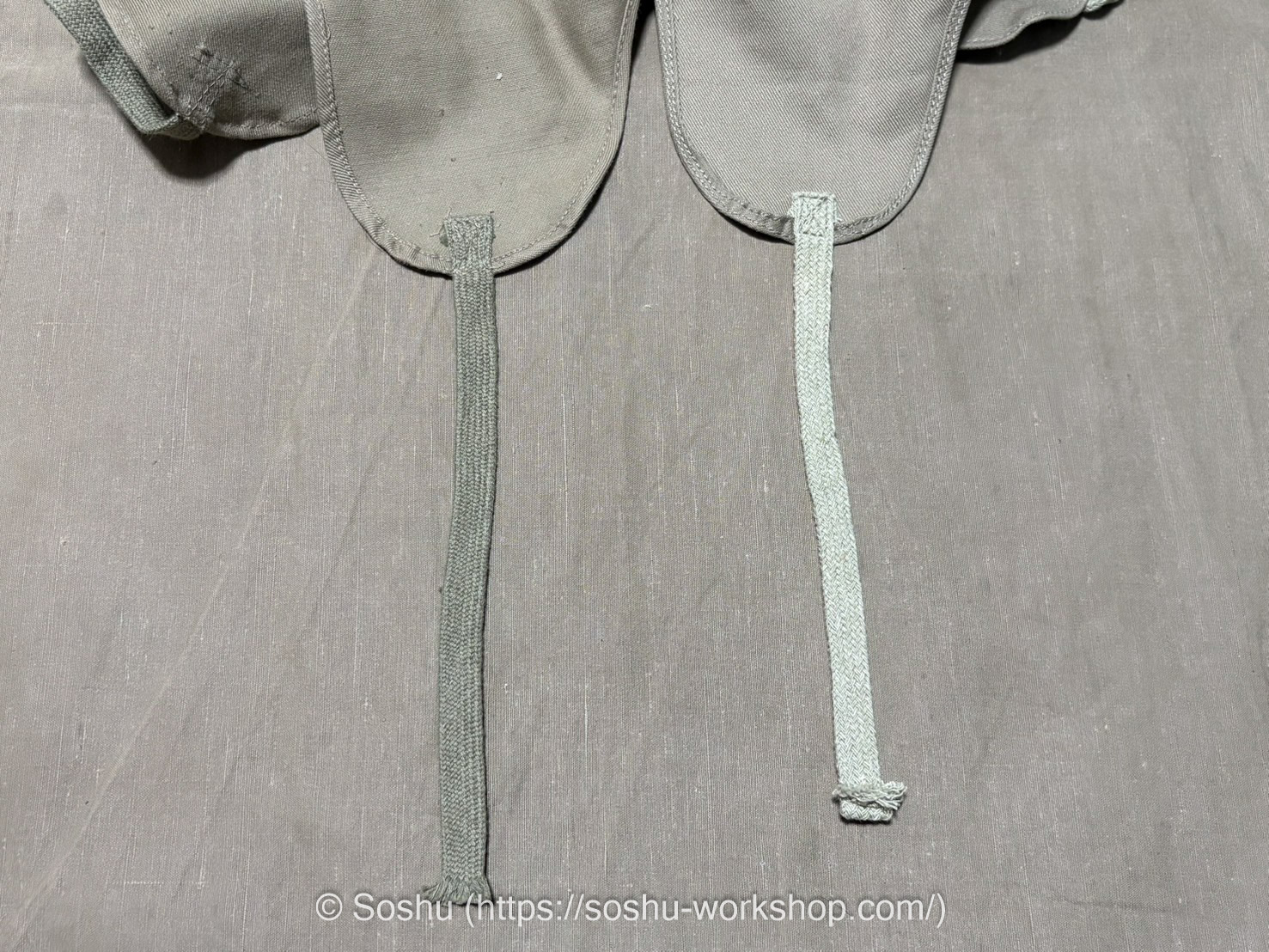
The chin strap on the replica is slightly shorter, but a difference of this degree seems likely to fall within the variation found among authentic examples. The color of the strap, however, differs considerably.
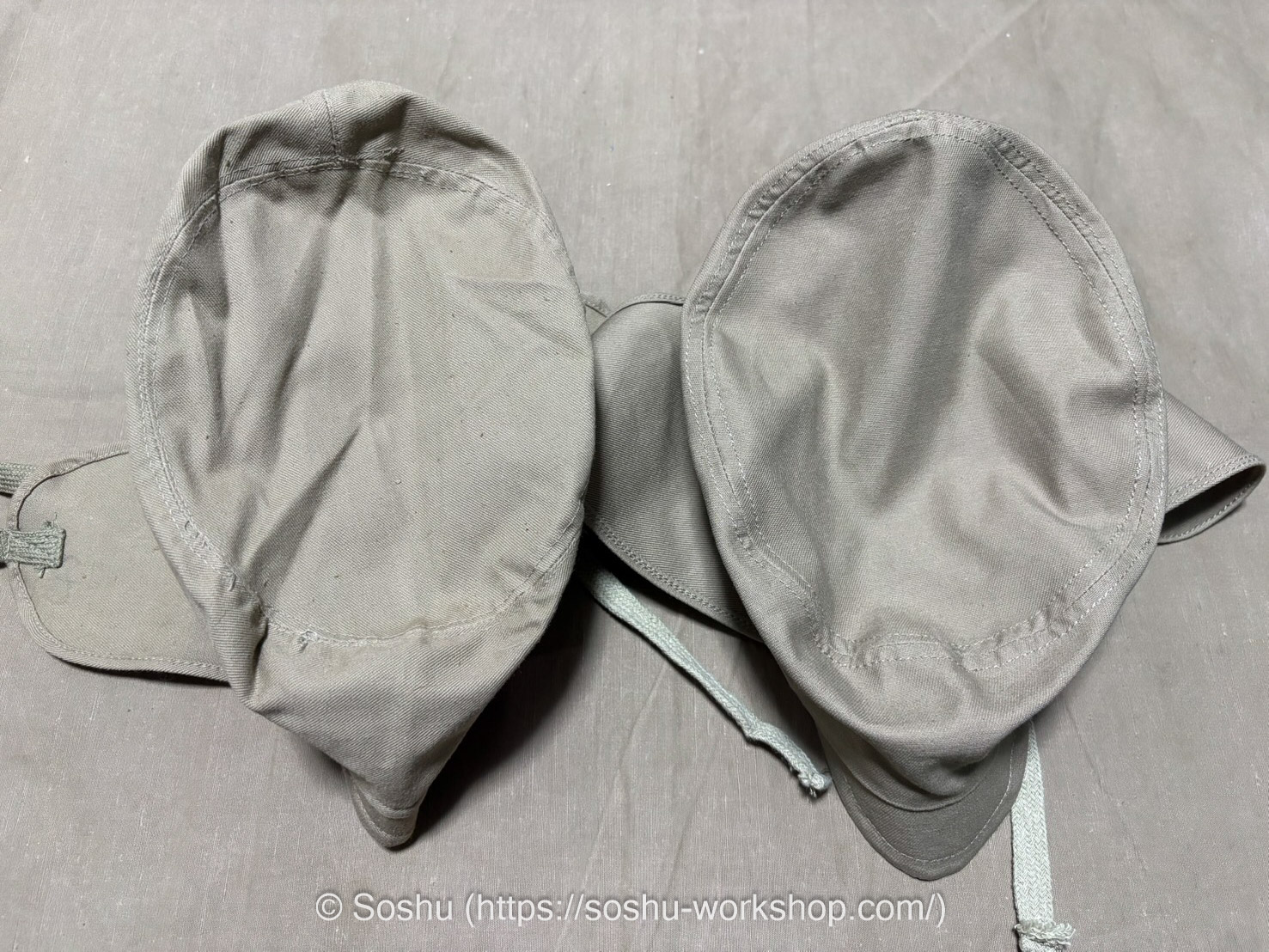
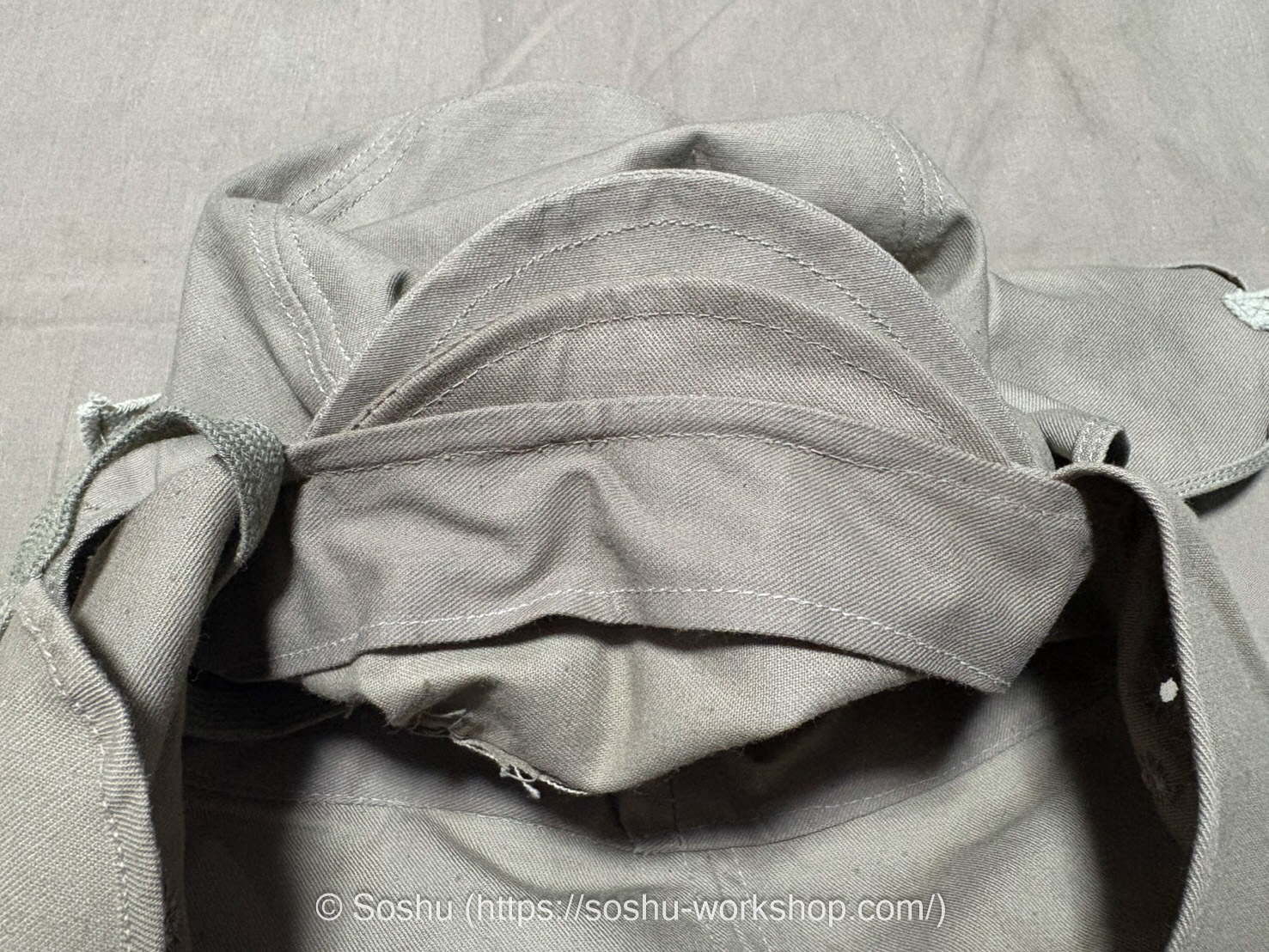
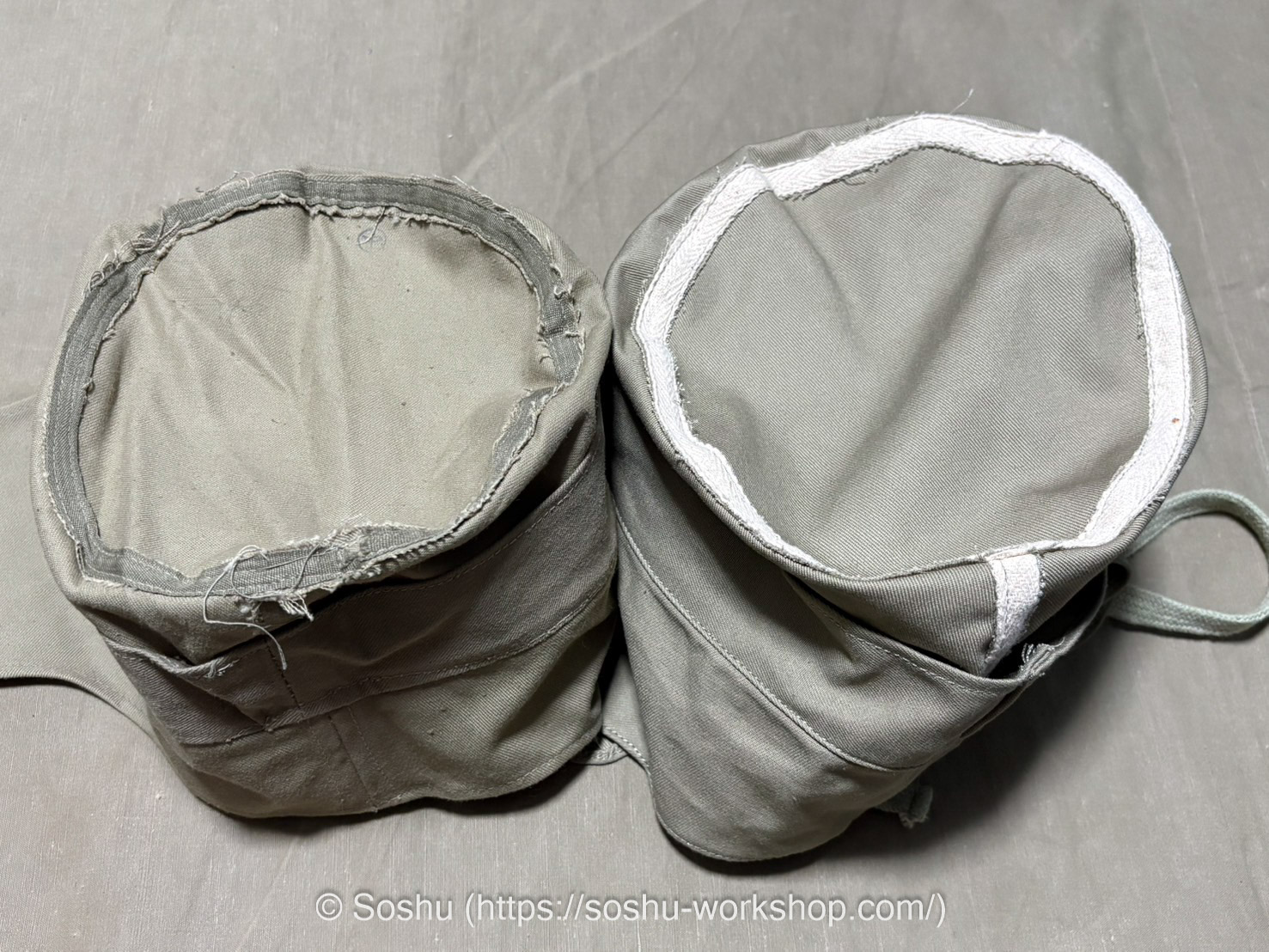
The inside of the Work Cap, photographed turned inside out. The color of the tape reinforcing the crown differs between the two.
The authentic cap is quite roughly made: the ends of the tape are left unfinished, raw-cut and fraying. The stitching is also inconsistent, at times running outside the edge of the tape and at others falling inside it. The replica, by contrast, has uniform tape width and evenly positioned stitching, giving it a neat finish.
The rear section of the cap, viewed from the inside. It is a minor detail, but the stitching differs slightly.
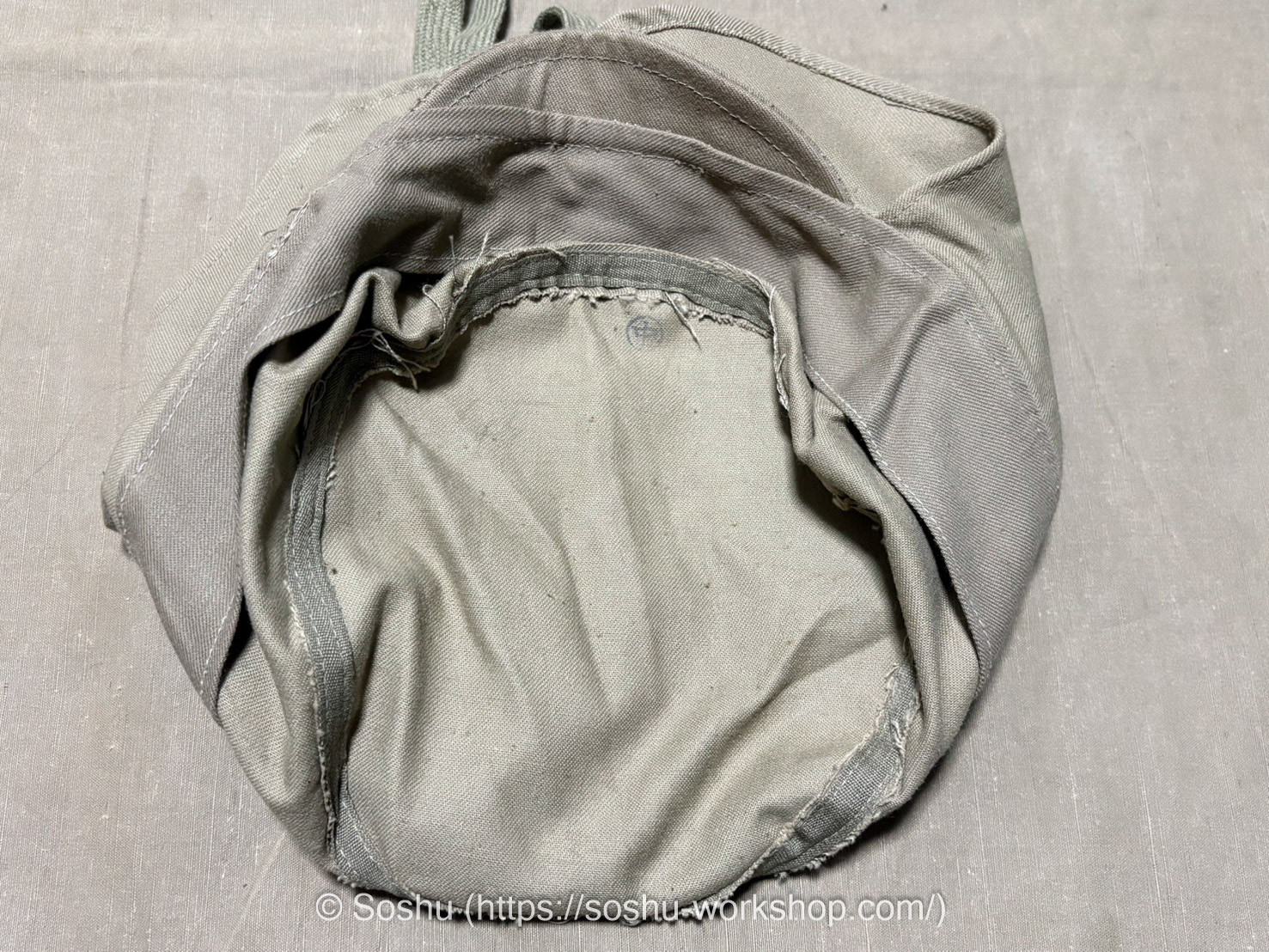
The inside of the authentic cap. A circled “中” (medium) and a size marking can be seen at the front of the crown.
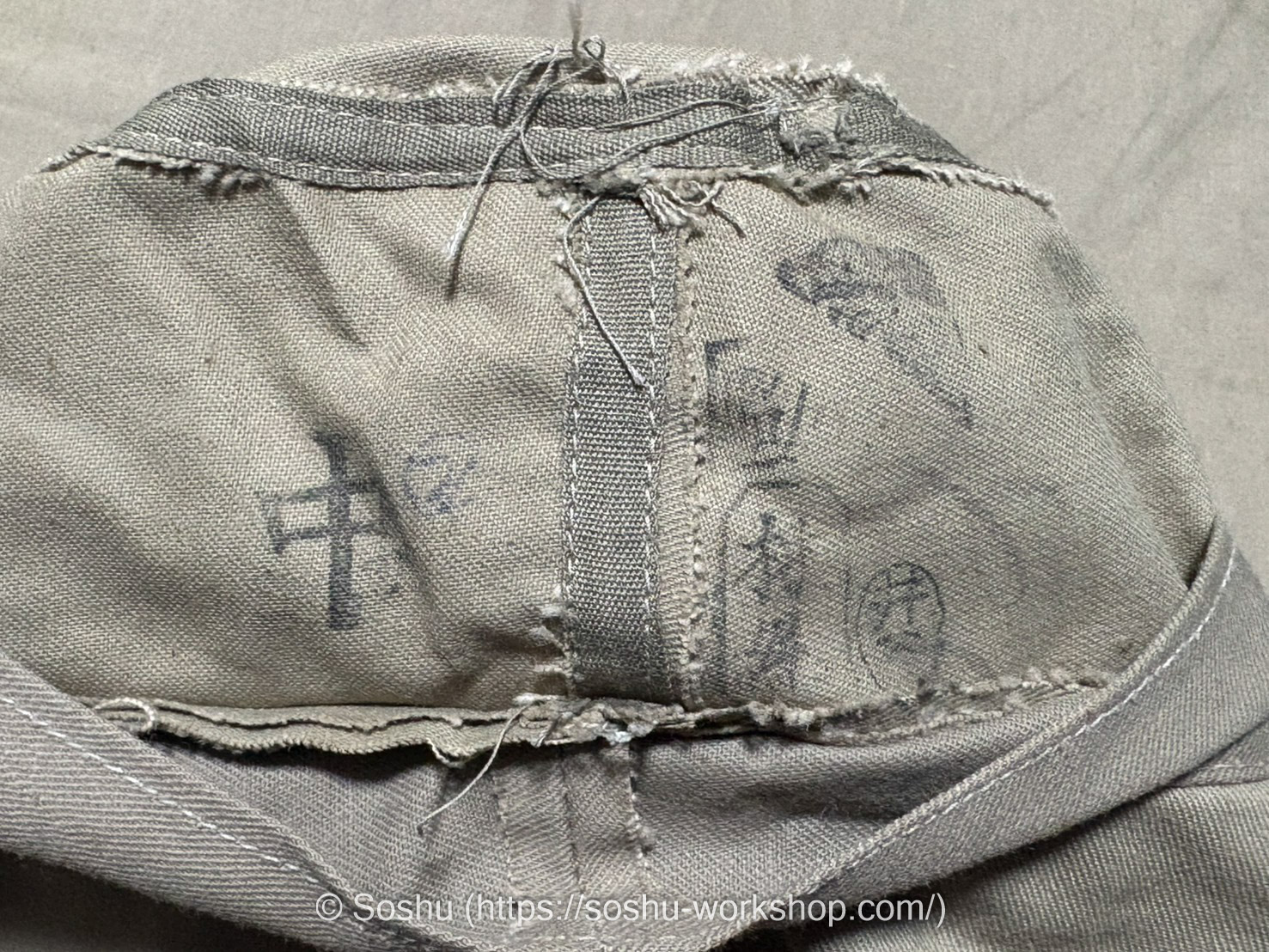
An inspection stamp is present on the inside of the rear section. The characters “林納” can be made out, along with a date given in the Japanese imperial era format as 昭□—that is, Shōwa (1926–1989) followed by the year within that era. The final digit is almost entirely worn away, but a rounded outline is visible in the lower half, suggesting either a 6 or an 8. Judging from the shape, it looks closer to a 6 than an 8, which would make this 昭和16年—Shōwa 16, or 1941.
That concludes this look at the Work Cap. While the HIKISHOP replica does differ from the authentic cap in a few respects, it seems perfectly adequate for wear at events or airsoft games.
I have previously covered HIKISHOP’s replica of the Tanker Overalls, which was also quite well made. These are replicas I would recommend to anyone putting together a tank crew impression.
Footnotes
- “Revising standards regarding clothing and accessories according to Army Uniform System, Article 5” JACAR (Japan Center for Asian Historical Records), Ref.C01001561600, Eizon Documents, Class A, Category 1, 1938 (National Institute for Defense Studies) ↩︎