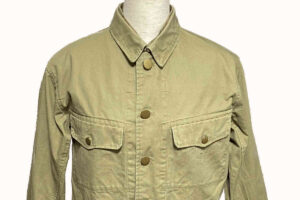
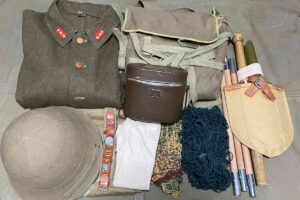
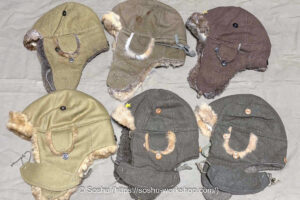
Cold Weather Half Pants are classified as Cold Weather Clothing under the Special Regional Clothing category and were worn over standard military trousers. Fur is sewn onto the interior, providing a high level of cold protection. When worn, they are used in combination with Cold Weather Leggings or Cold Weather Boots. In the 1929 (Shōwa 4) directive titled “Regarding the Regulations for Special Regional Clothing”1, its form is illustrated.
These Cold Weather Half Pants also occasionally appear in near-unissued condition; however, in most cases the fur on the inside is extremely prone to shedding, and even light contact causes a large amount of fur to come off.
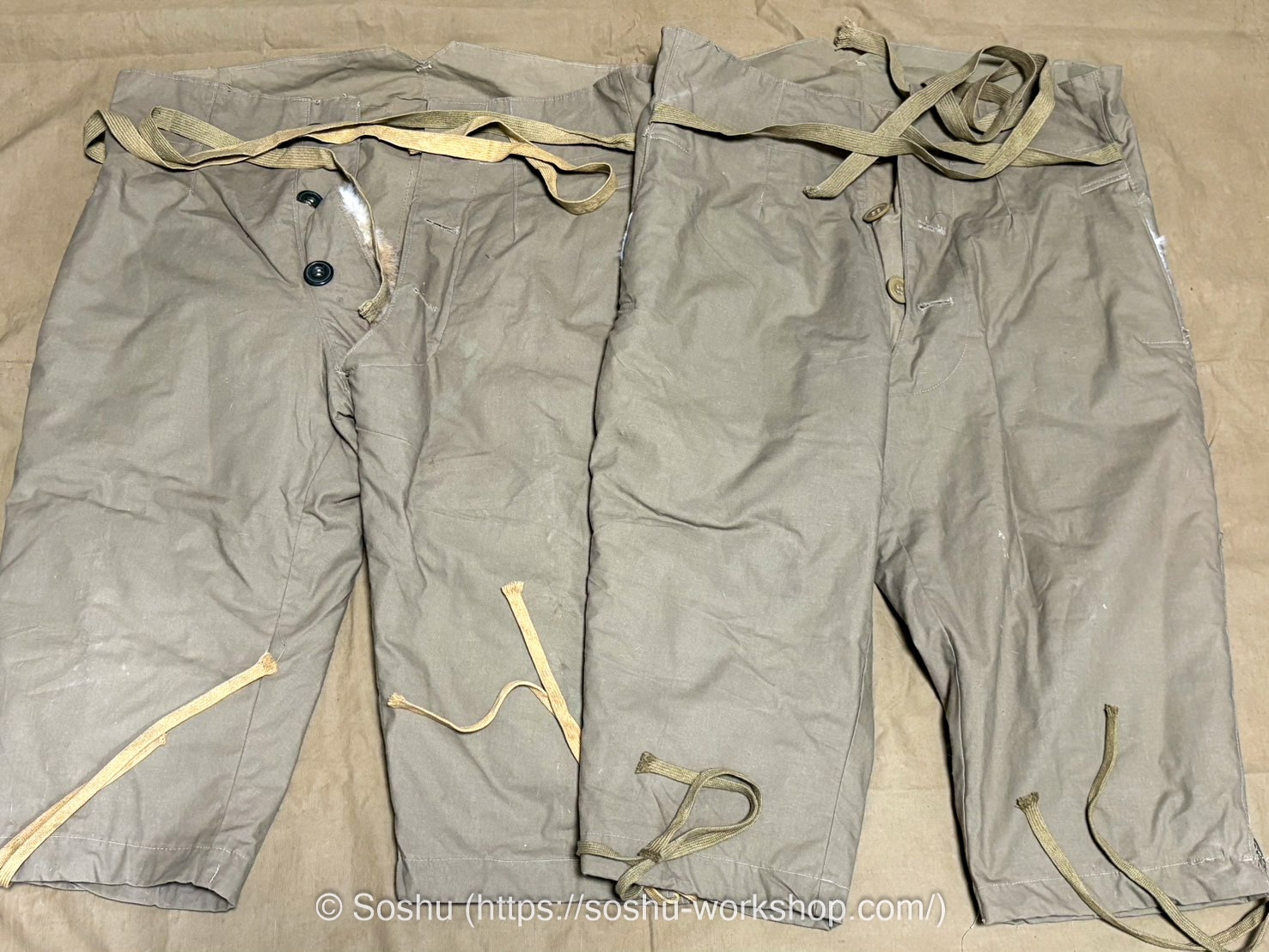
Shōwa 18 (1943) issue, Army Clothing Depot (1)
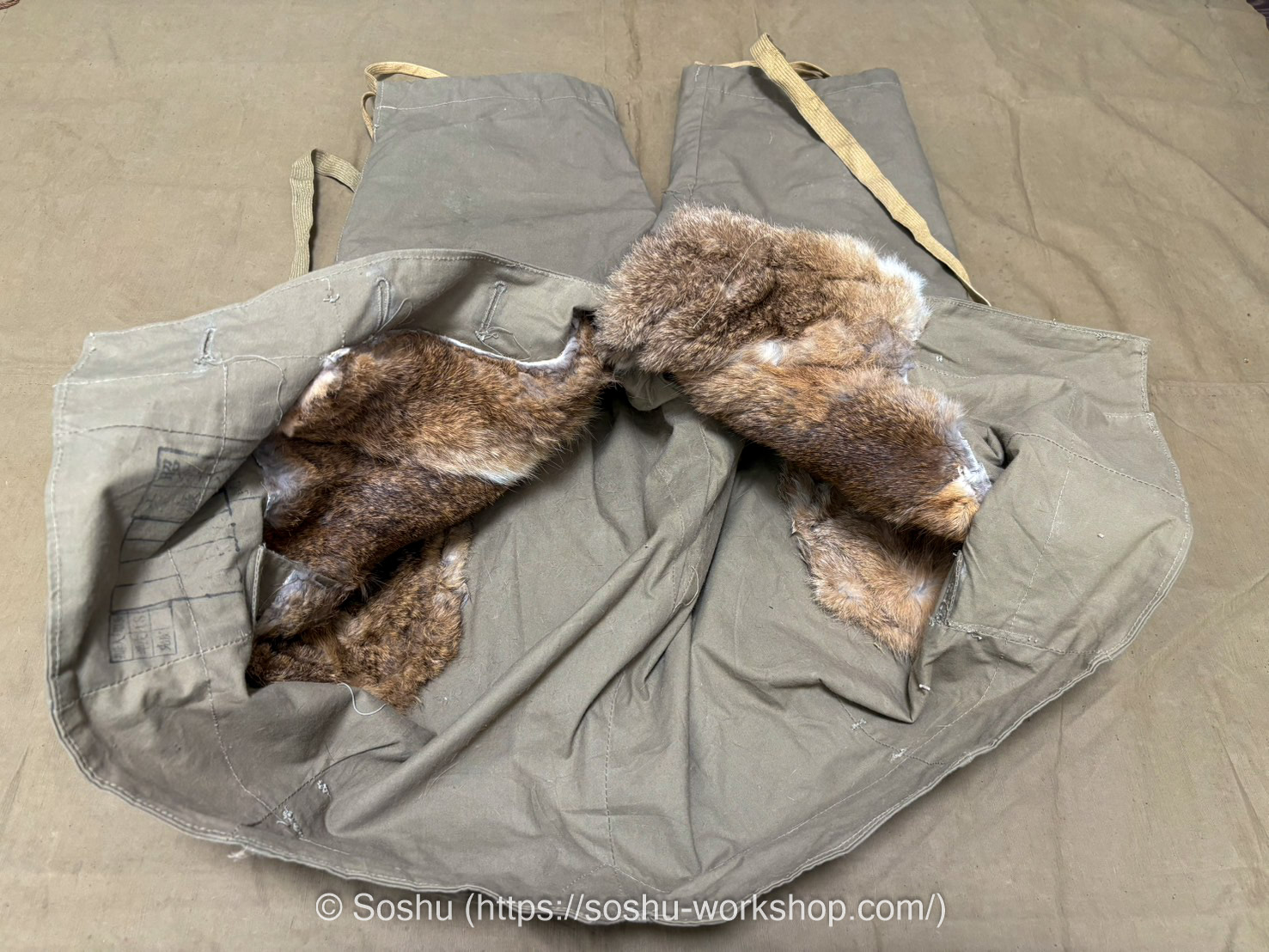
The length of the Cold Weather Half Pants extends to just below the knees, with the area below the knees covered by Cold Weather Leggings or Cold Weather Boots.
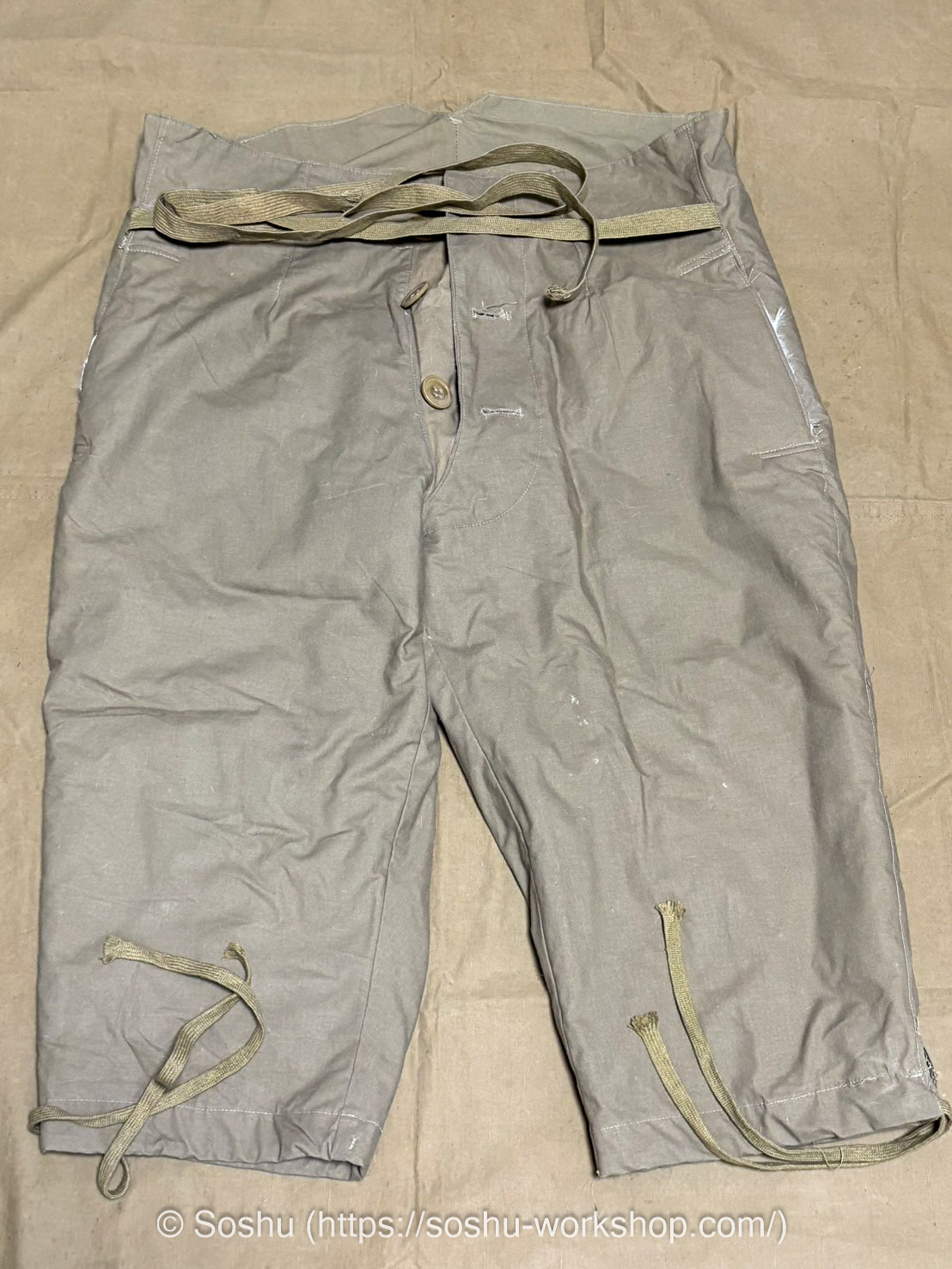
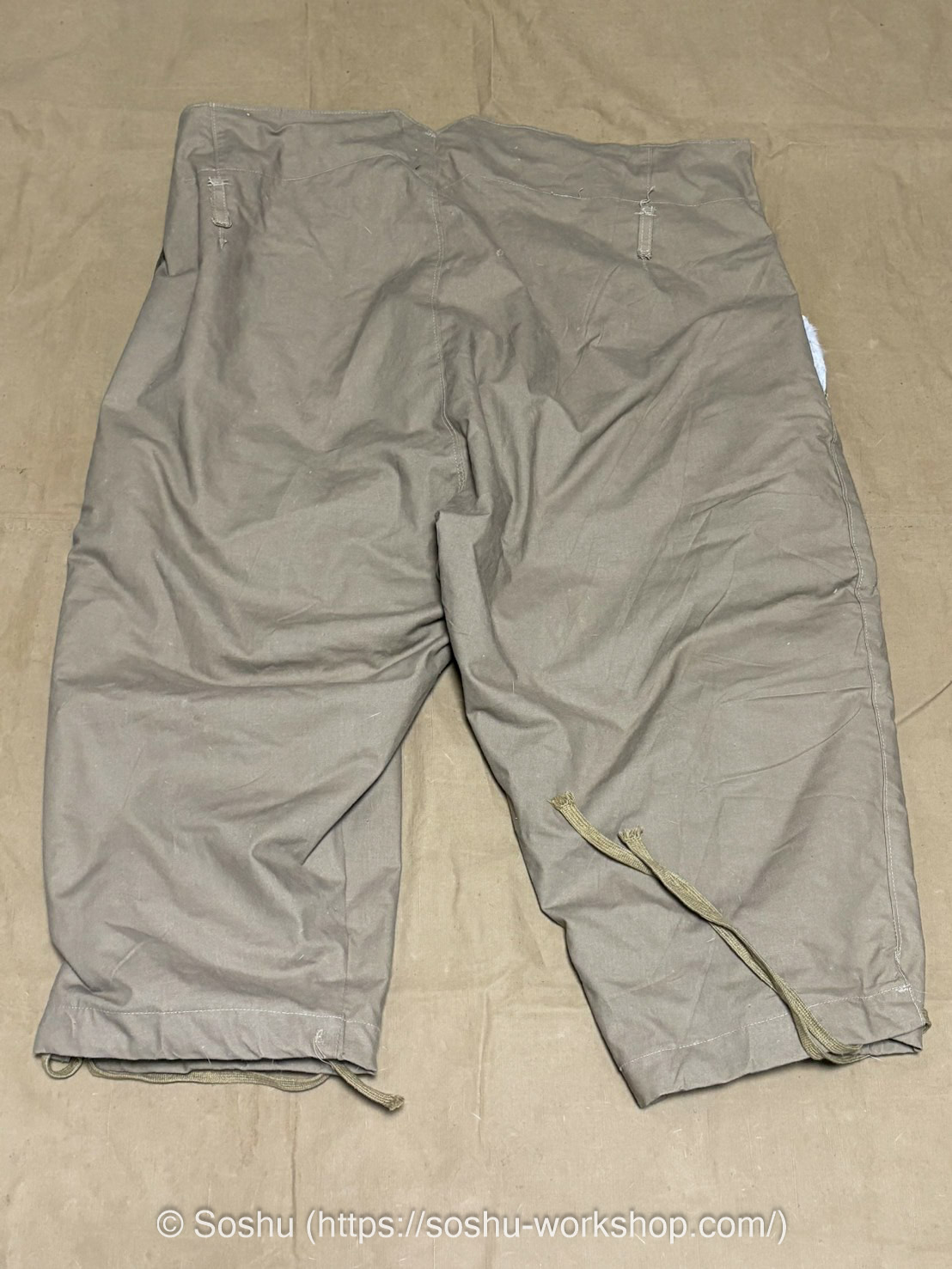
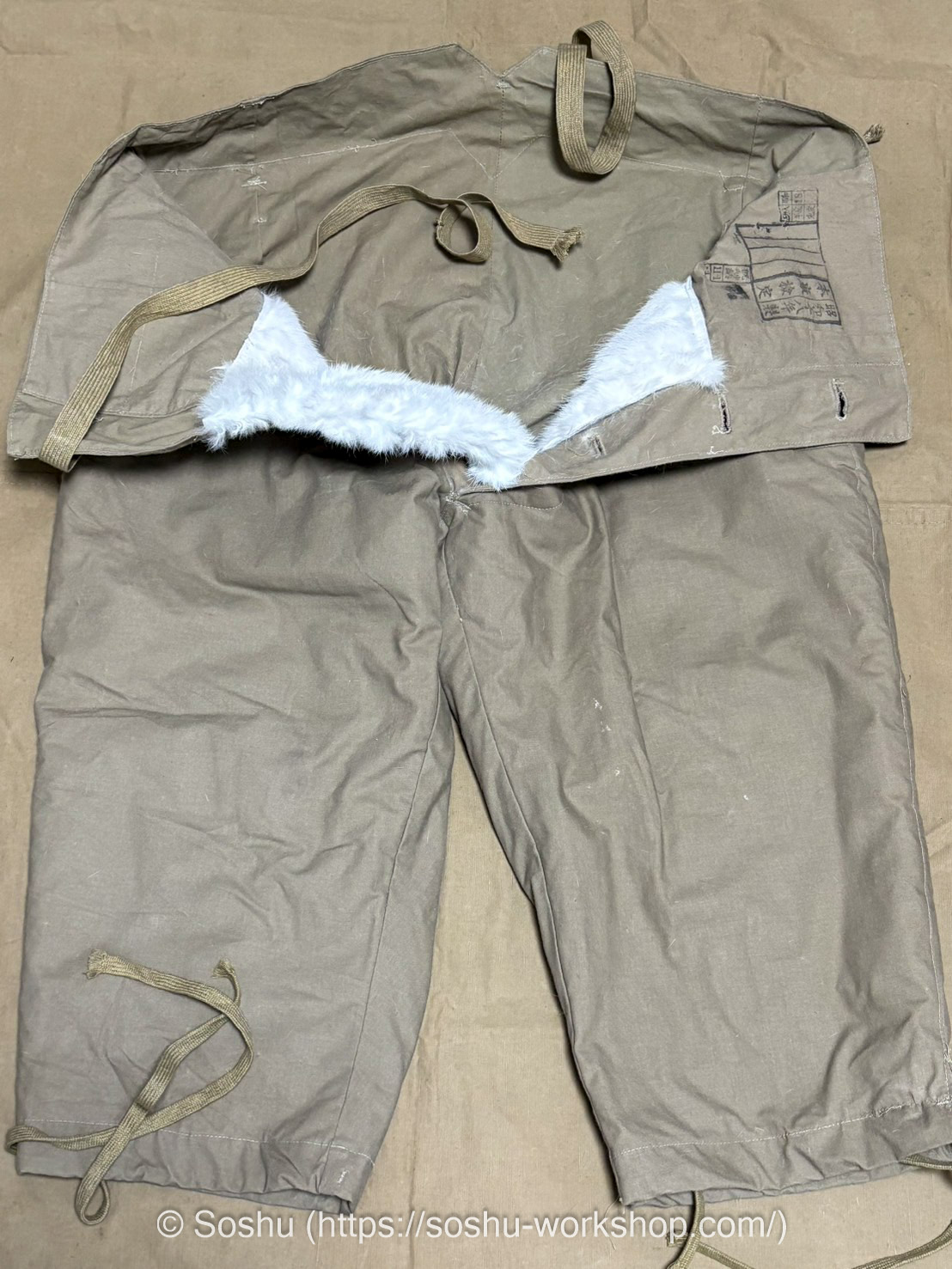
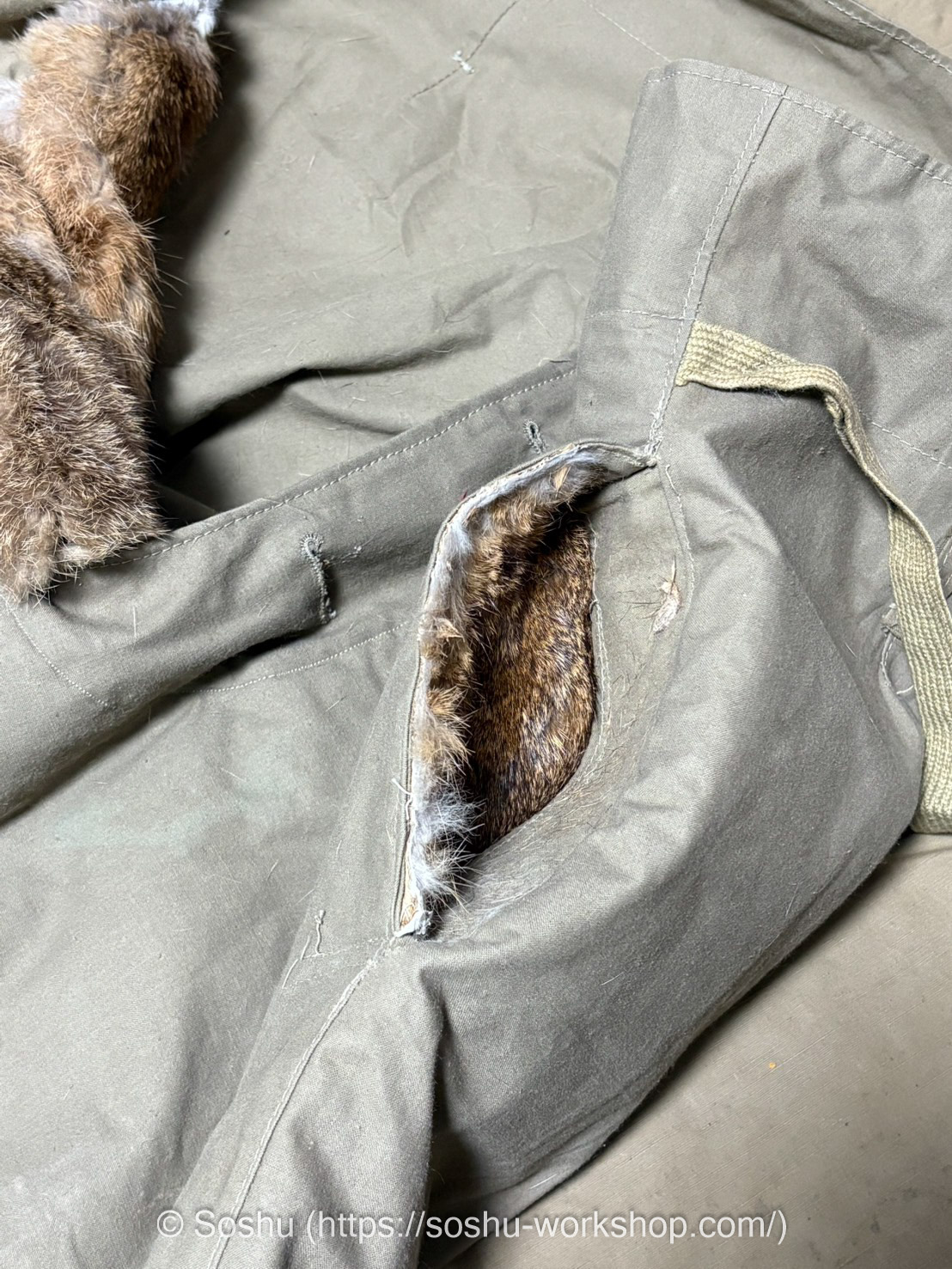
The fur is sewn only onto the front section. The left and right pockets are simple openings, allowing access to the pockets of the standard trousers worn underneath. In this respect, the construction is similar to that of the Cold Weather Coat.
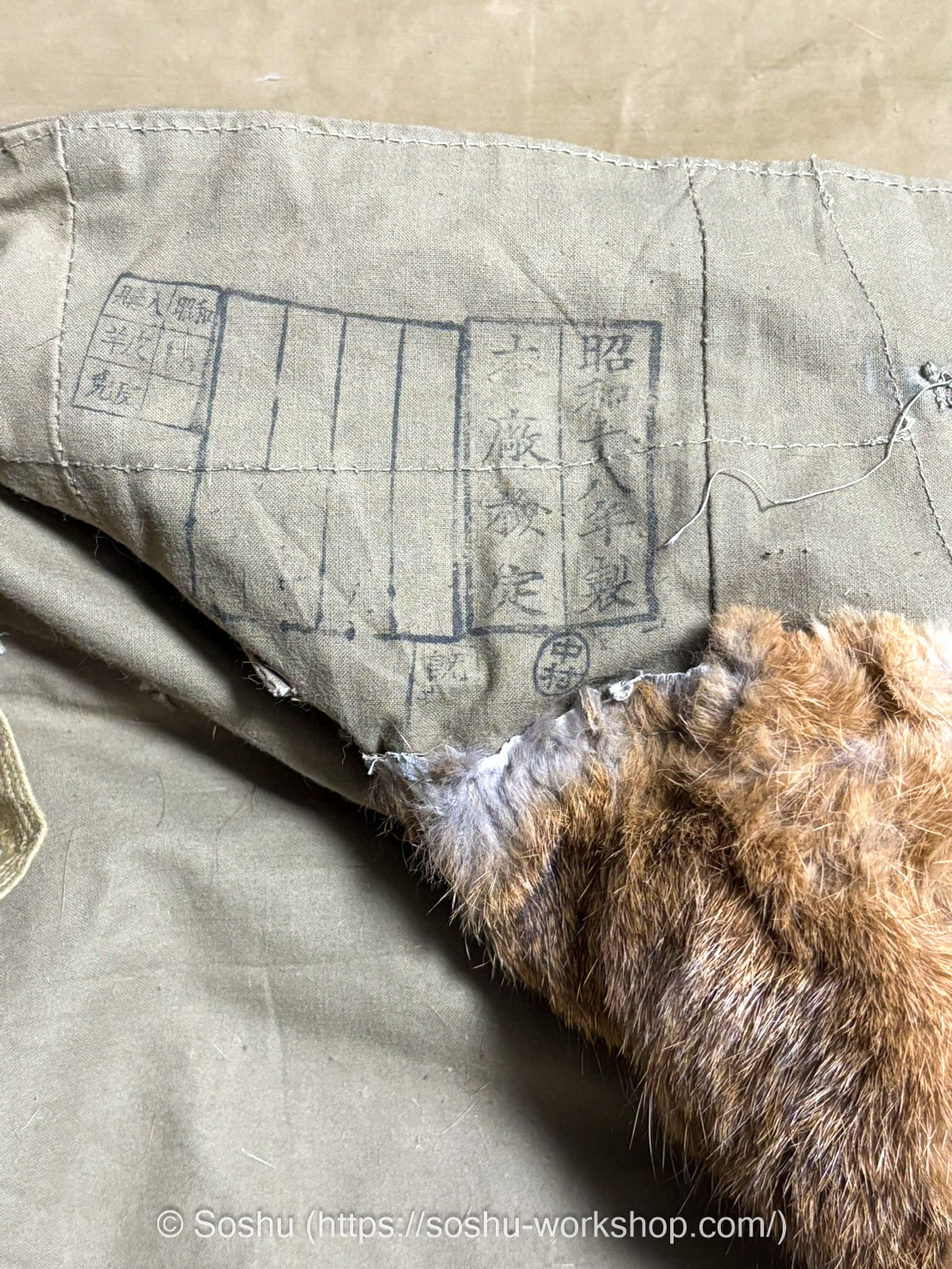
From the wording of the inspection stamp, it can be determined that sheep and rabbit fur were used; however, the material designation stamp was applied upside down.
The supplier’s name appears to read “旣中央納”. Since there is no known character formed by combining the radical of “央” with the character “中”, this reading seems to be the most reasonable interpretation.
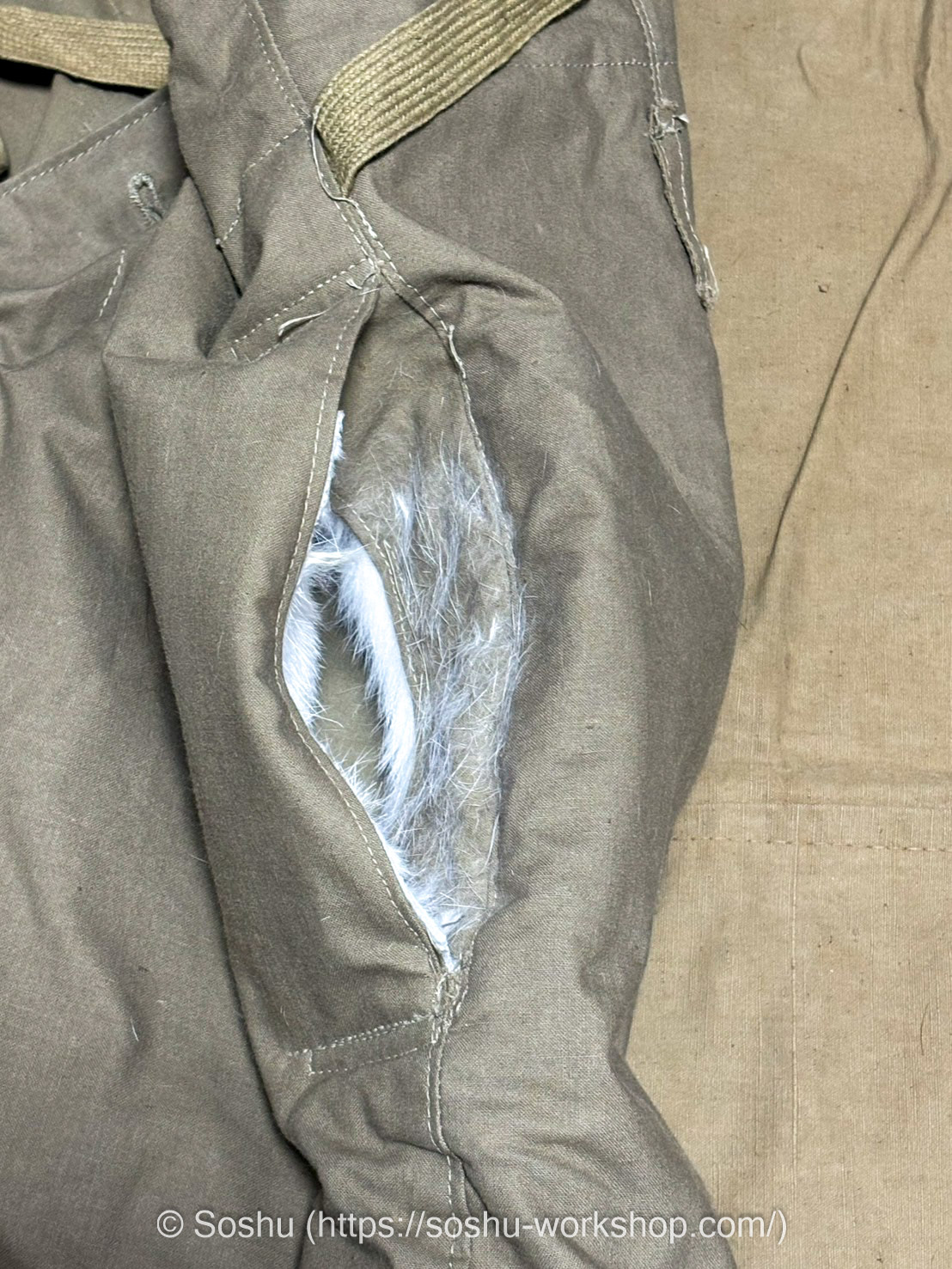
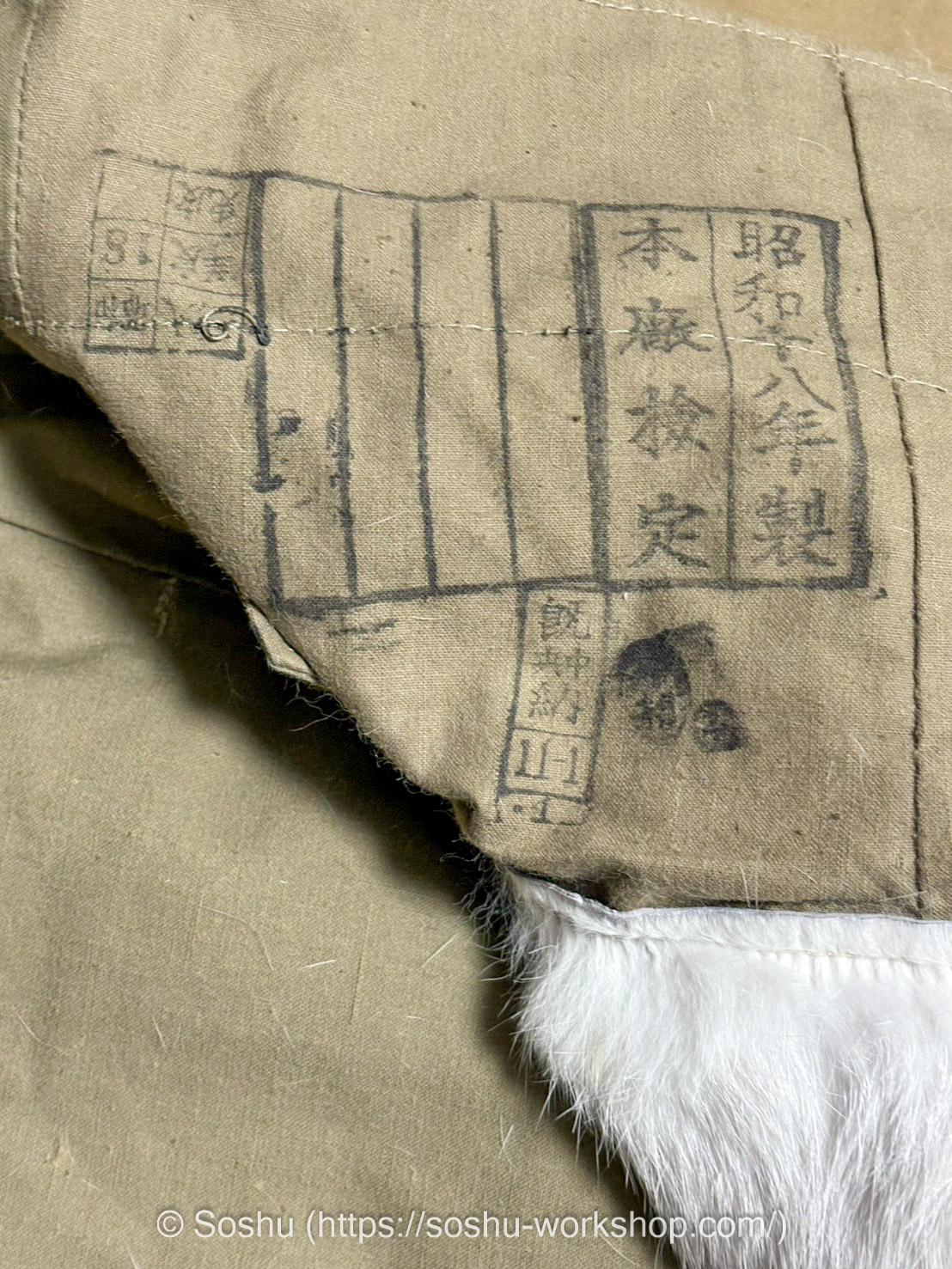
Shōwa 18 (1943) issue, Army Clothing Depot (2)
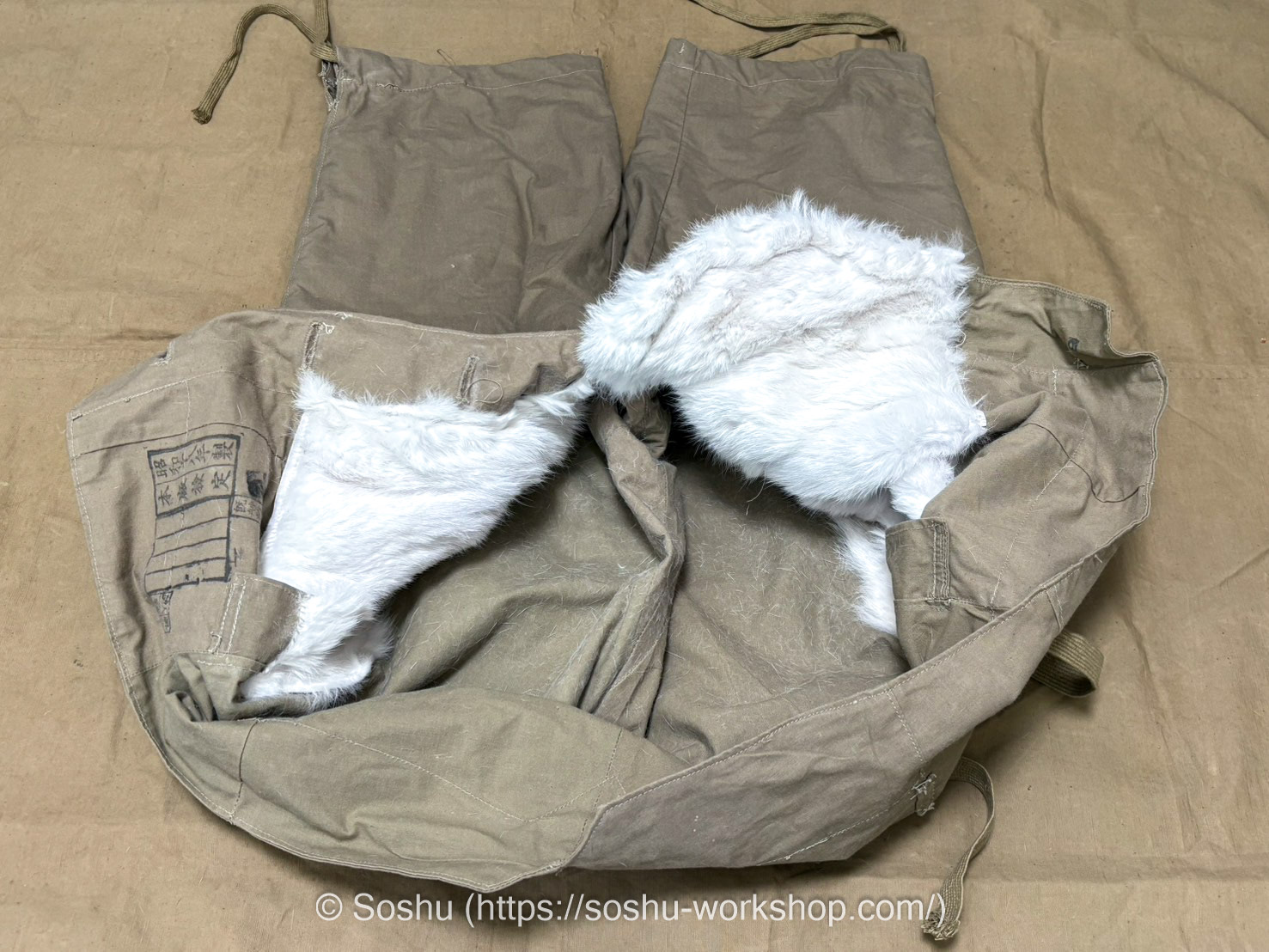
This is also a pair of Cold Weather Half Pants manufactured in 1943 (Shōwa 18) by the Army Clothing Depot.
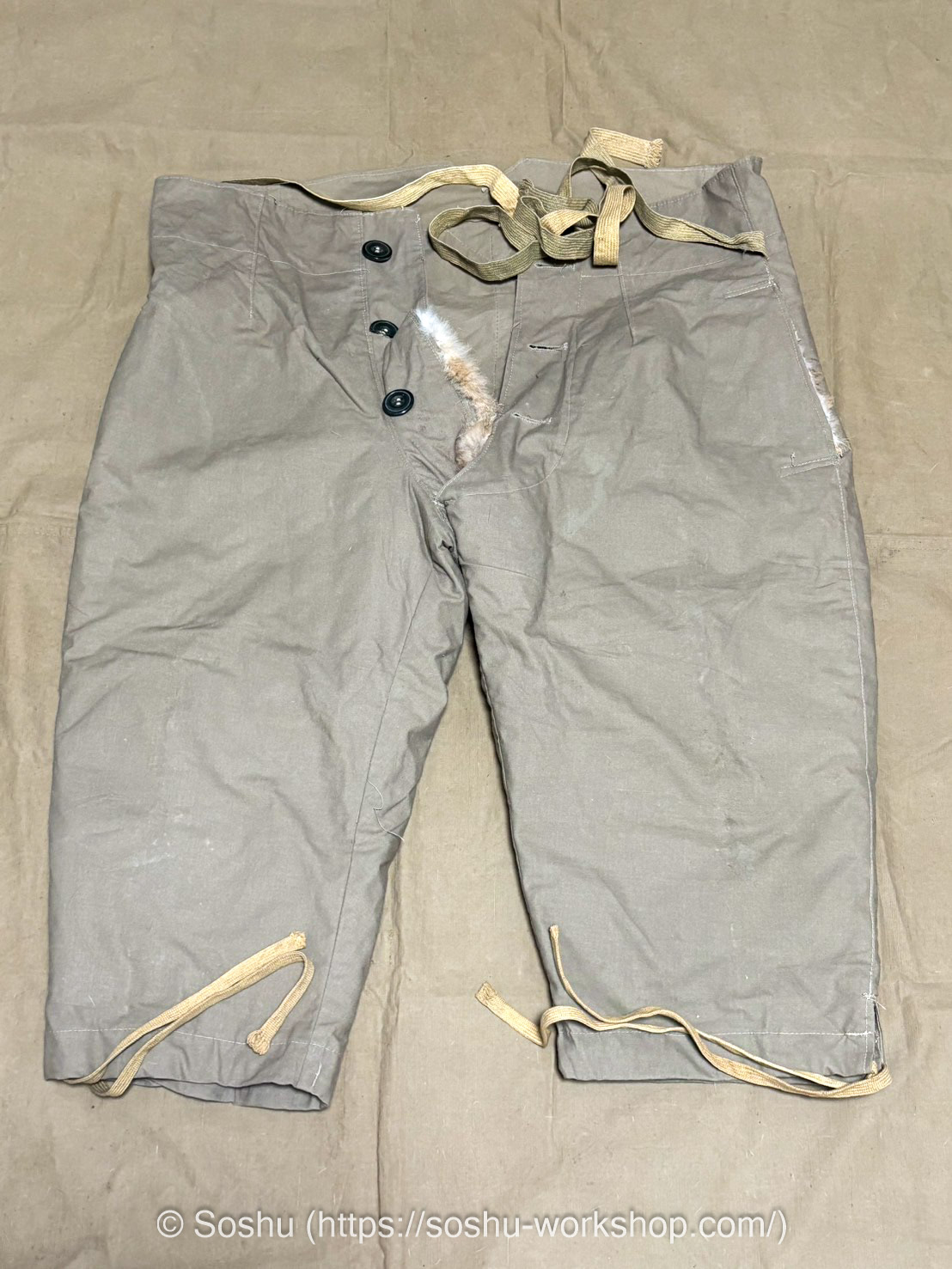
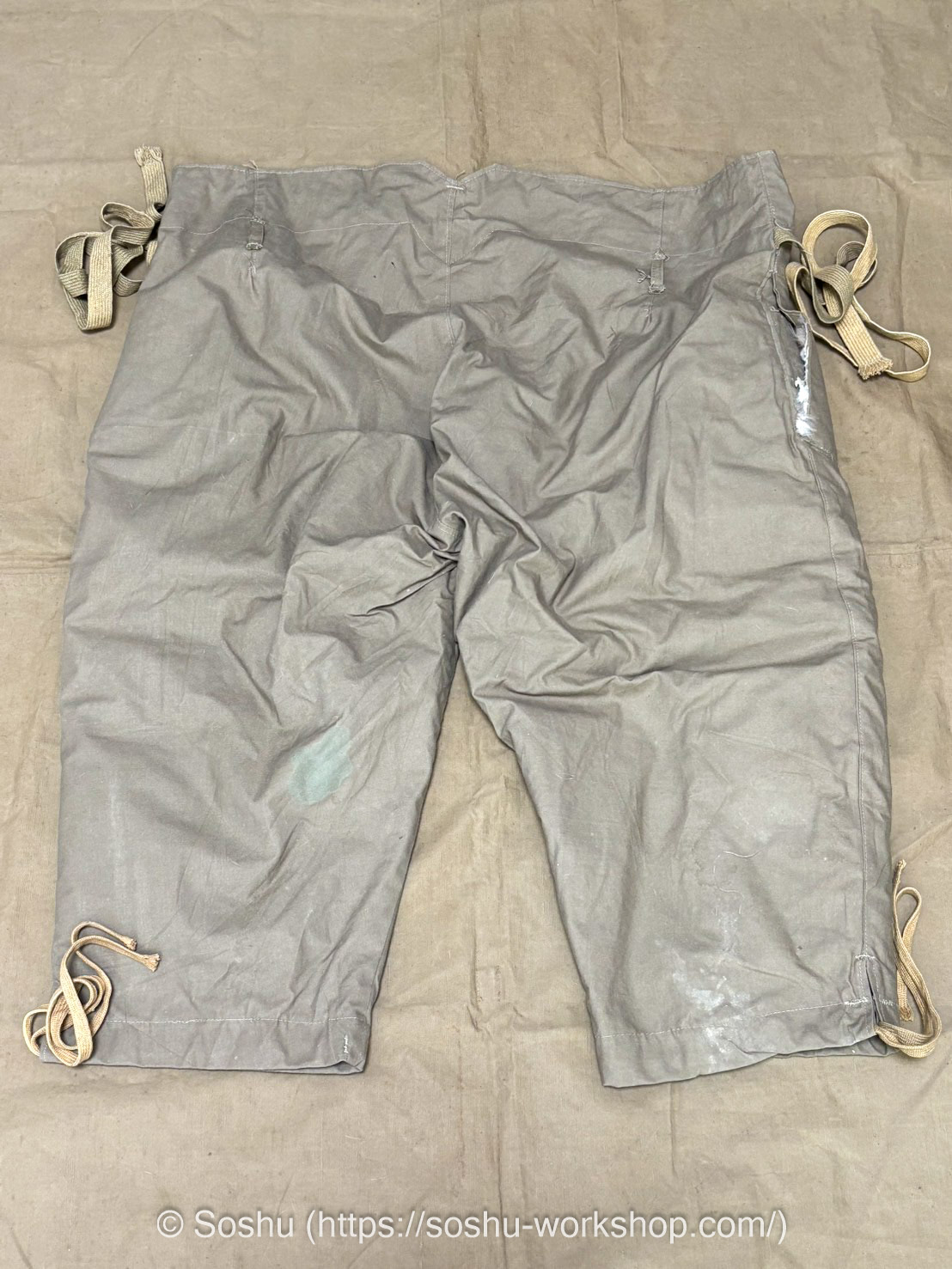
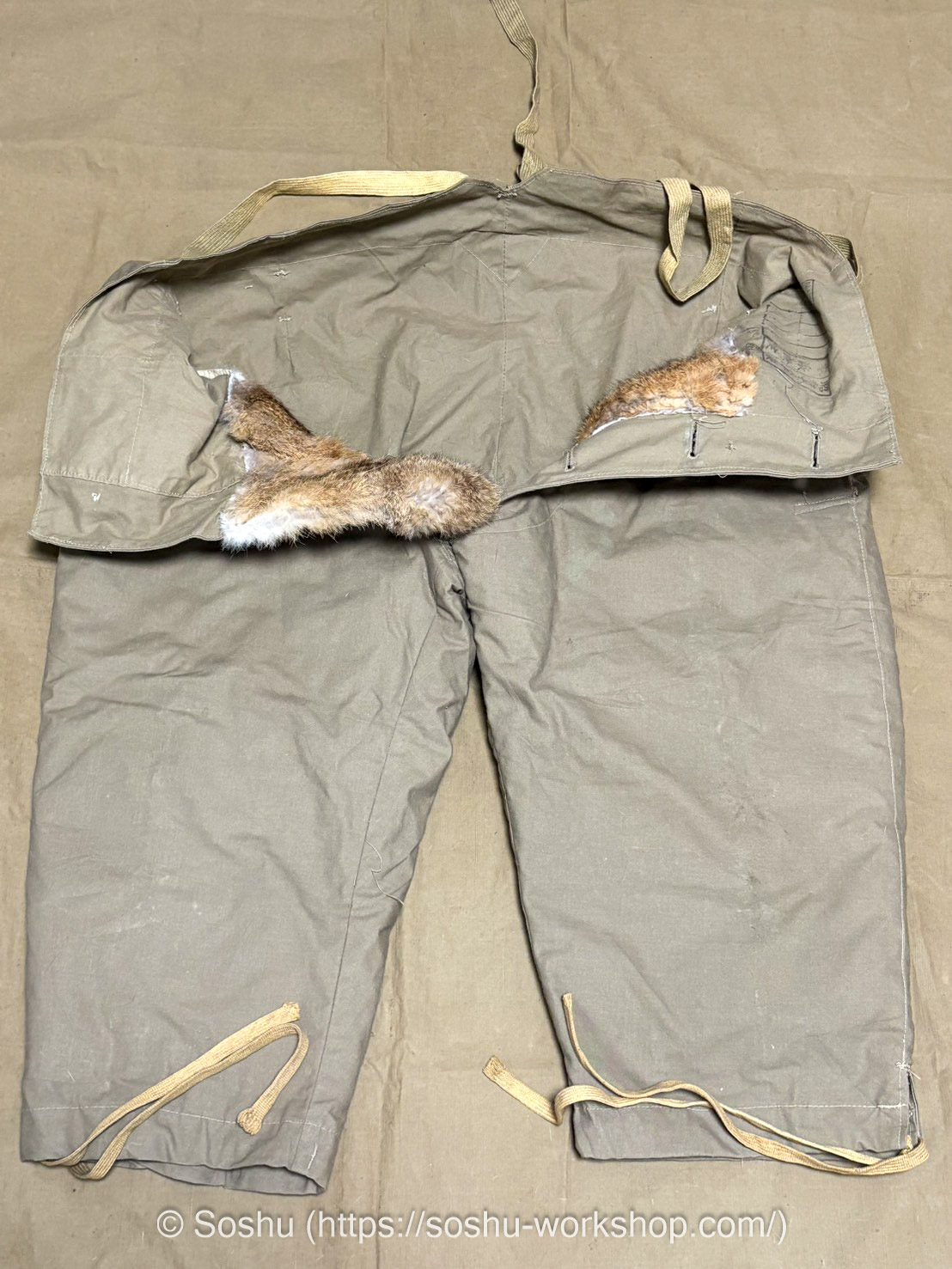
This example also uses sheepskin and rabbit fur. The supplier’s stamp is largely illegible, with only the first character discernible; however, since it appears to read “旣”, it is likely that this piece was supplied by the same contractor as the previously mentioned example. It should be noted that these two items were purchased simultaneously from the same source.
Even when produced in the same year and by the same supplier, clear individual variations can be observed in details such as the shade of the fabric, the color of the ties, and the color of the fur.
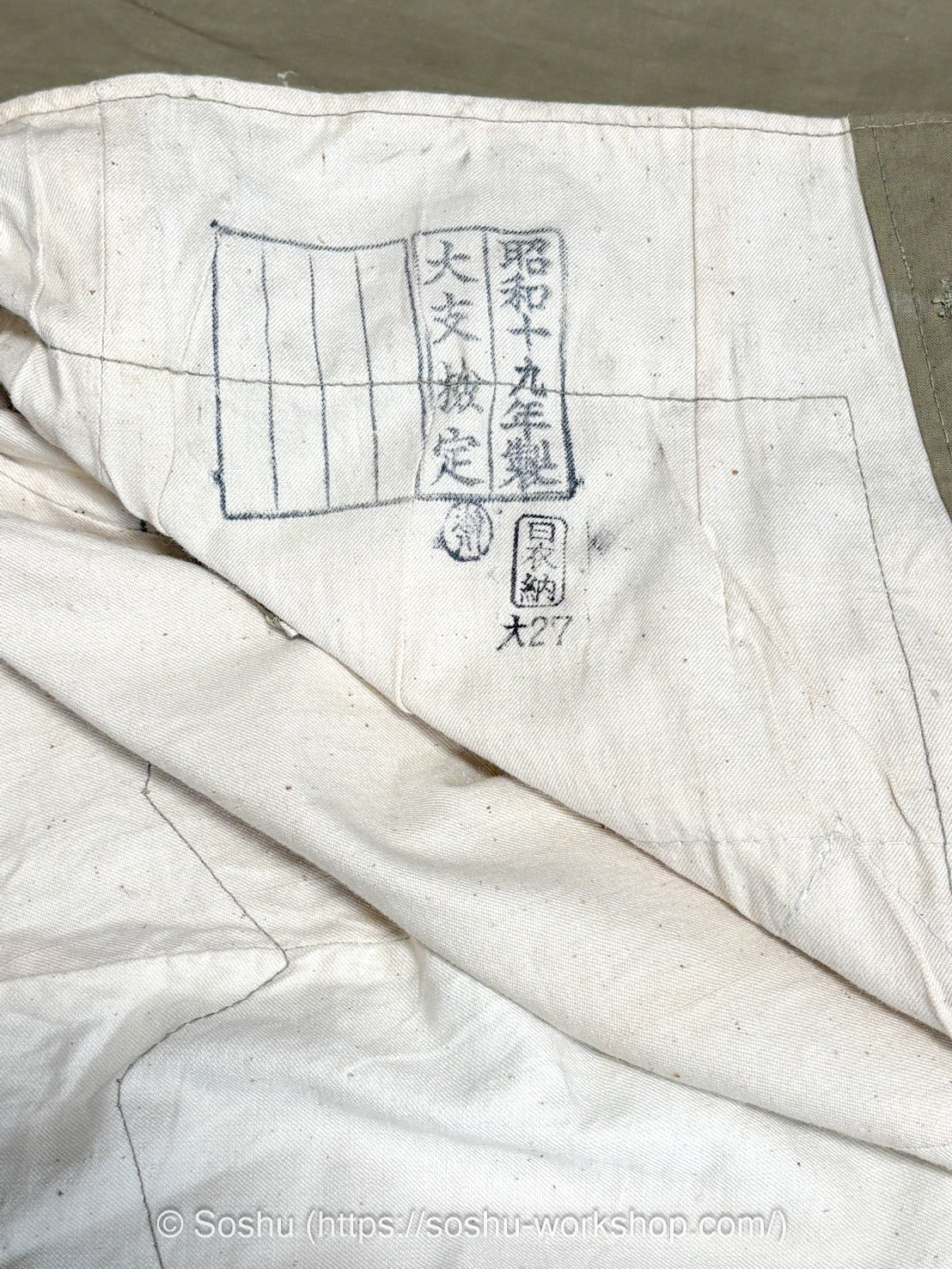
Shōwa 19 (1944) issue, Osaka Army Clothing Depot
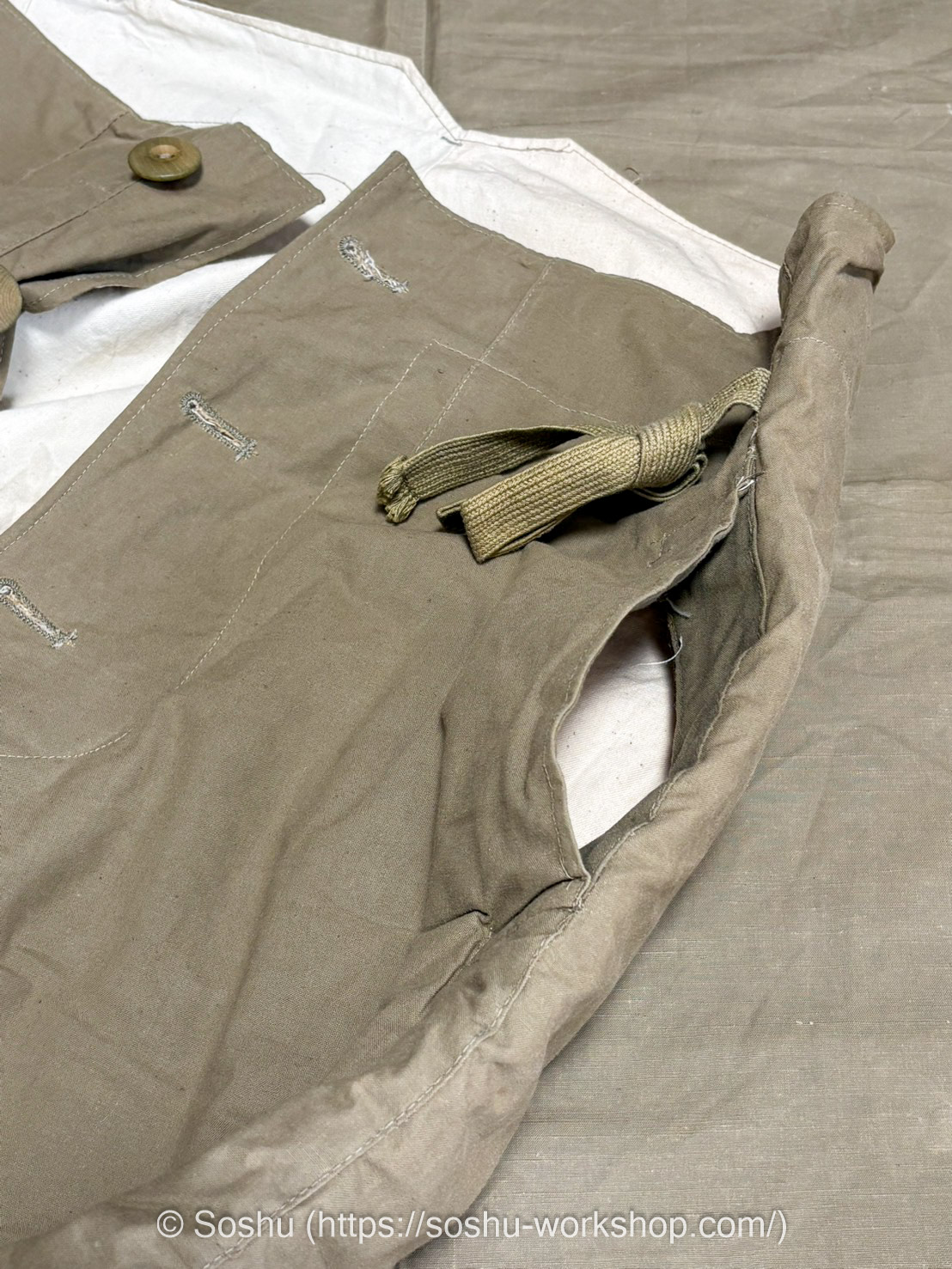
This example is a pair of Cold Weather Half Pants manufactured in 1944 (Shōwa 19) by the Osaka Army Clothing Depot, and it is the type without fur lining on the inside.
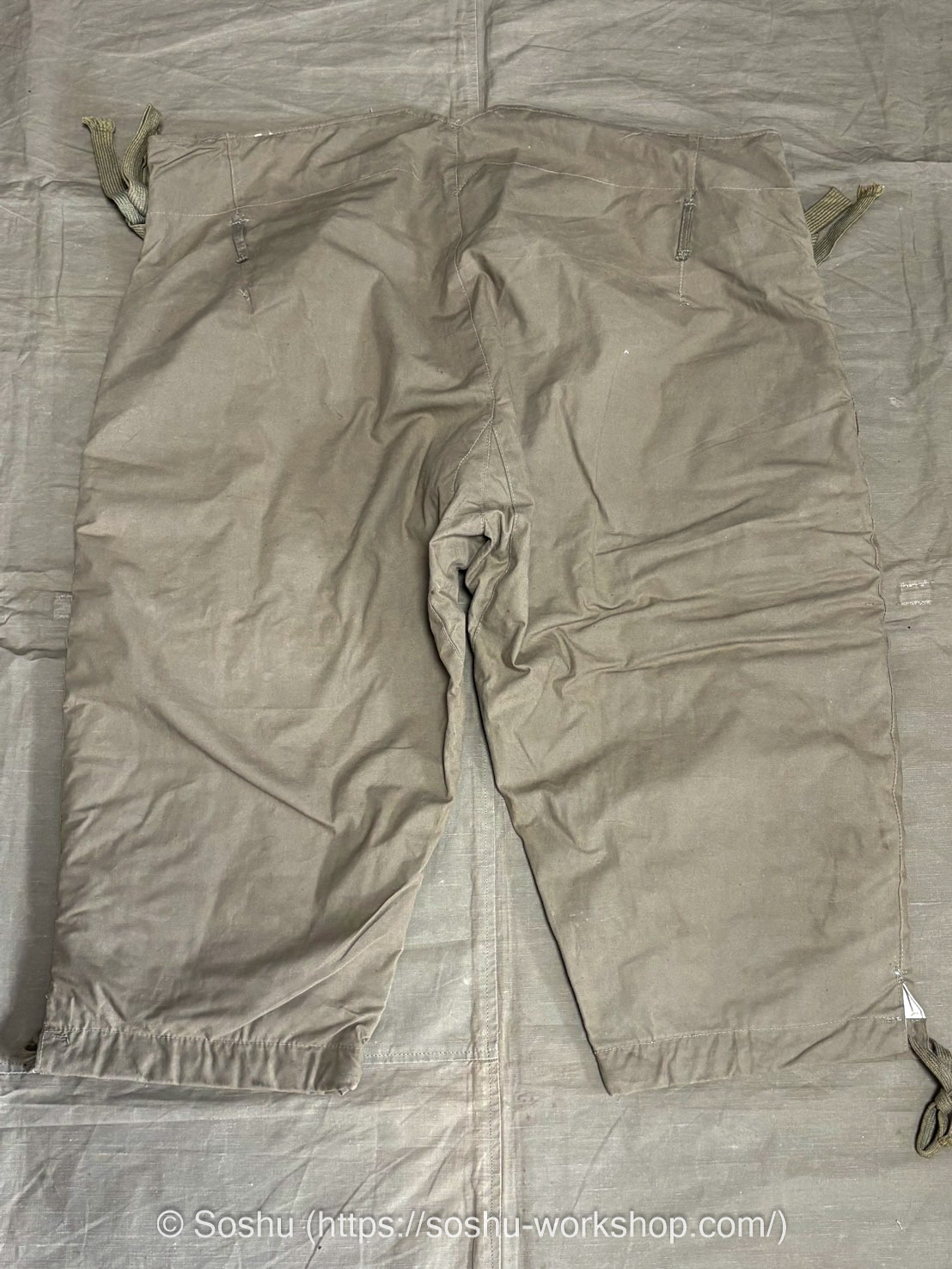
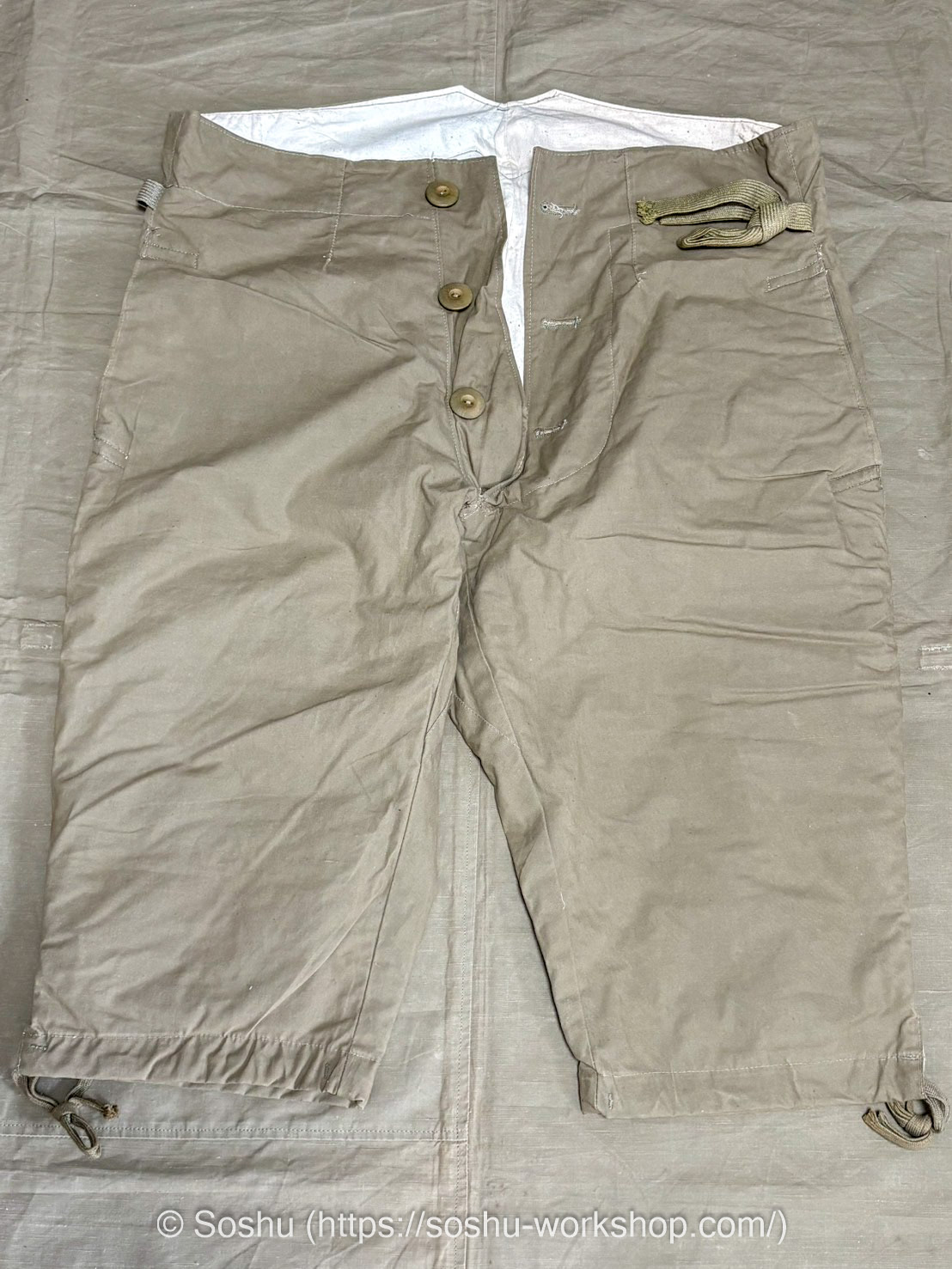
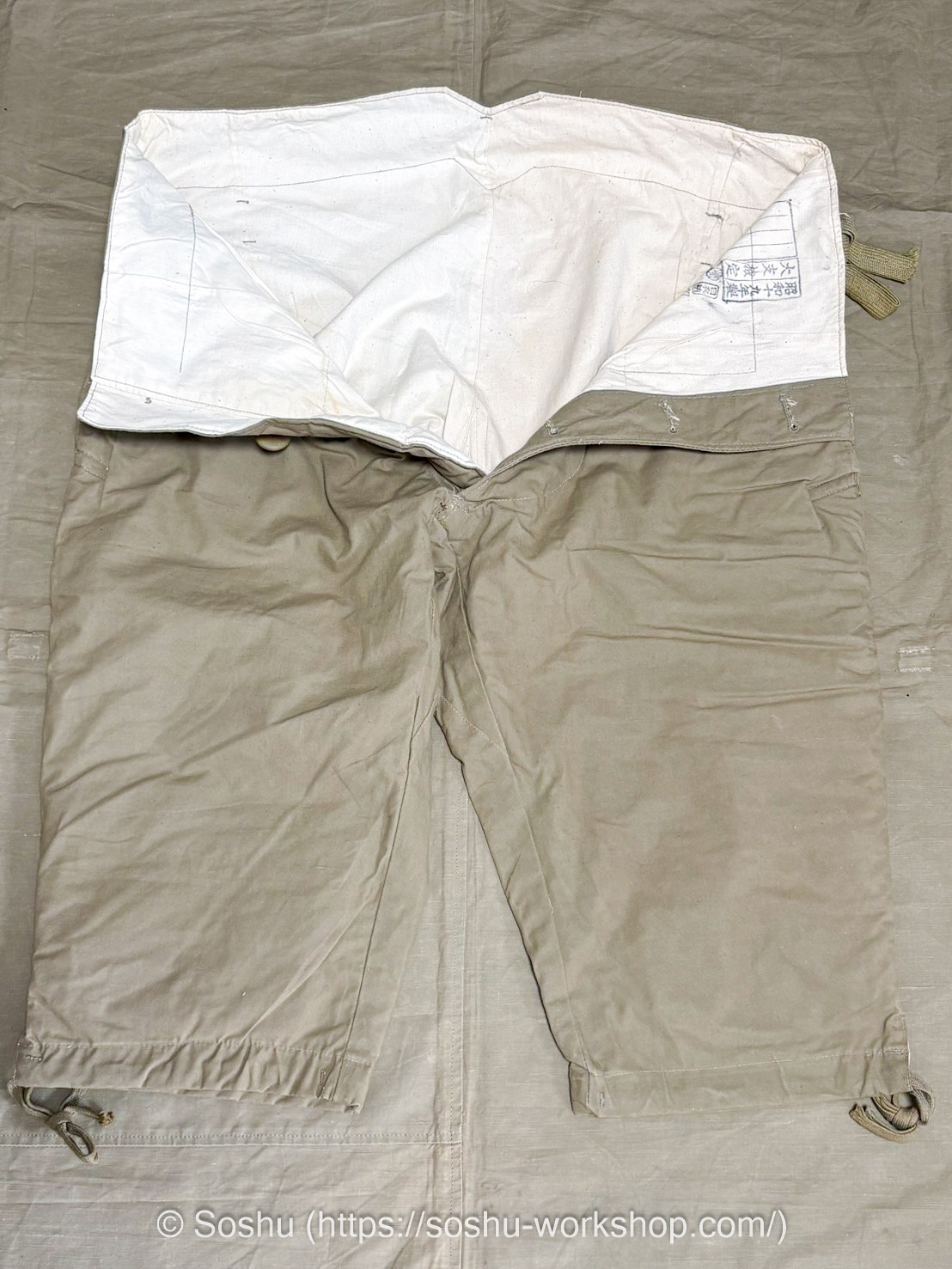
As you can see, it has a double-layer construction, similar to Type 98 Cotton Winter Tunic. There is no fur on the front of the half pants, but instead, some kind of interlining material appears to be inserted between the layers of fabric. When bent, it produces a dry, rustling sound.
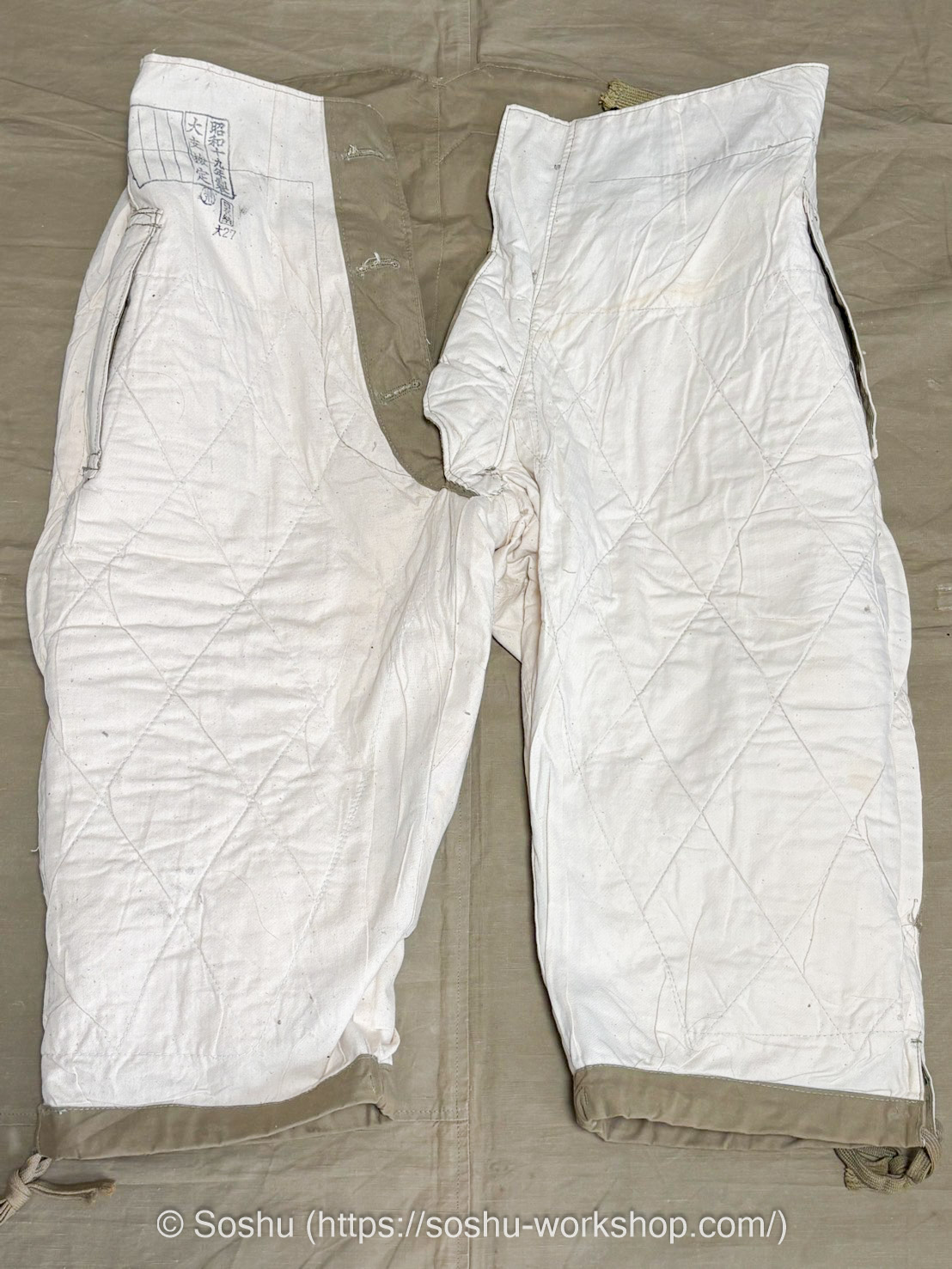
Footnotes
- “Standard for outfit in specific region” JACAR (Japan Center for Asian Historical Records) Ref.C01001082500, Dainikki, Koshu, 1929 (National Institute for Defense Studies of the Ministry of Defense) ↩︎