Showcase the military uniforms worn by soldiers of the Imperial Japanese Army, using both original items and replicas.
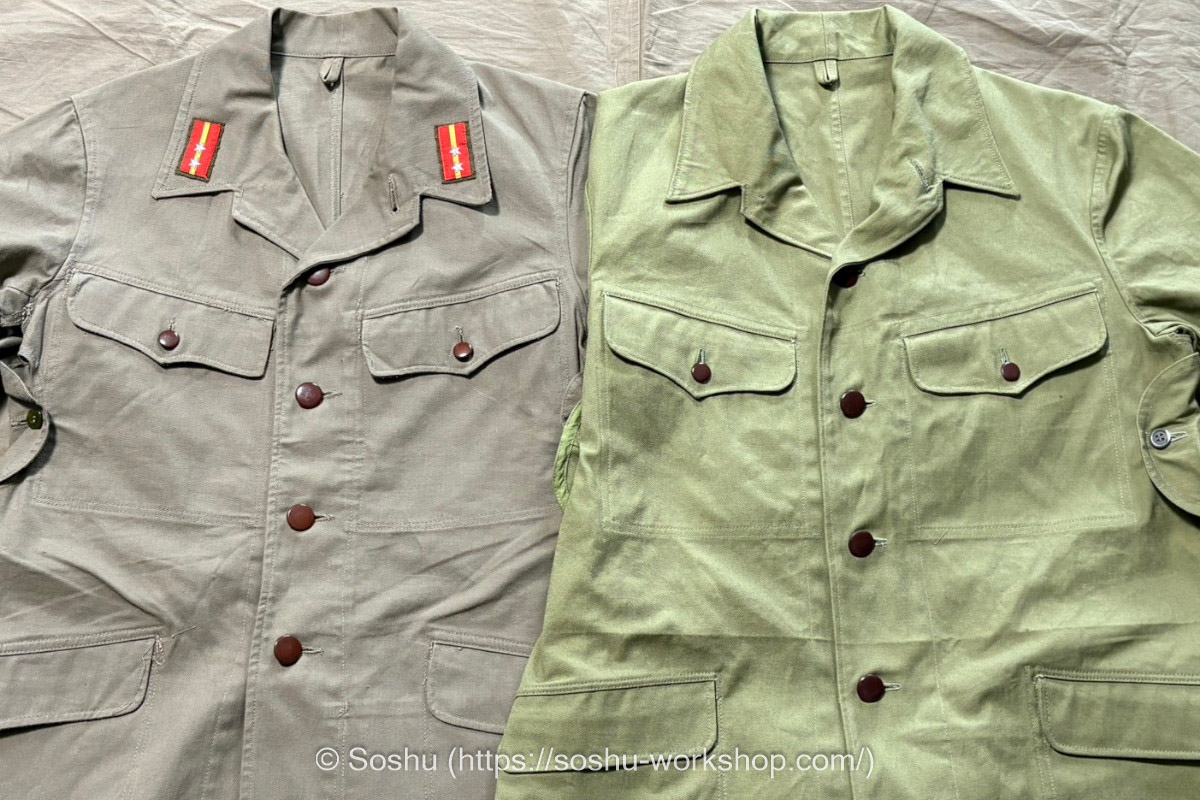
The tropical uniform revised in 1942 (Showa 17) was a minor modification based on the earlier 1938 (Showa 13) pattern, with changes such as the elimination of the collar hook and the addition of ventilation holes. This time, I have produced a replica of the 1942 (Showa 17) tropical uniform, which I would like to introduce here.
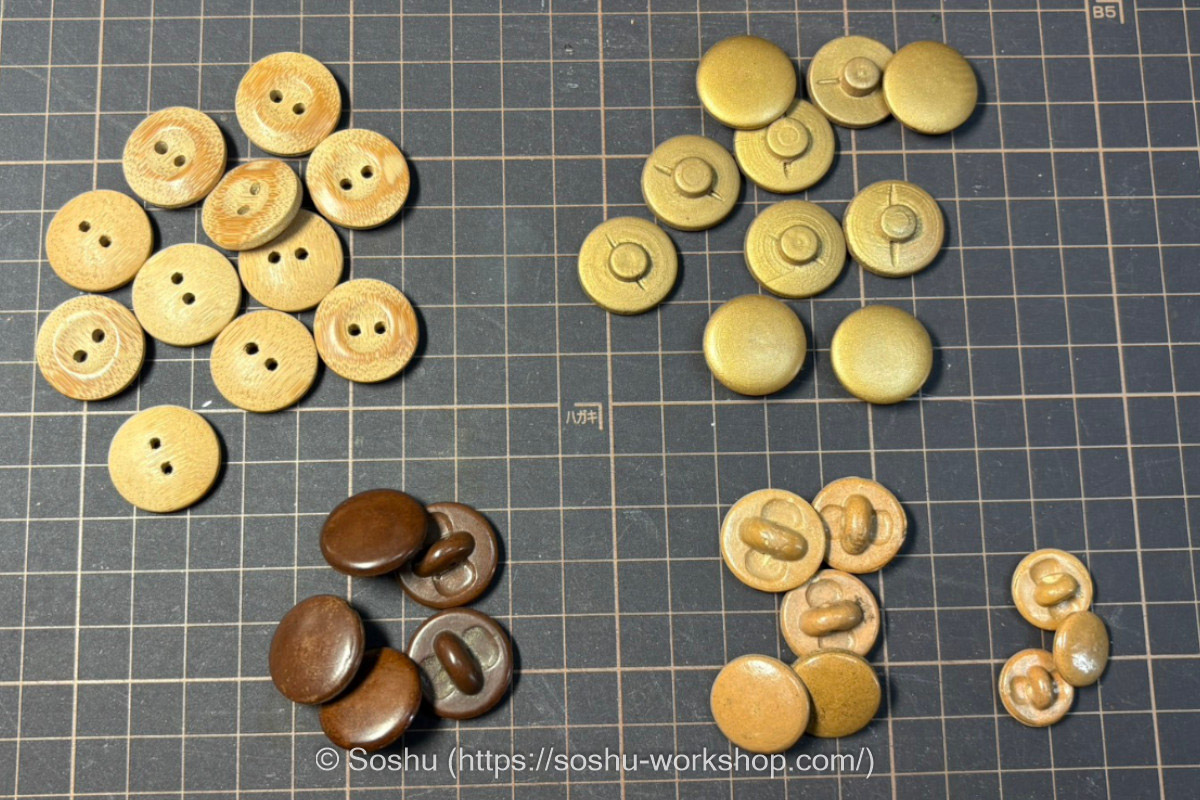
From around 1940–1941, shortages of military supplies led to the use of various substitute materials in clothing. This article introduces substitute buttons—such as those made of bakelite and wood—based on both historical documents and authentic examples, and also records the process of attempting to create replicas.
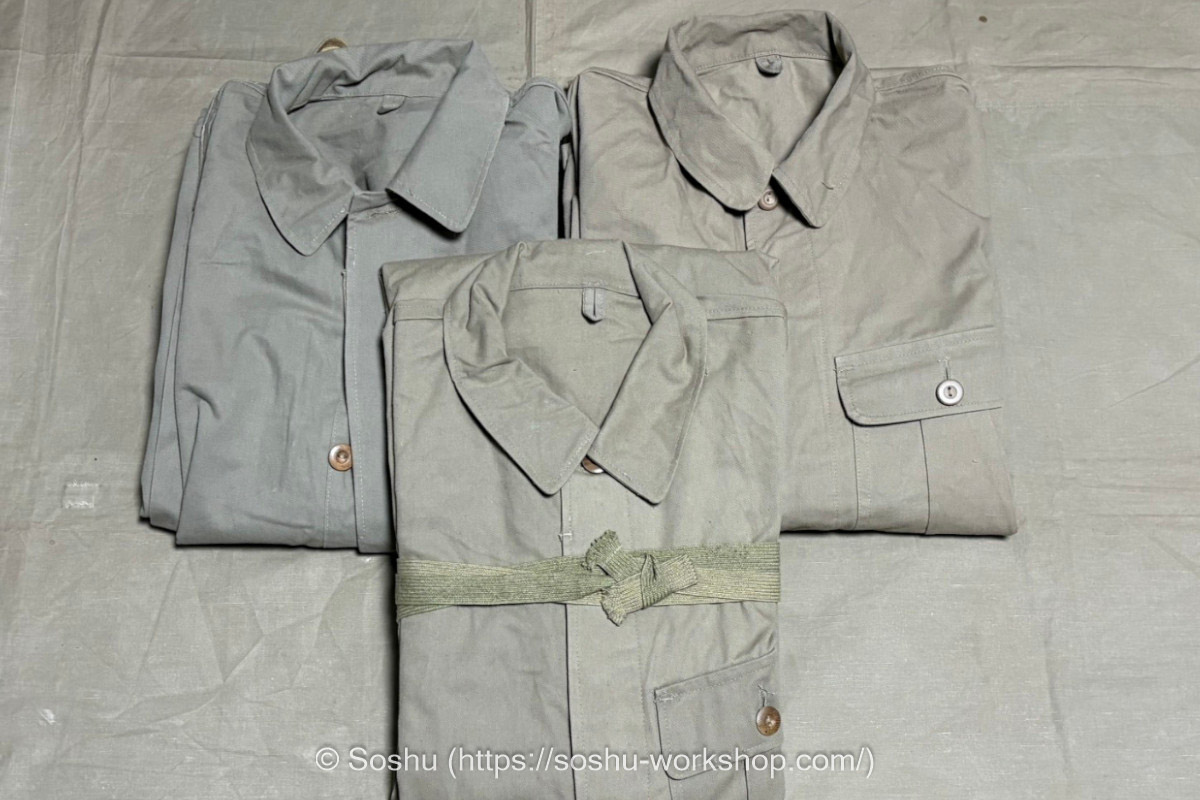
This article introduces original examples of the Tanker Overalls worn by tank crewmen and maintenance personnel of the Imperial Japanese Army. Several individual pieces are examined, with attention given to details such as differences in color.
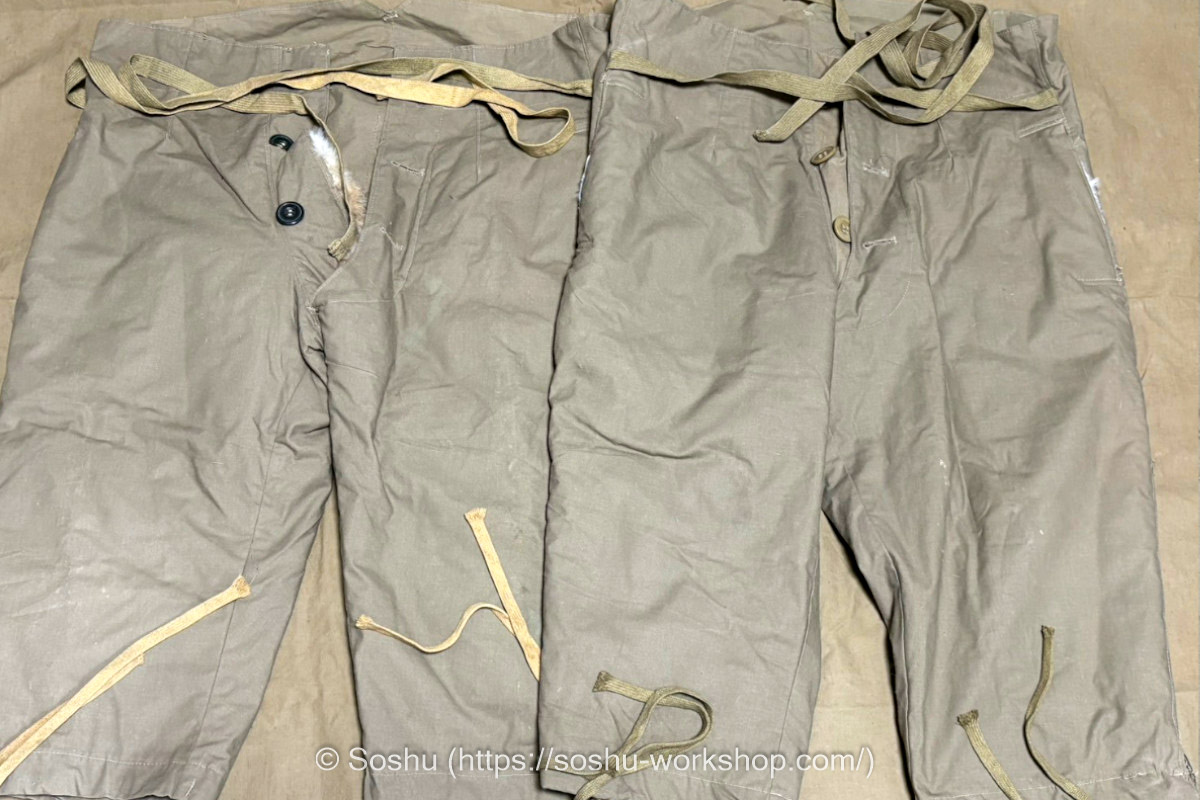
This is an example of an authentic Cold Weather Half Pants. It is worn over the standard military trousers and used in combination with Cold Weather Leggings or Cold Weather Boots.
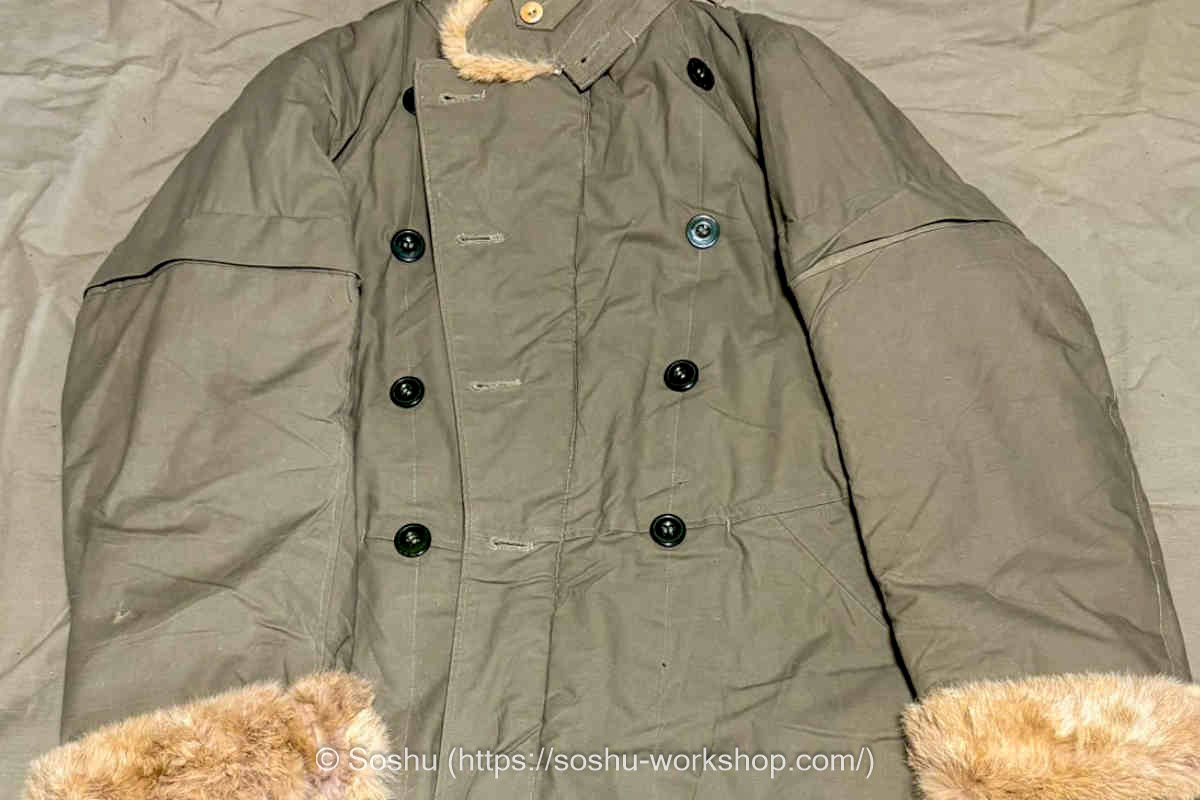
Here is a comparison of authentic Cold Weather Coats. I also show examples of how to wear the full cold-weather gear.
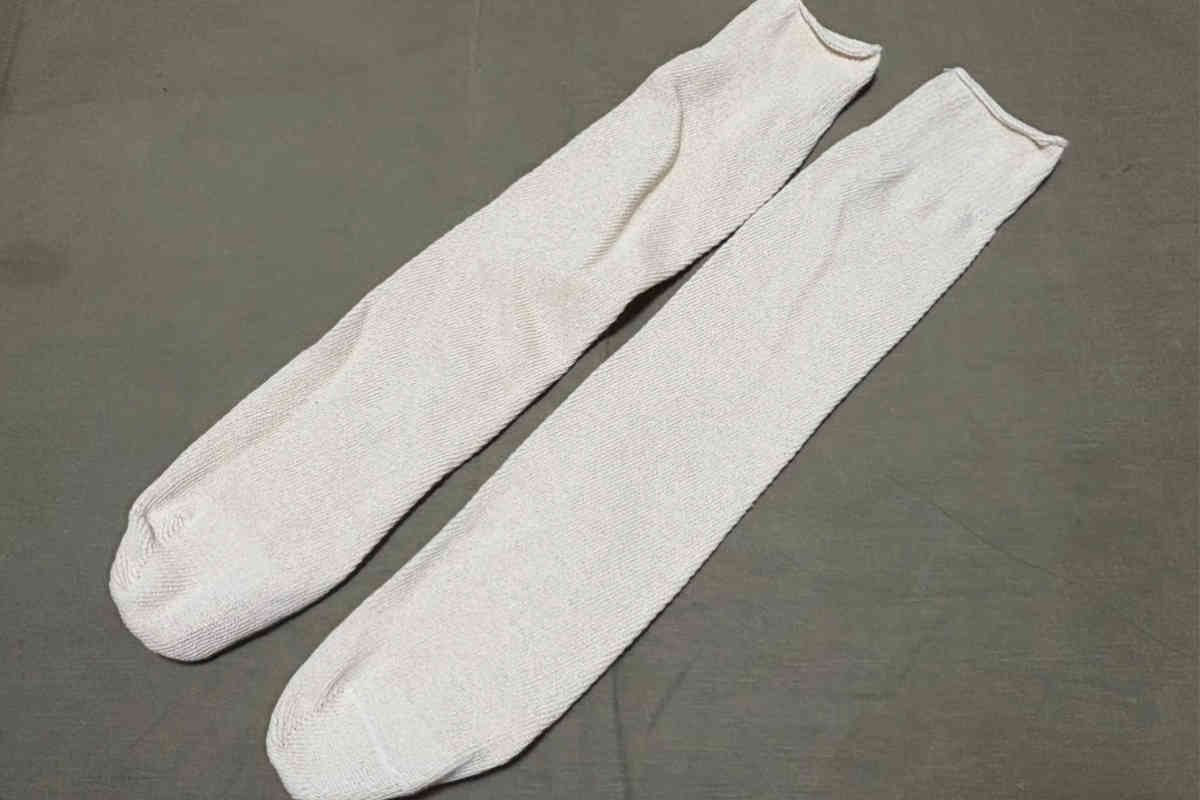
What I’d like to introduce this time is a replica of the military socks, known as gun-soku (軍足), worn by soldiers of the Imperial Japanese Army. Strictly speaking, though, it’s not exactly a replica—socks of nearly the same design are still being manufactured and sold today, so this is more of an introduction to those. The gun-soku used by the Imperial Japanese Army differed somewhat from the socks generally sold today under the same name.…
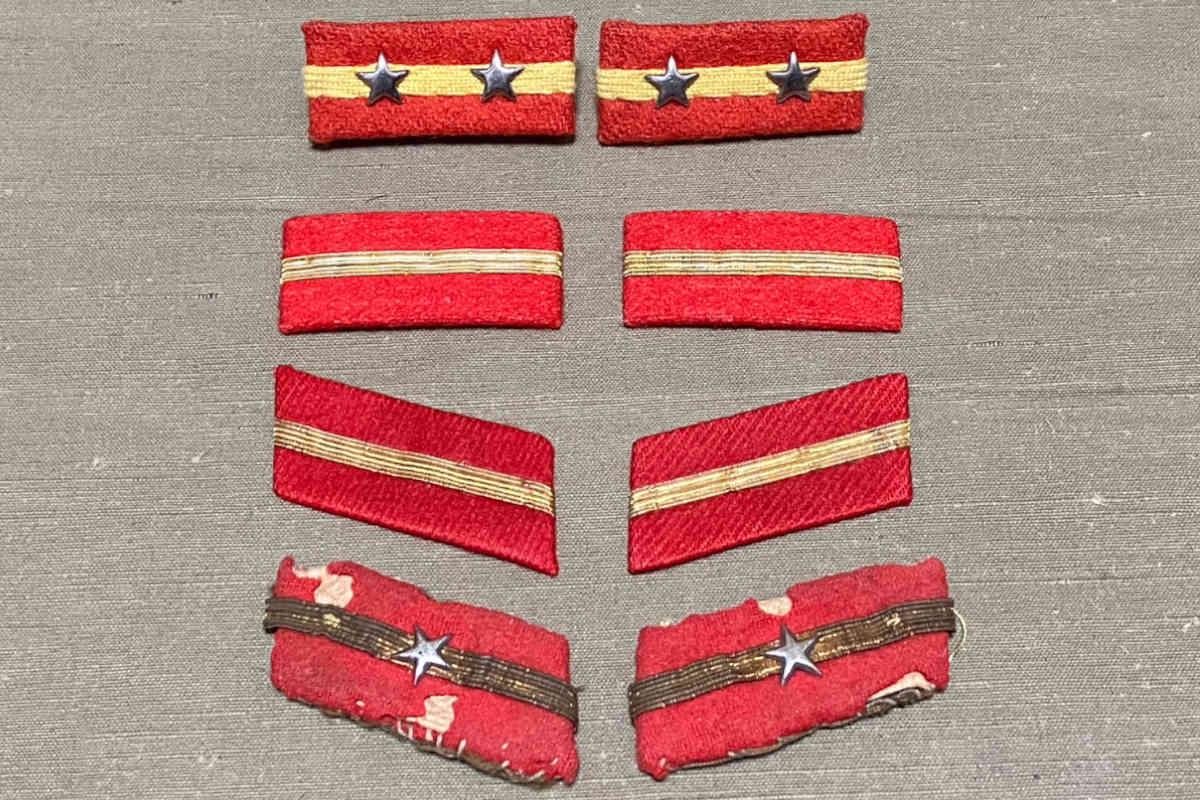
This time, I would like to introduce the changes in rank insignias and identification Insignias worn on the Type 98 military uniform established in Showa 13. When aiming to accurately reproduce past military attire, the specific year and month is an important factor. It is crucial to understand when the new regulations were implemented if one is to wear military attire according to the revised standards; otherwise, it may result in a uniform that does…