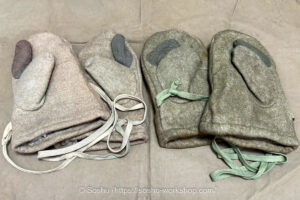
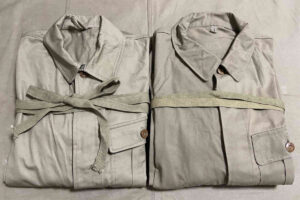
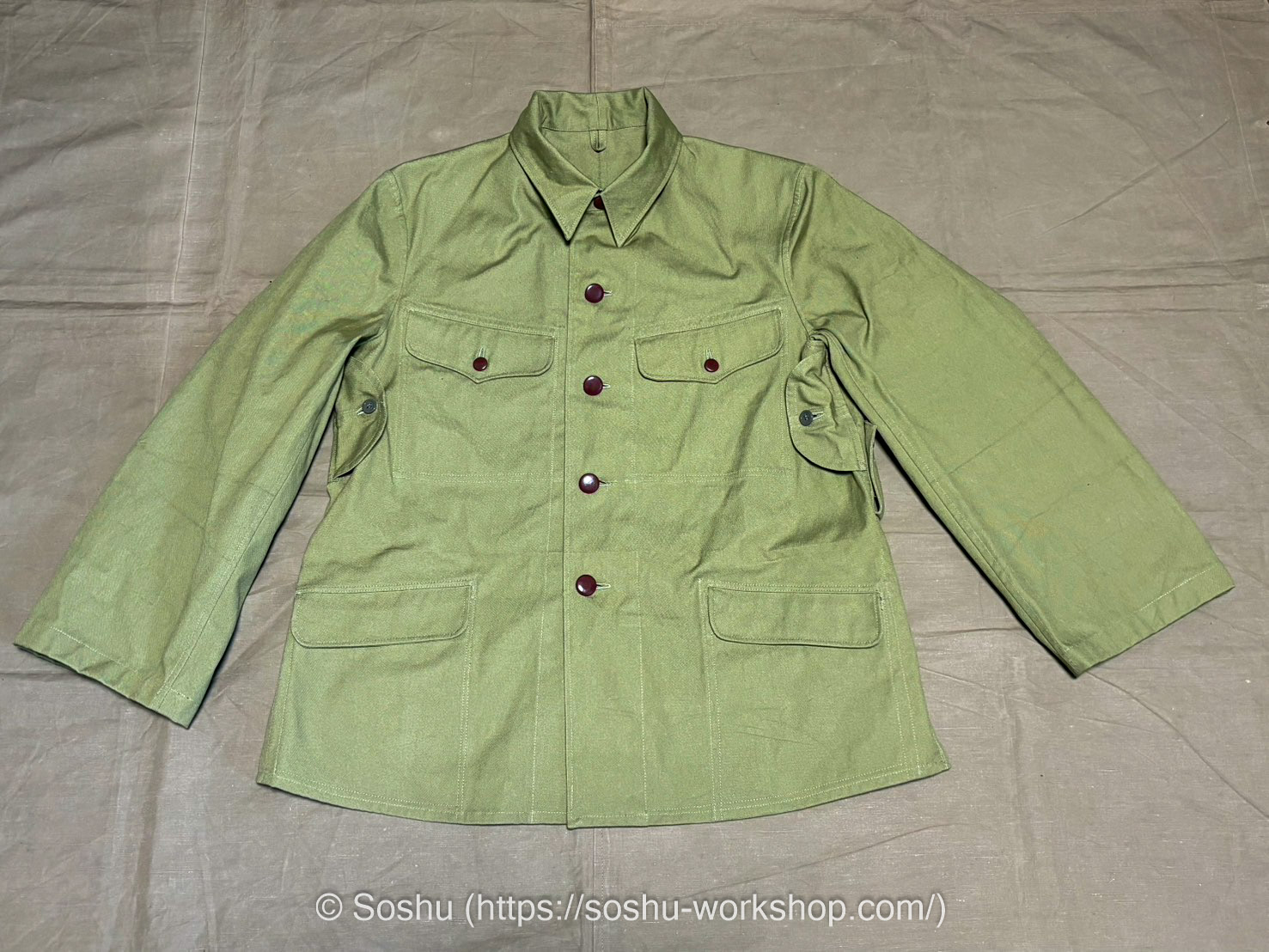
This time, I will introduce the Tropical Uniform for enlisted men and NCOs established in 1942 (Shōwa 17).
In addition, since my sister is highly skilled in sewing—holding a Level 1 certification in dressmaking—we also produced a replica based on an authentic example from my collection. In this article, I will introduce that replica as well.
Please note that the replica tropical uniform will be available as a made-to-order item for those interested. As each piece is handmade rather than factory-produced, it may take several months from order to delivery. Thank you for your understanding.
Authentic Tropical Uniform
First, an introduction to an authentic example. The Tropical Uniform, originally established in 1930 (Shōwa5), underwent two subsequent revisions in 1938 (Shōwa13) and 1942 (Shōwa17).
The Type 5 Tropical Uniform, like the Type 5 Tunic, features Collar Insignia and can be worn open at the front. Rank Insignia are worn on the shoulders. Also, the chest pockets are of the patch pocket type, with fabric applied to the exterior.
Next, the Type 13 Tropical Uniform1 closely resembles the Type 98 Summer Tunic in shape, but is characterized by its ability to be worn open at the collar. It also features a hook at the collar, as seen on other military tunics. Ventilation openings with button closures are provided on both sides. The chest pockets are of the patch pocket type, as with the Type 5 pattern.
Furthermore, the Type 17 Tropical Uniform2 can be described as a minor modification based on the Type 13. The collar hook was abolished, making open-collar wear the standard, and the side ventilation openings became larger than those of the Type 13. In addition, as with the Type 98 Summer Tunic, ventilation holes were newly added under the arms. Historical documents also note that “two ventilation holes are provided under each armpit”. The chest pockets on this example are not of the patch type, as is also the case with the Type 98 Summer Tunic.
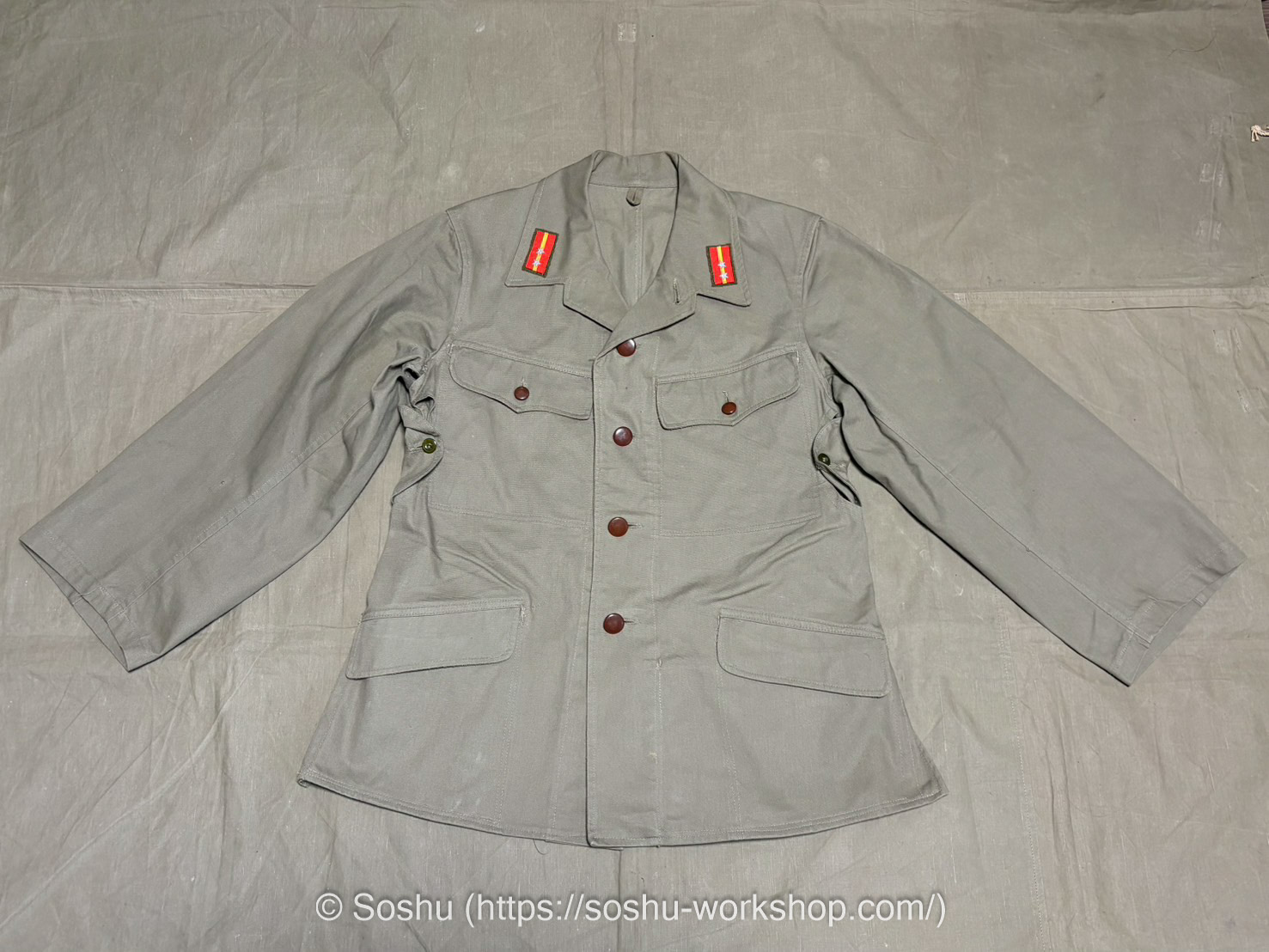
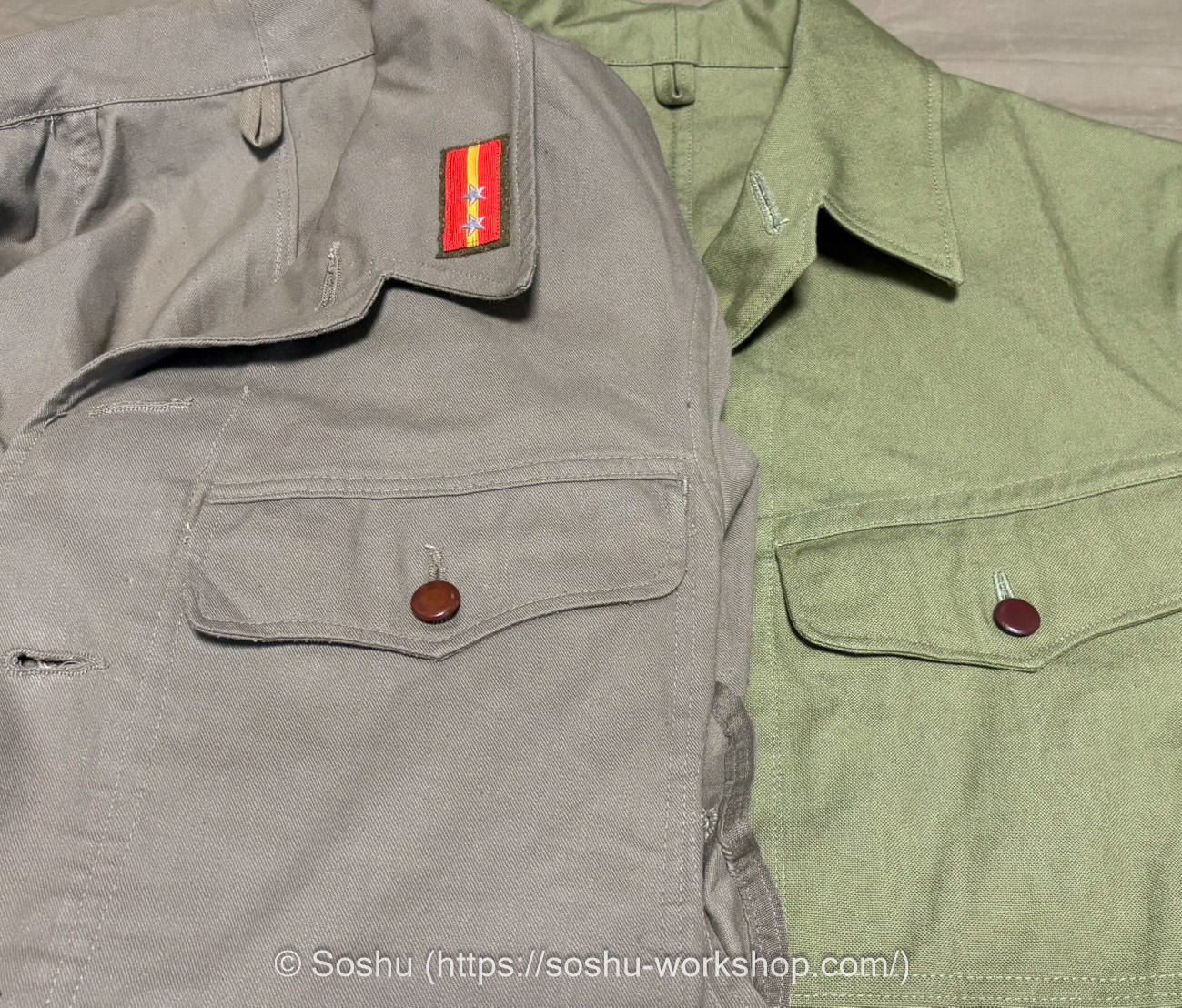
This is the collar section. The Type 17 Tropical Uniform does not have a hook at the collar. In addition, my example was missing the top button. Since traces of stitching remain, it may have been removed at some point. A Rank Insignia was also attached to the collar, but I am unable to determine its authenticity.
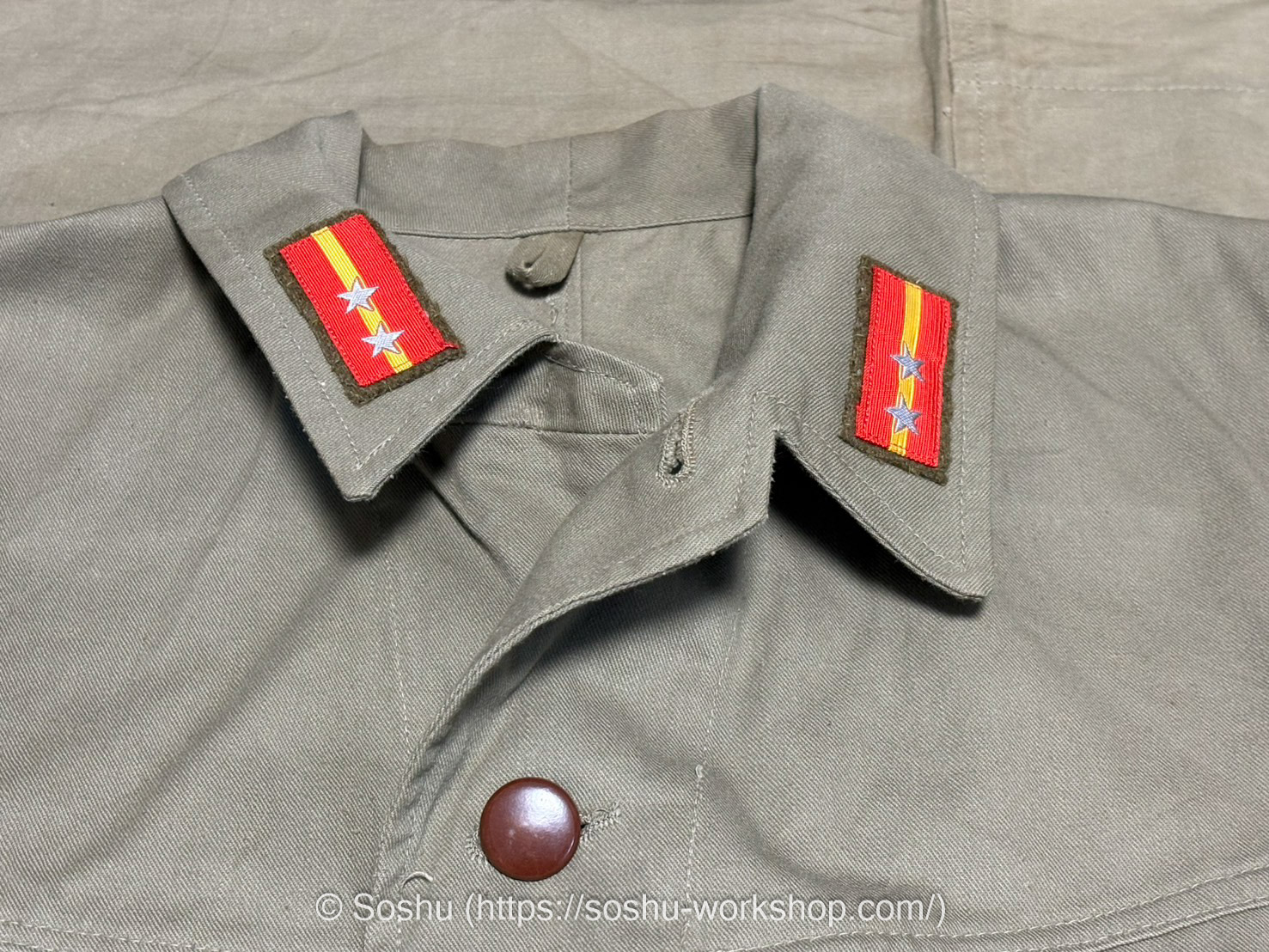
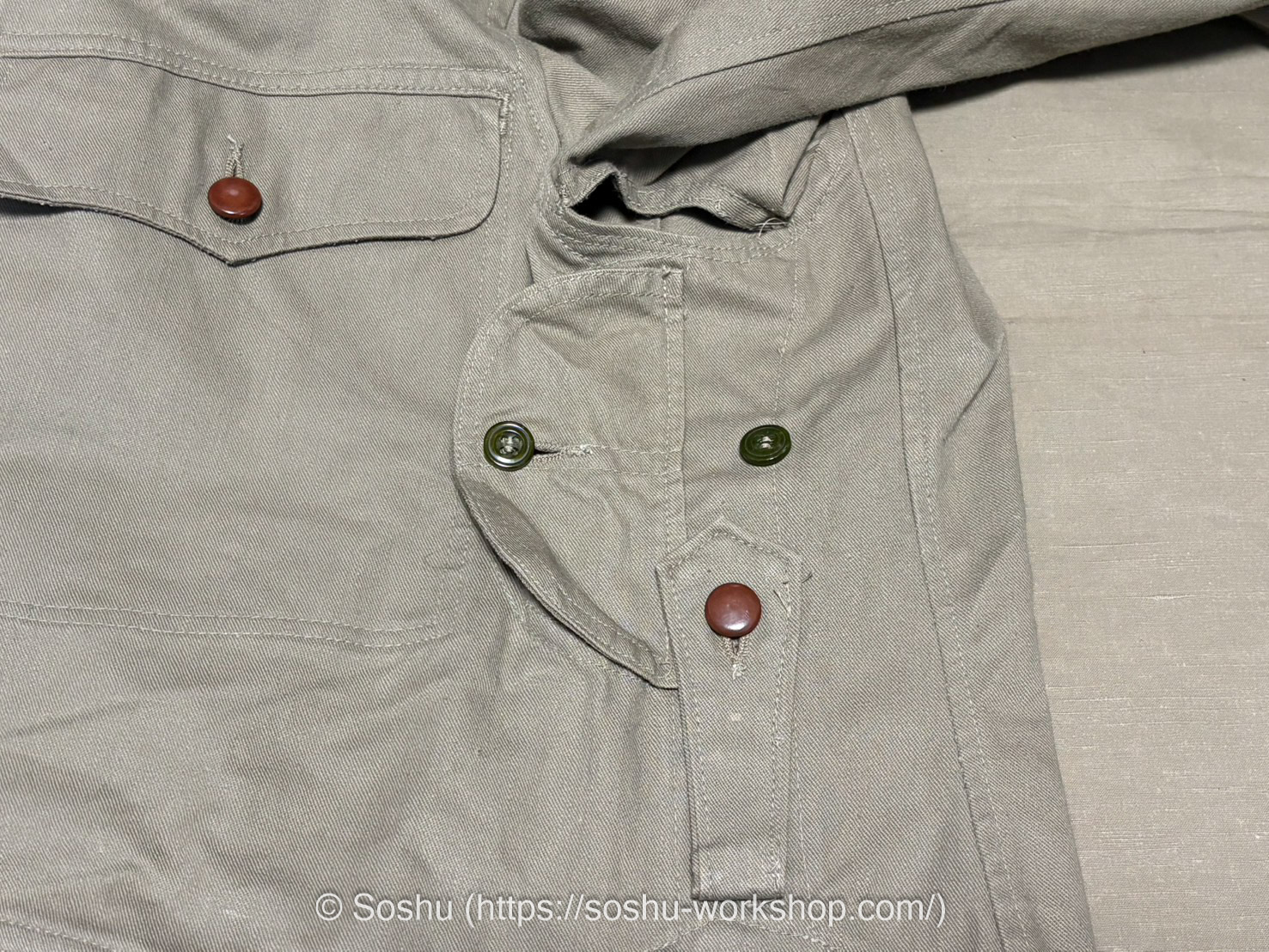
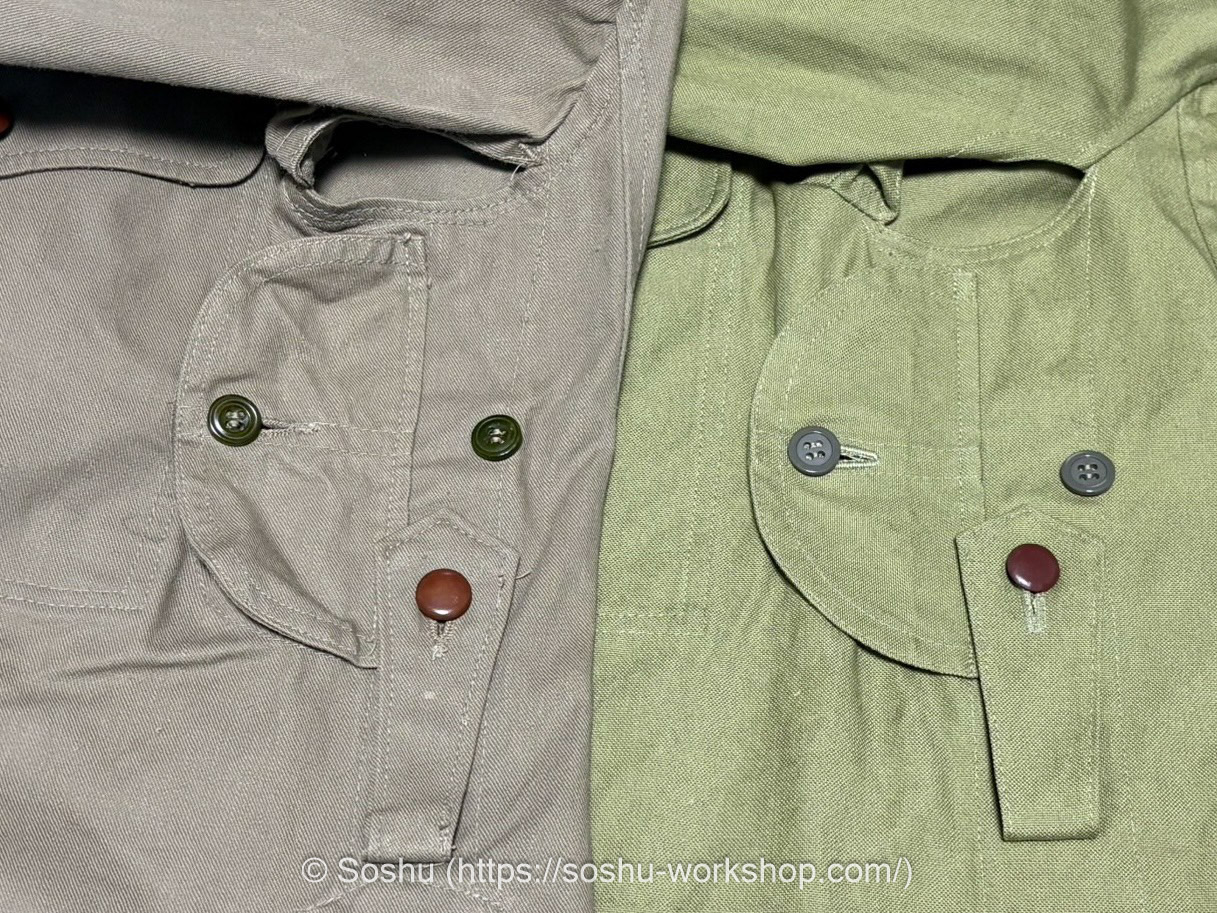
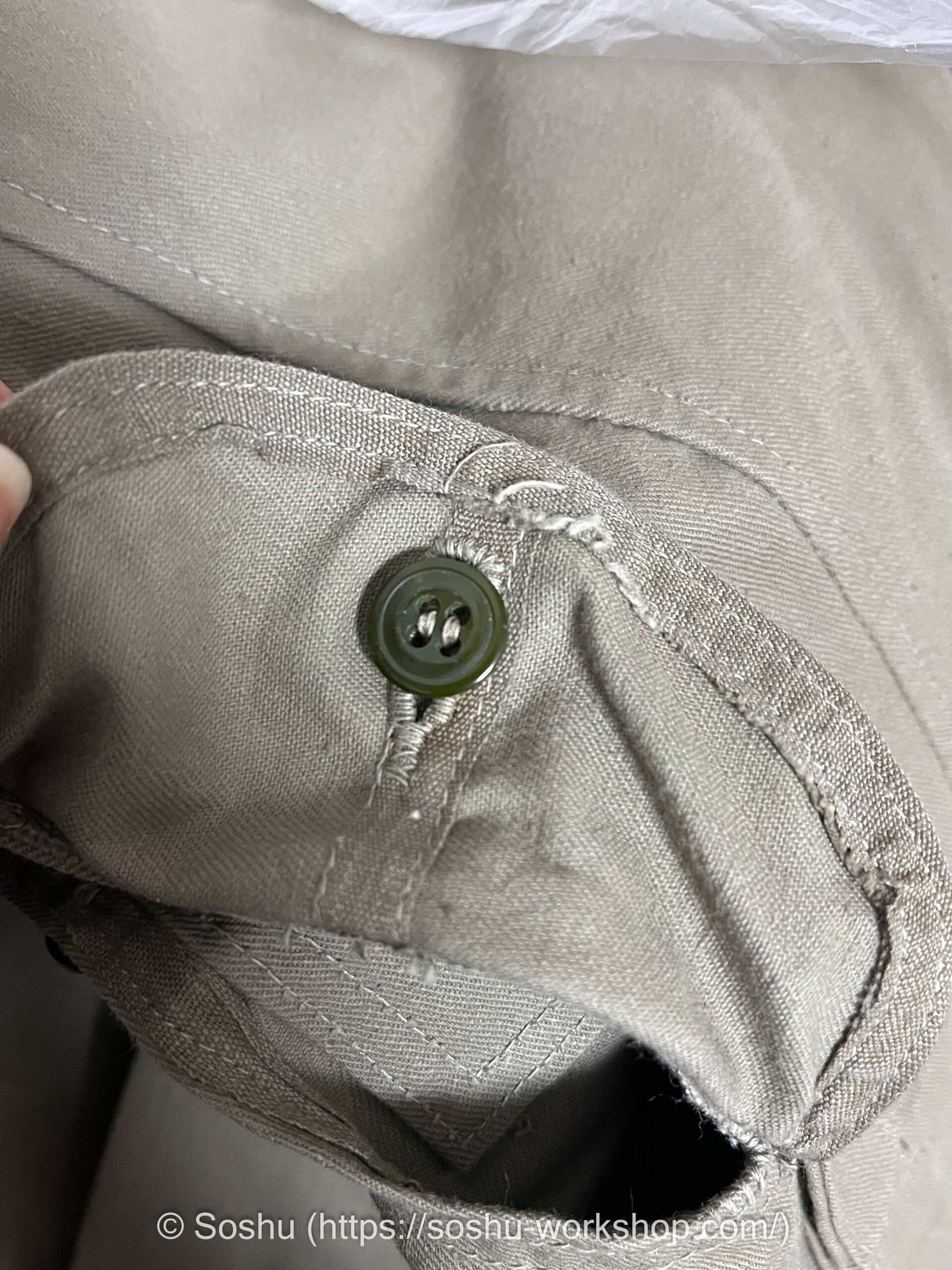
These are the side ventilation openings, which can be opened and closed with buttons.
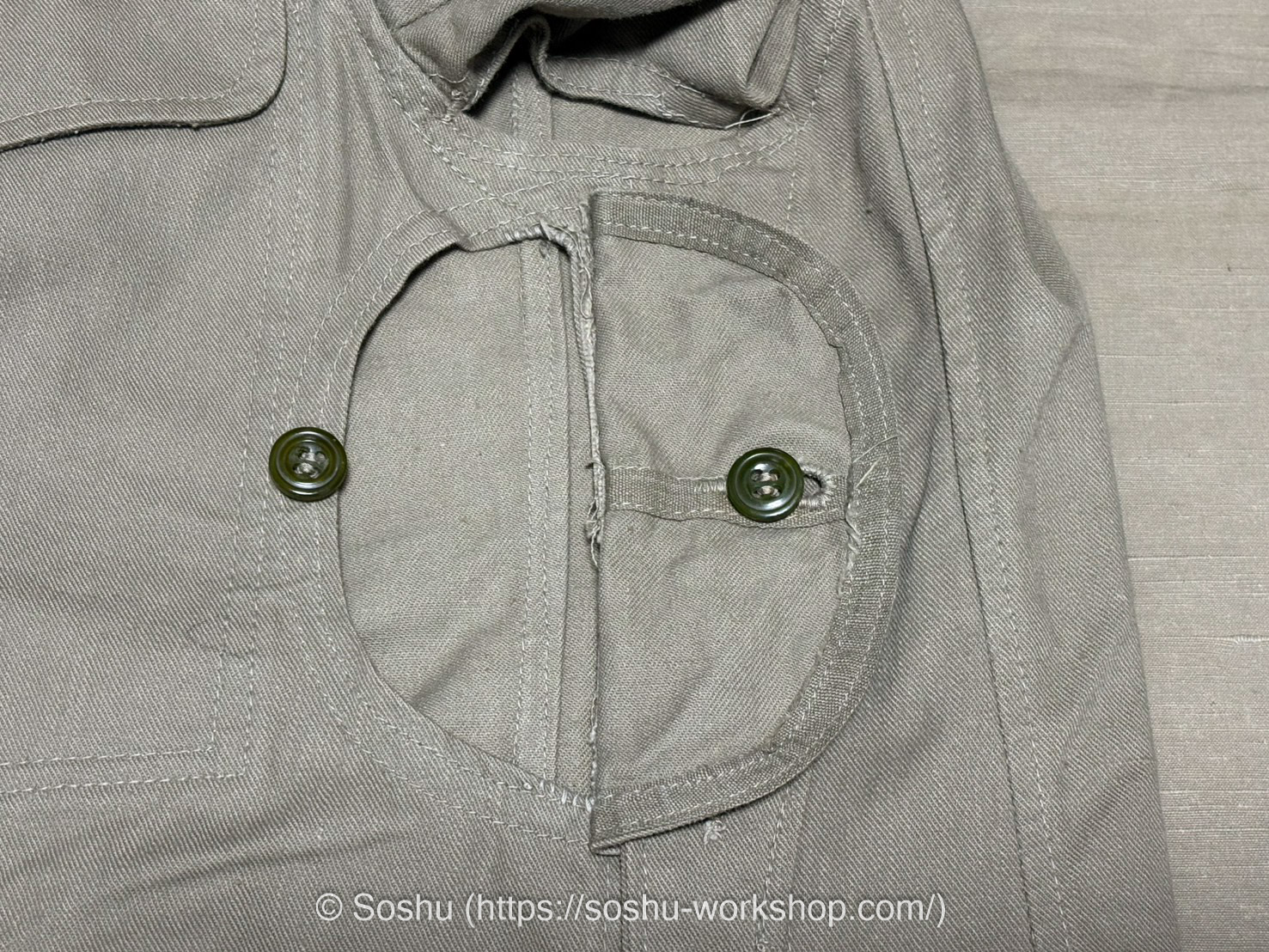
On the Type 17 Tropical Uniform, the flaps covering the vents are larger and interfere with the Sword Hanger. In addition, ventilation holes are provided under the arms, as on the Type 98 Summer Tunic, but these underarm vents are not found on the Type 13 Tropical Uniform.
On the underside of the button of the right chest pocket, a small white tag remains attached. It appears to read “ラ5”, though its meaning is unclear. The presence of such a tag suggests that this example may be unused.
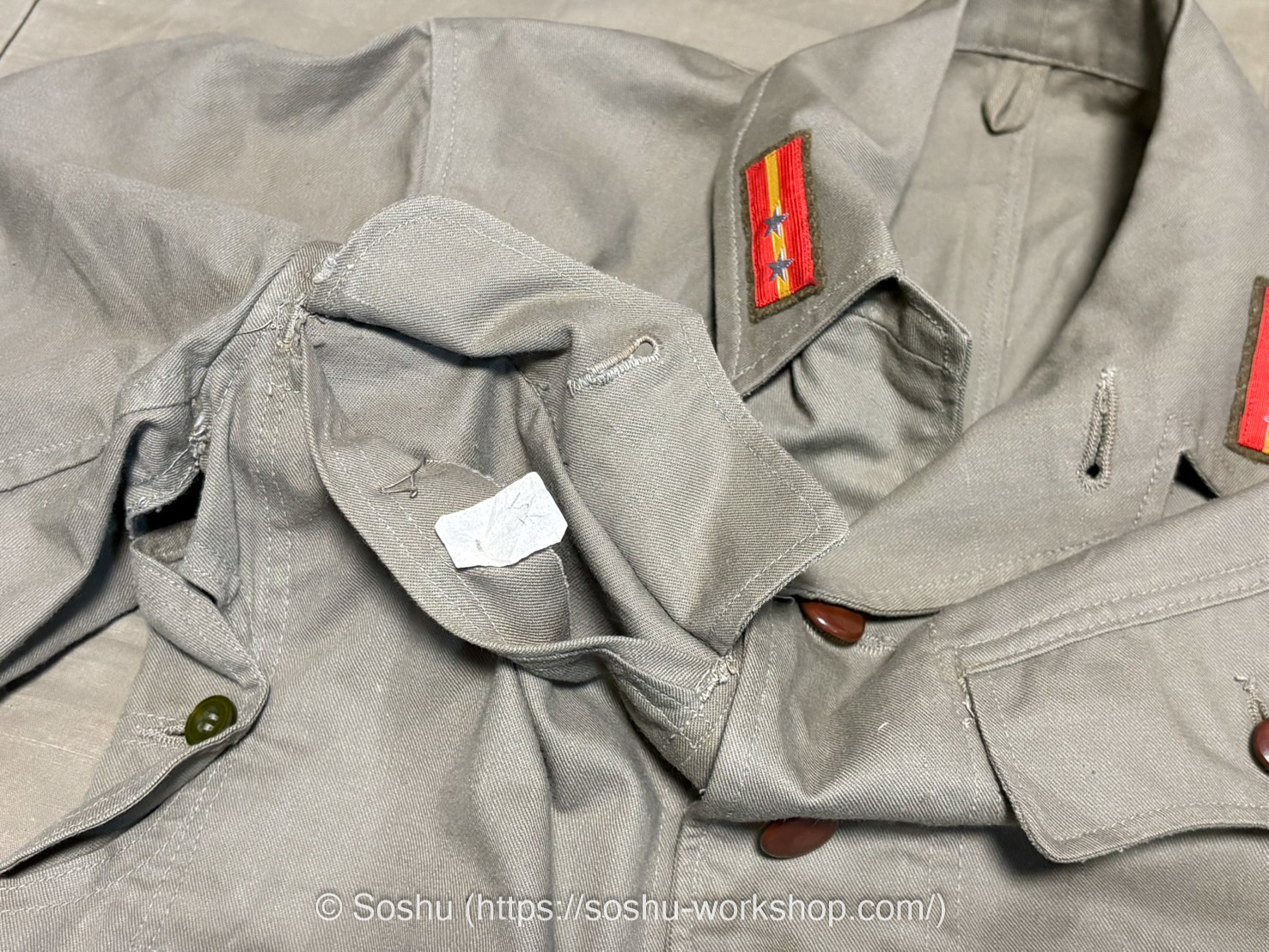
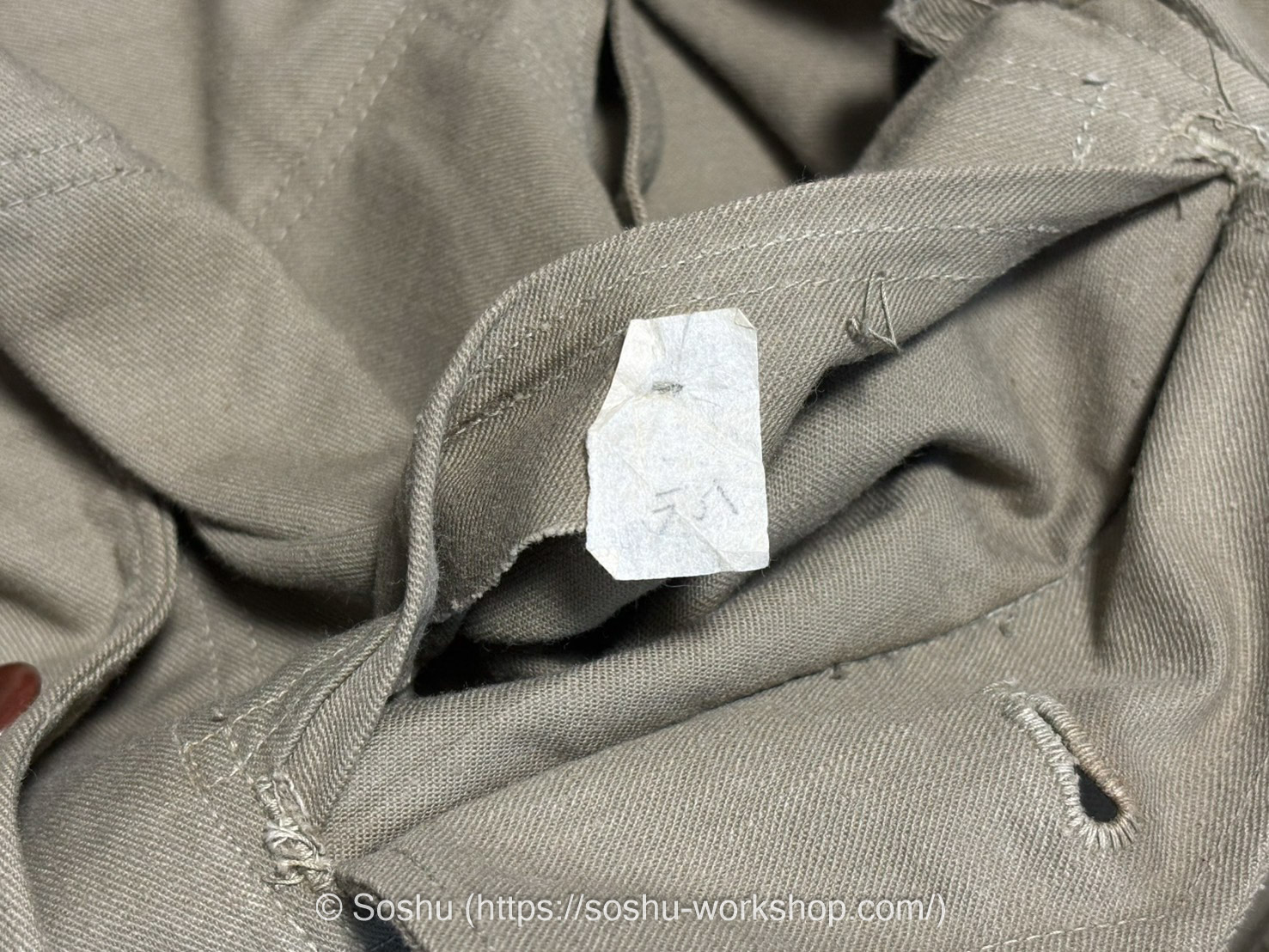
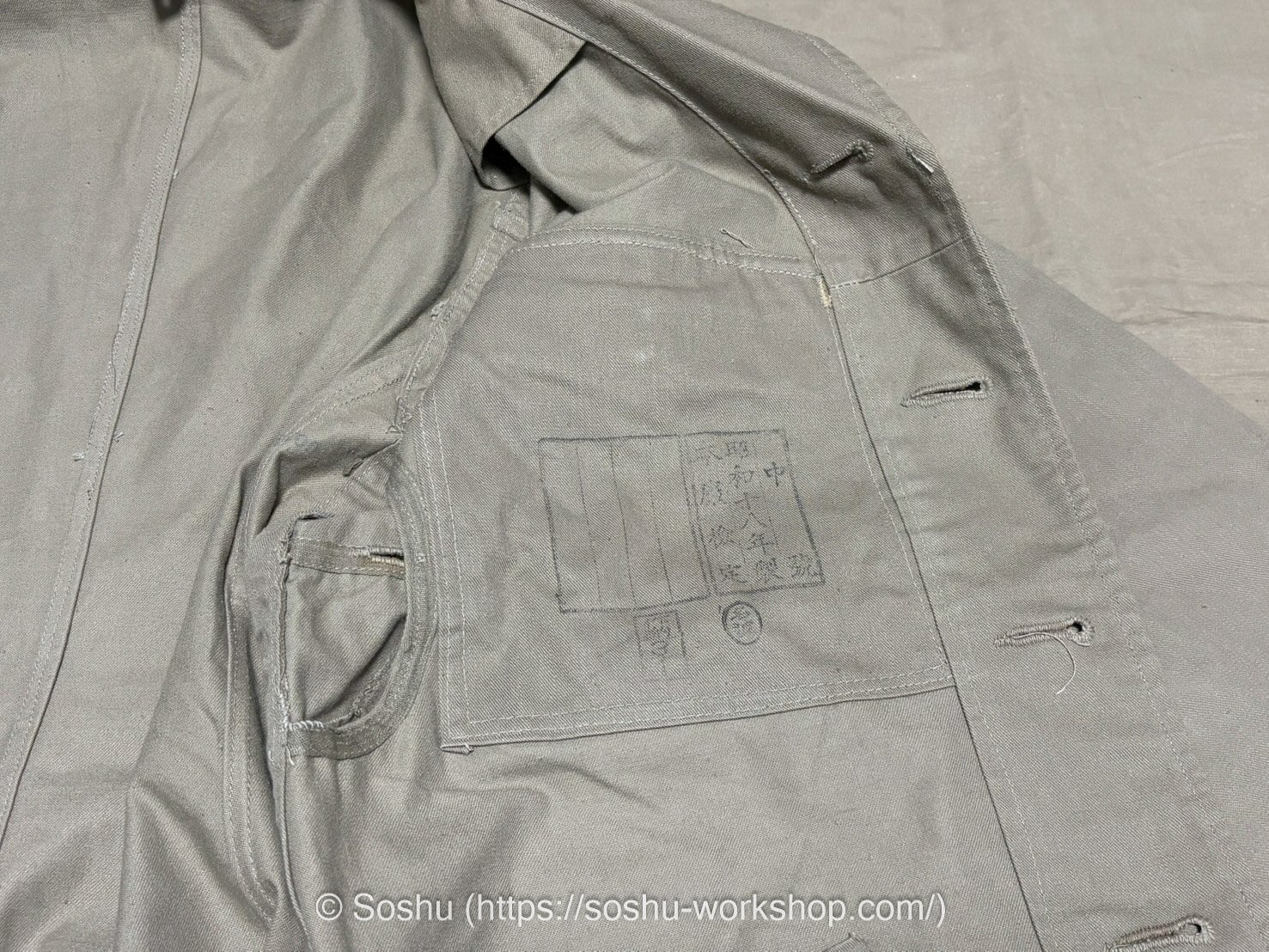
This is the inspection stamp applied inside the garment. It reads: “Medium Size, Manufactured in Shōwa 18 (1943), Army Clothing Depot Inspected.” At the time, “Medium Size” (中號) roughly corresponded to what would now be considered a size S, suitable for a body height of under approximately 160 cm.
Incidentally, although this is somewhat of a digression, it appears that the Summer Tunic was also permitted to be worn with the collar open. In the directive “Special Provisions on the Wearing of Summer Clothing Outside the Southern Operational Areas and Taiwan”3, issued in Shōwa 18 (1943) by Army Minister Hideki Tōjō, it is stated that “NCOs and enlisted men, when within barracks, shall wear the Summer Tunic with the collar open.”
This directive defined the use of summer clothing in areas other than extremely hot regions such as the southern operational zones and Taiwan. Conversely, this suggests that in such hot regions, if tropical uniforms were not sufficiently issued, there may have been cases where Summer Tunics were worn open-collared based on local discretion.
On the other hand, outside of these hot regions, the wearing of the Tropical Trousers and the Tropical Light Uniform was generally limited to within barracks, and the Summer Tunic was required for official settings. In particular, garments such as short trousers were likely discouraged in public view, possibly due to considerations of appearance and discipline.
Another interesting point is that, by modern standards, Okinawa might be considered a hot region, but at the time it was not necessarily classified as such. In photographs from the Battle of Okinawa, there are examples of Japanese soldiers wearing Summer Tunics rather than tropical uniforms, with the collars fastened—likely reflecting these regulations.
Special Provisions on the Wearing of Summer Clothing Outside the Southern Operational Areas and Taiwan
| Commissioned and Warrant Officers | NCOs and Enlisted Men | |
| Tropical Uniform | Permitted | Permitted |
| Tropical Trousers | Within barracks only | Within barracks only |
| Tropical Light Uniform | Within barracks only | Within barracks only |
| Tropical Light Trousers | Within barracks only | Within barracks only |
| Open Collar (Summer Tunic) | Not specified (presumed prohibited) | Within barracks only |
Introduction of the Replica
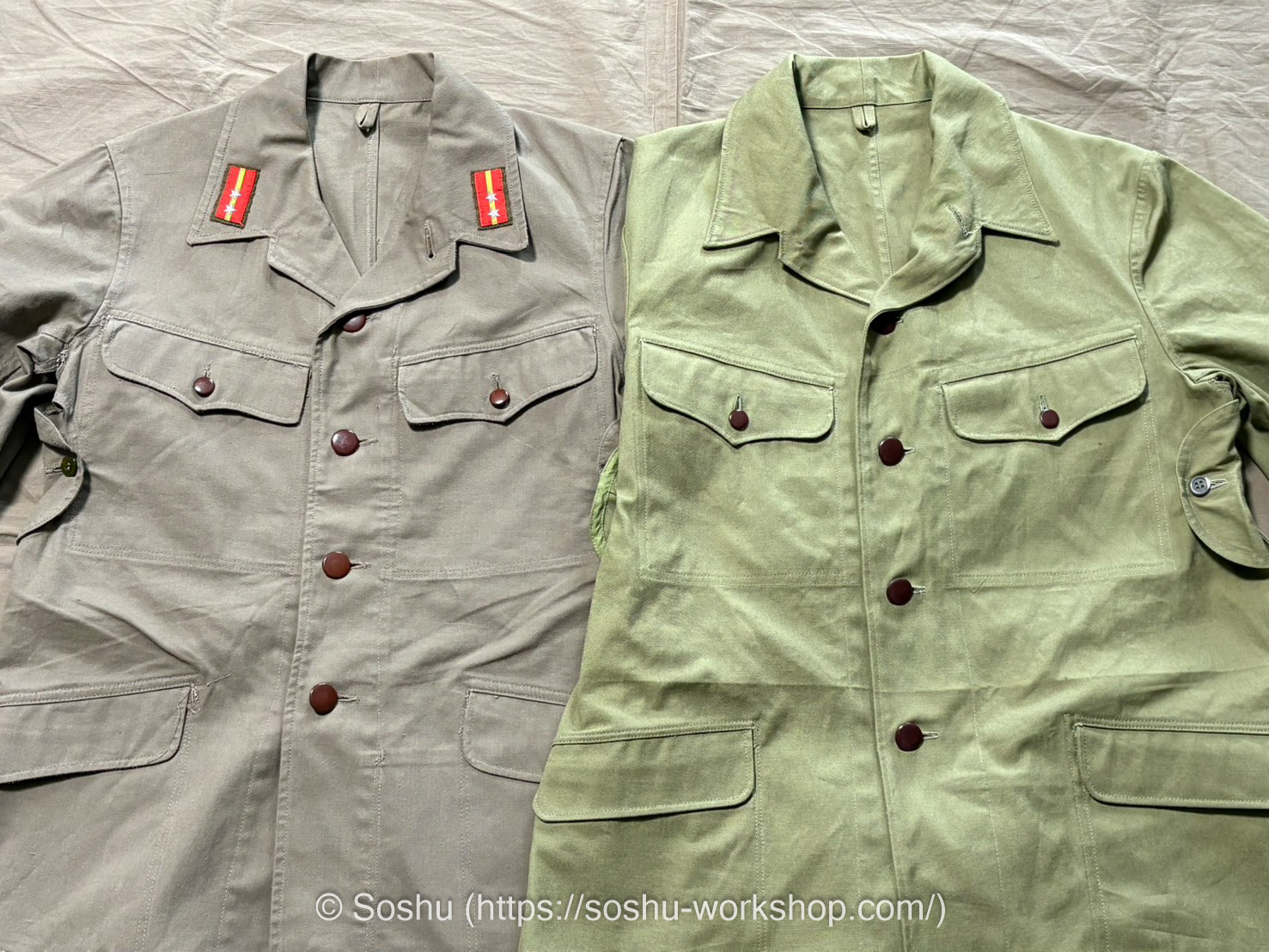
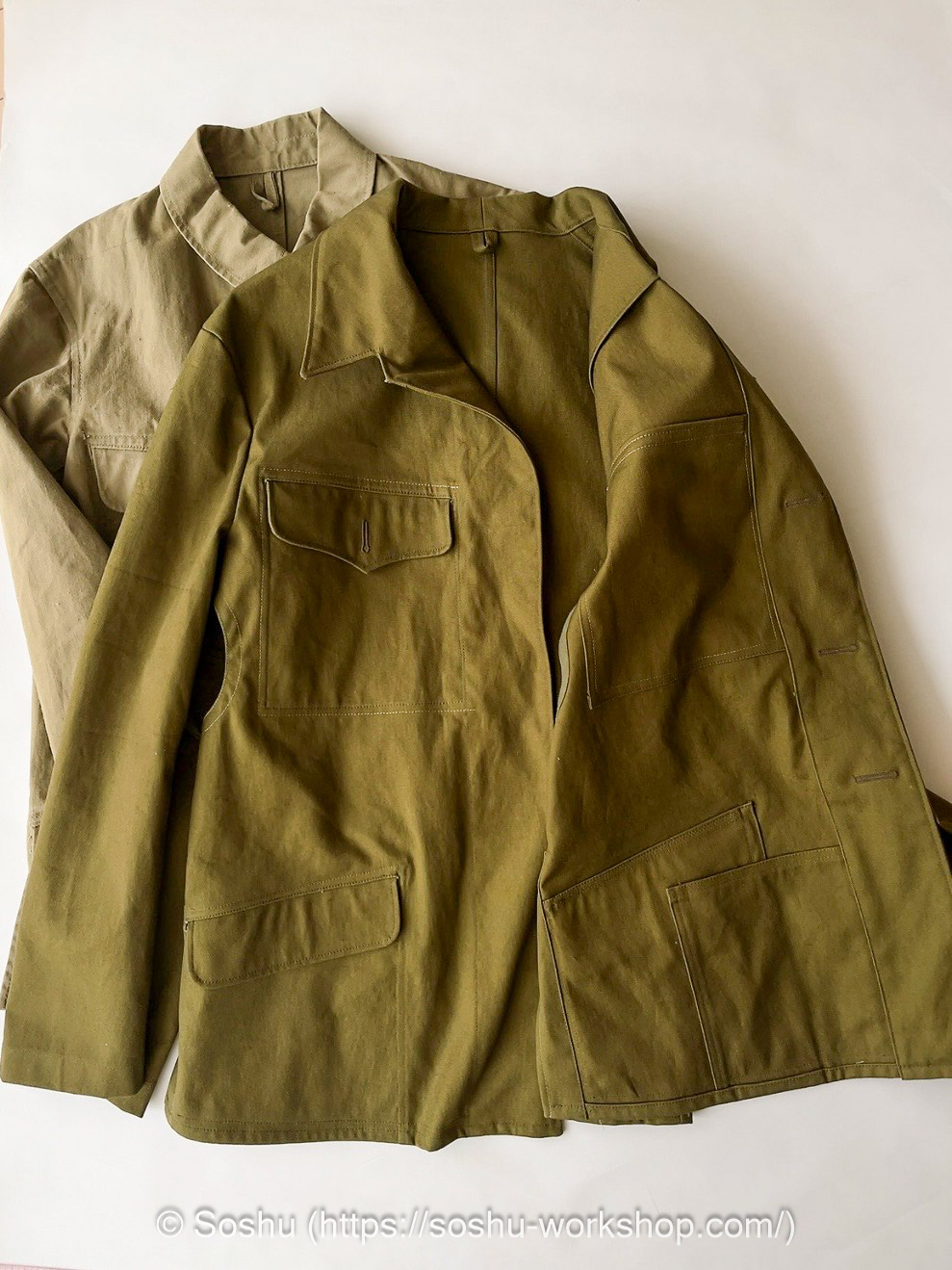
The item on the left is an authentic example, while the slightly greenish one on the right is the replica. As these are individually handmade pieces and demand is uncertain, commercially available fabric was used for this production. While we selected materials as close as possible to the original, as you can see, the result has a somewhat stronger green tone. On the other hand, the texture, weight, and thickness when handled are, we believe, quite close to the authentic example.
As for sizing, it has been made in an ML size, slightly larger than a modern Japanese M. If there is sufficient demand, we are considering offering an LL size as well, though this would require creating new patterns from scratch and may take some time.
If you fall within the following measurements, the ML size should fit without issue:
- Height: 166–176 cm
- Shoulder width: 45 cm
- Garment length: 67 cm
- Hip circumference: 109 cm
- Sleeve length: 59 cm
- Sleeve length (from center back): 82 cm
“Sleeve length (from center back)” refers to the measurement from the center of the back of the neck (base of the collar), over the shoulder, to the wrist bone on the little finger side. When choosing a size, please prioritize this measurement over standard sleeve length. Measuring a well-fitting jacket laid flat will help you determine the most accurate fit.
The planned LL size will have a shoulder width of 48 cm and is intended for individuals approximately 176–184 cm in height.
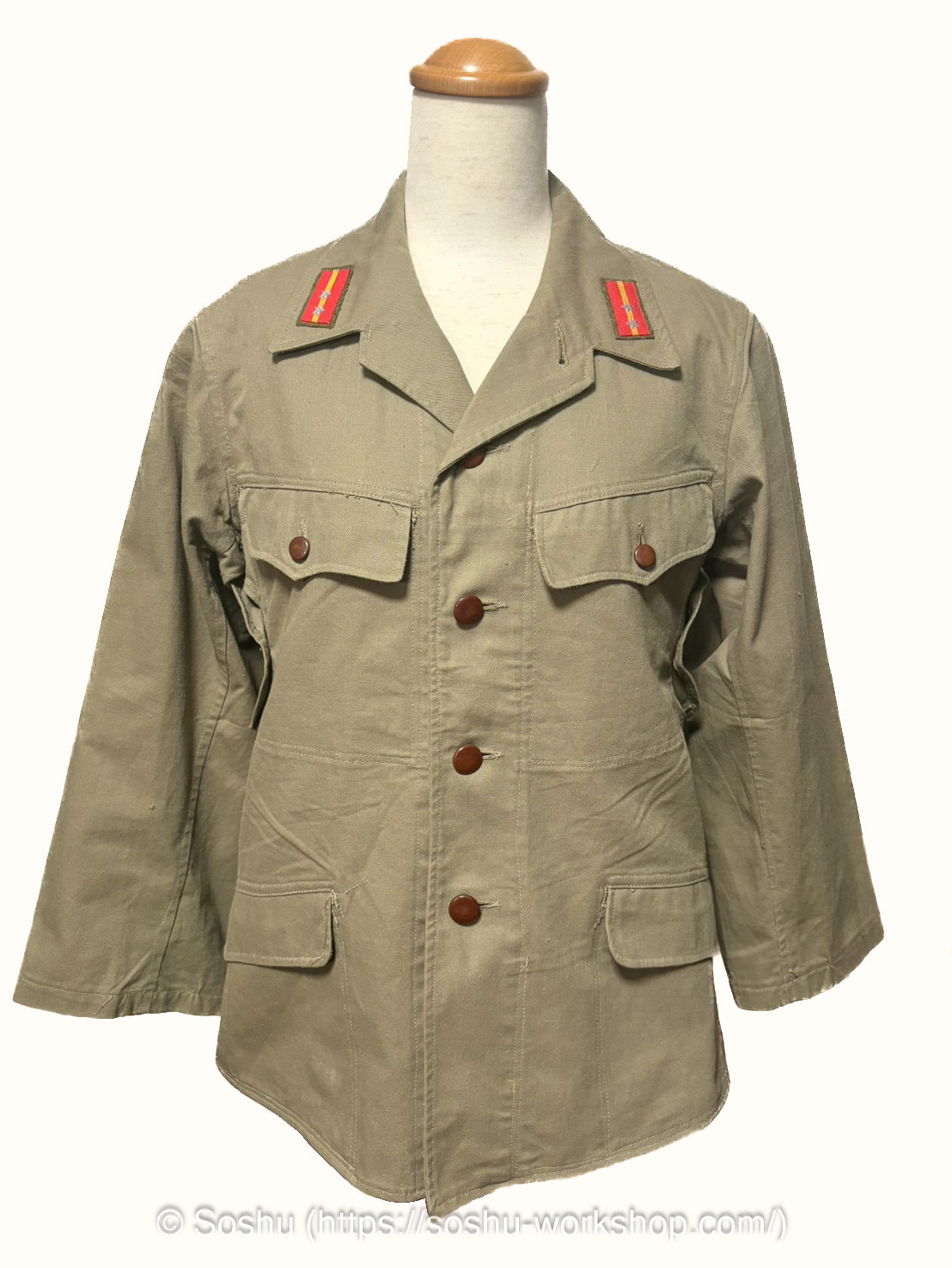
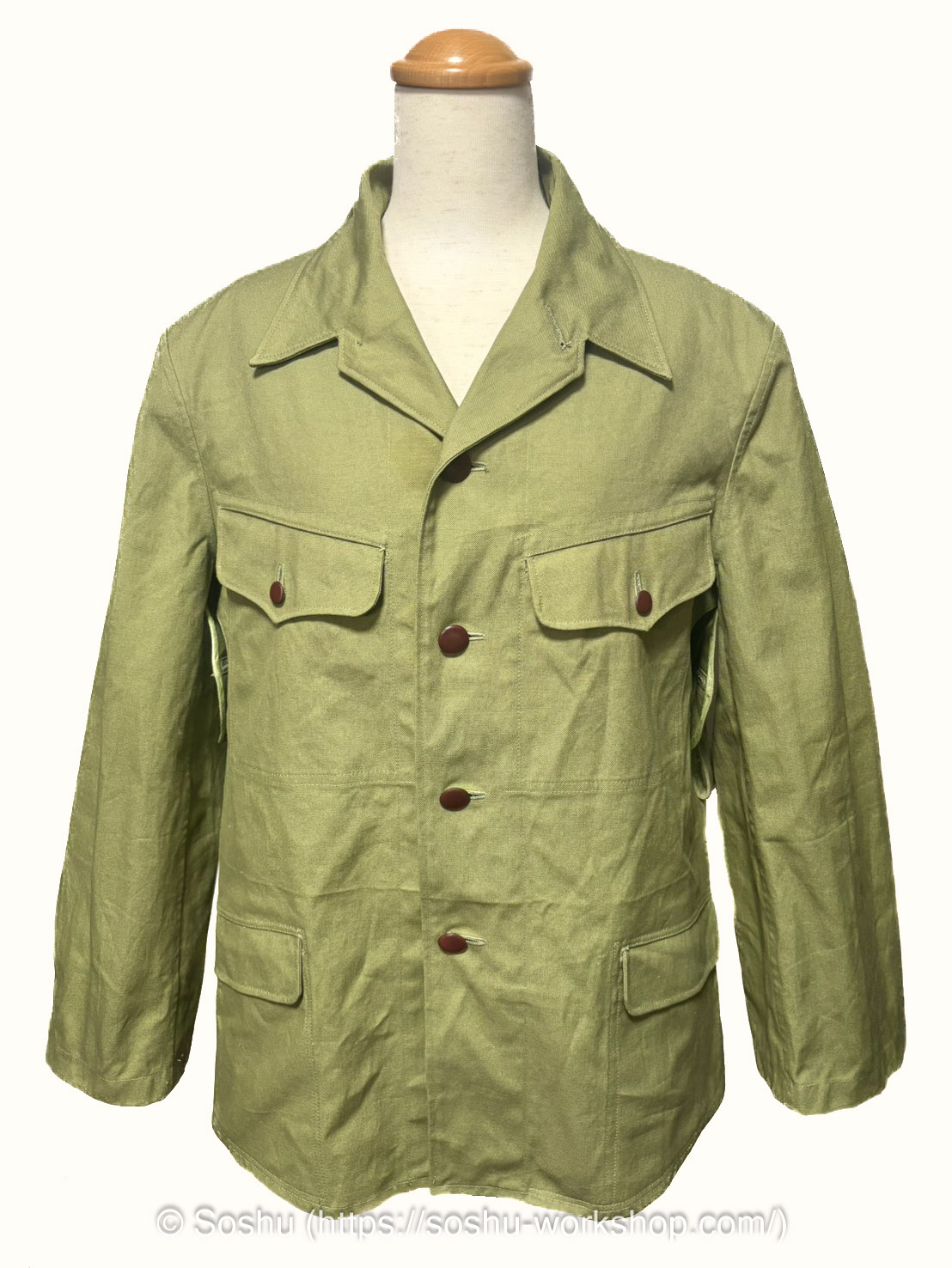
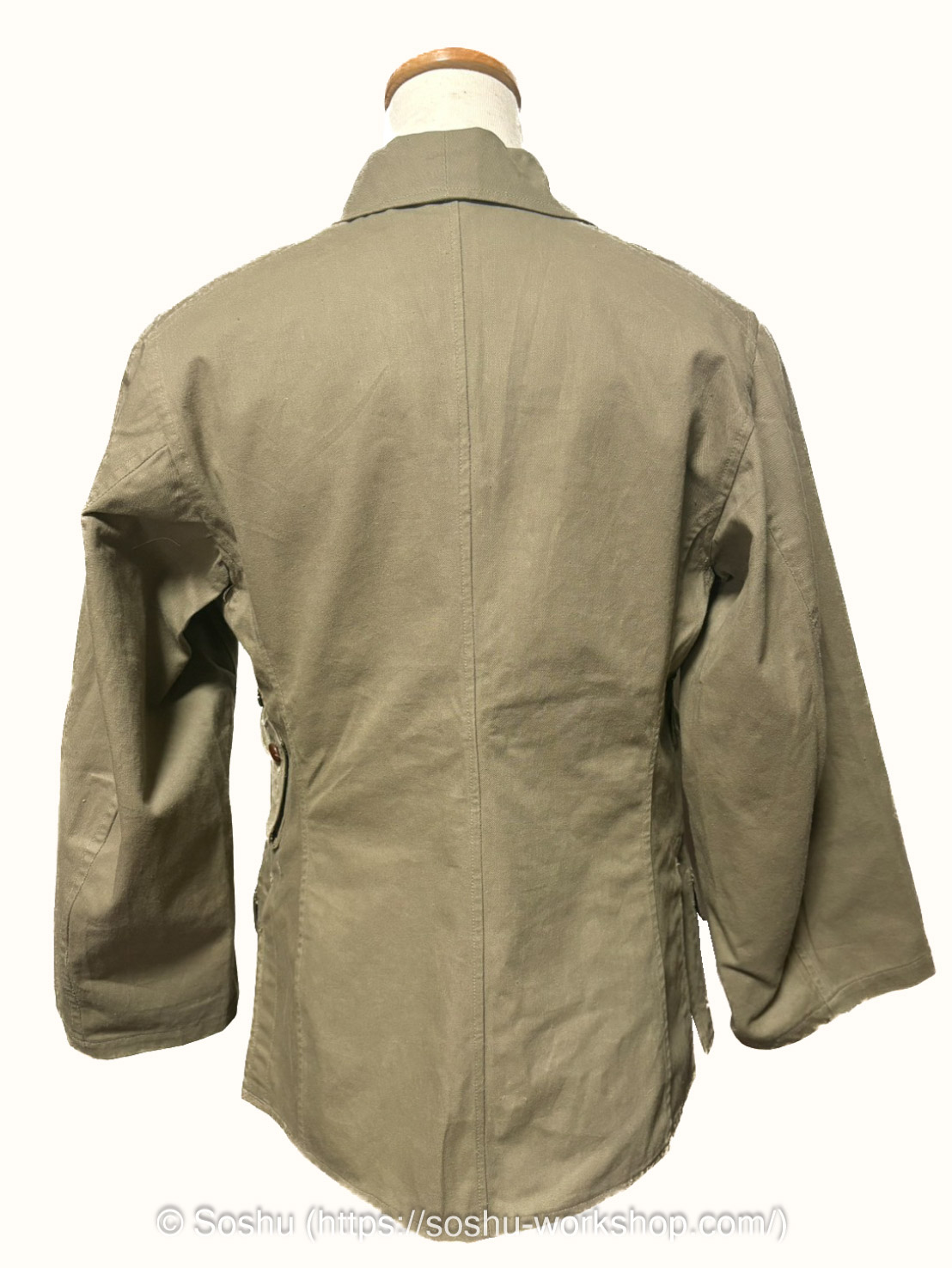
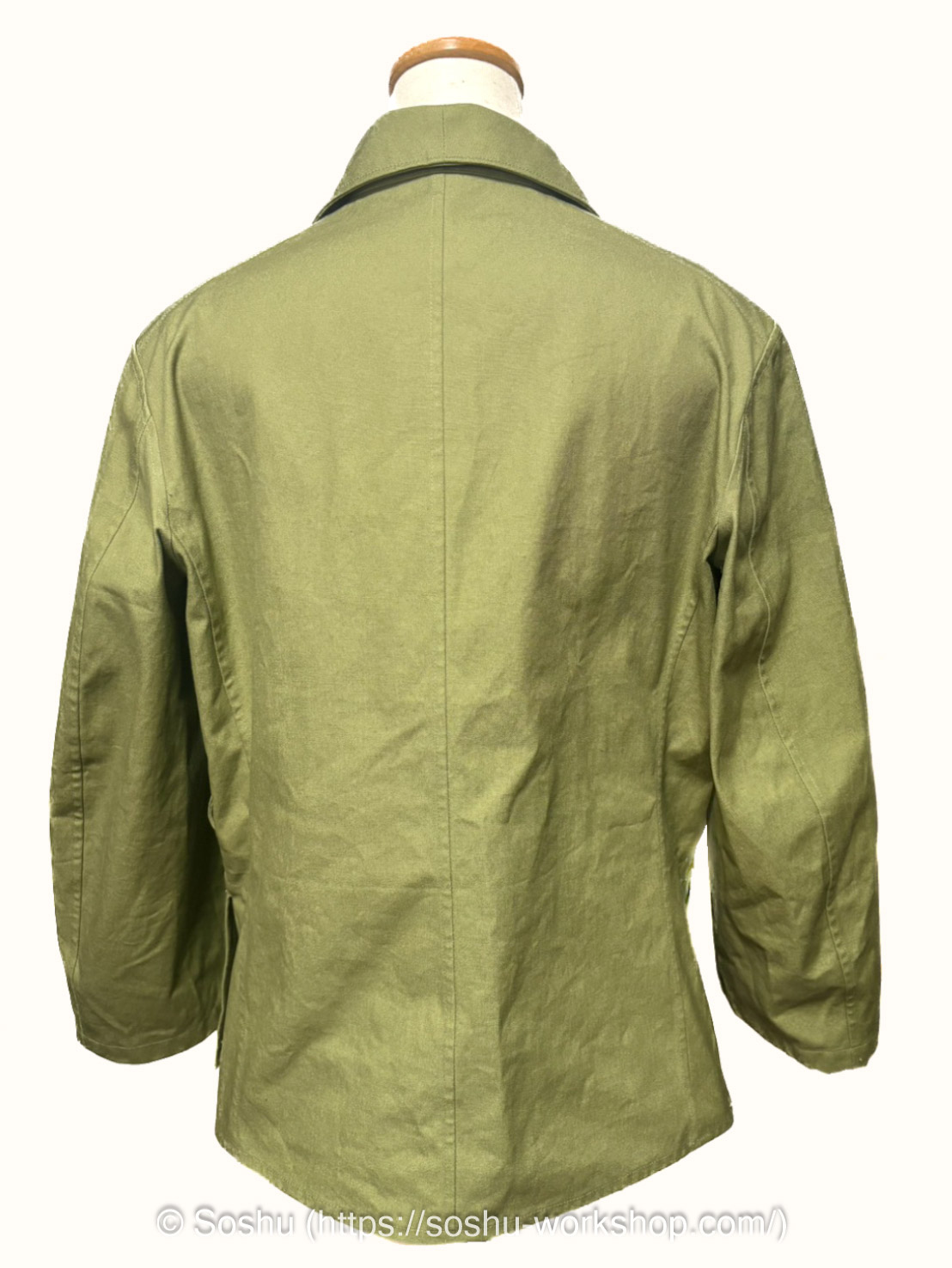
While striving to reproduce the original silhouette as closely as possible, some aspects have been intentionally modified to improve wearability.
The sewing has been done more carefully than on the authentic examples. Original pieces often show skipped stitches, uneven seams, and left–right asymmetry, which may reflect a decline in skilled labor around Shōwa 18 (1943).
The buttons are 3D-printed (material: ABS). They have high heat resistance and will not deform under conditions such as being left inside a car in summer. As introduced in a separate article, they are finished with four coats of paint, including the base layer, followed by careful polishing, so the finish will not easily wear off through light abrasion.
We hope they will be actively worn and used, for example in airsoft games, where they will develop greater character over time. They can be washed, but please avoid using a dryer, as it may cause shrinkage.
The price is 30,000 yen.
To place an order, please follow my sister’s account on X and contact her via direct message.
If you order directly without going through a marketplace site, shipping within Japan will be covered by us.
For international shipping, however, the cost is high, so we kindly ask that it be borne by the customer.
As my sister and I live in different locations, combined shipping with items I list is not available. However, for overseas customers, I can combine shipping with my other items upon request, so please let me know.
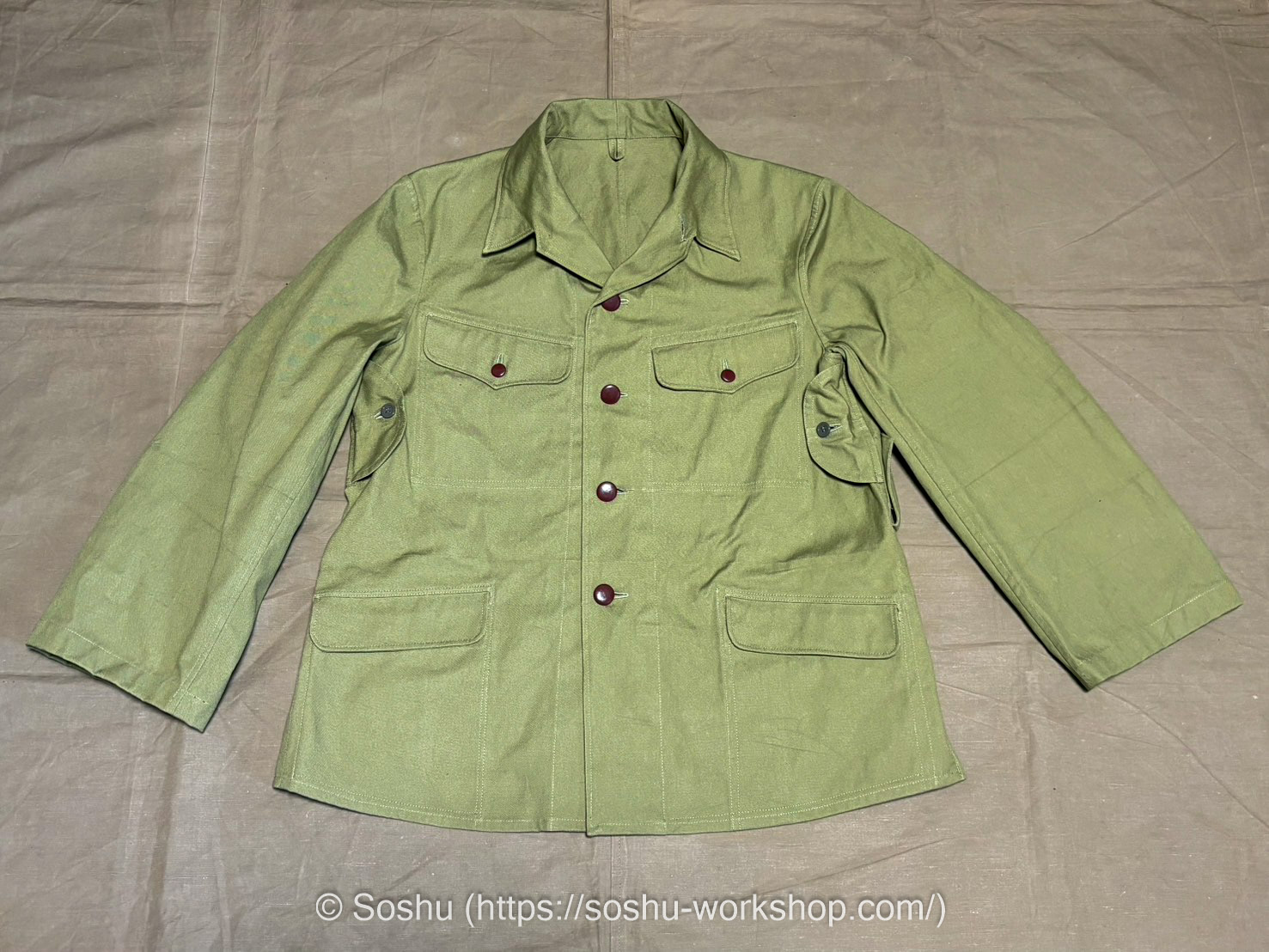
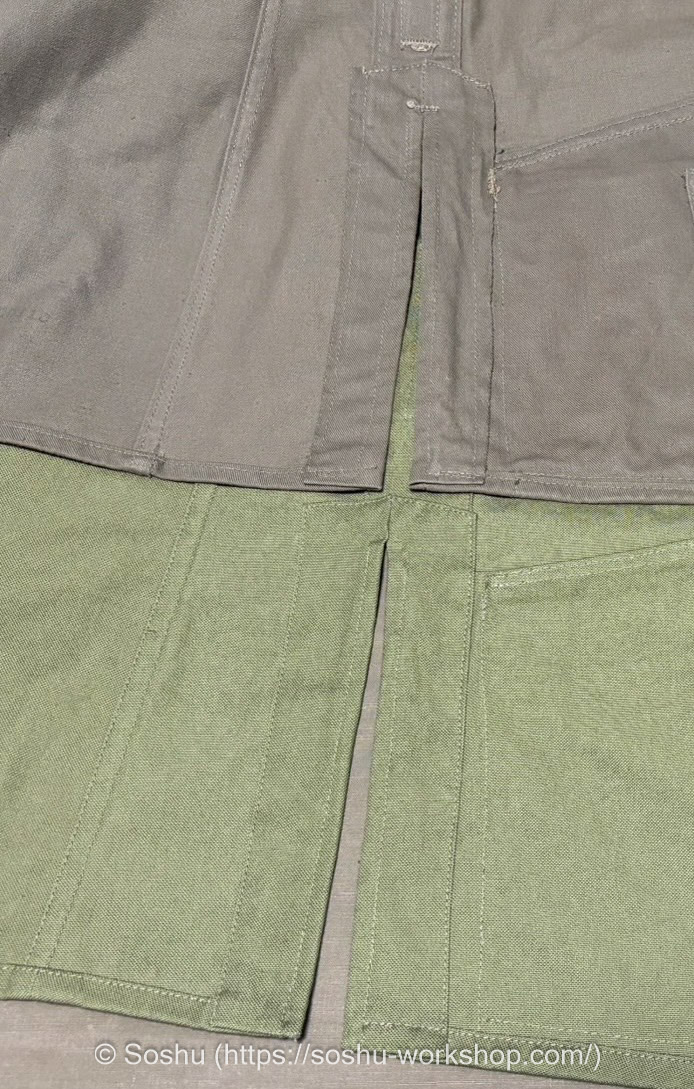
In fact, as we are not fully satisfied with the color tone, we also produced another version using a different fabric. The item on the left is an authentic Type 98 Summer Tunic, and the one on the right is the replica. Although this version has a slightly darker tone, the overall color impression is closer to the original.
With wear and fading from sunlight, it may develop an even more authentic appearance over time. If you prefer this color variation, please let me know when placing your order. The price remains the same.
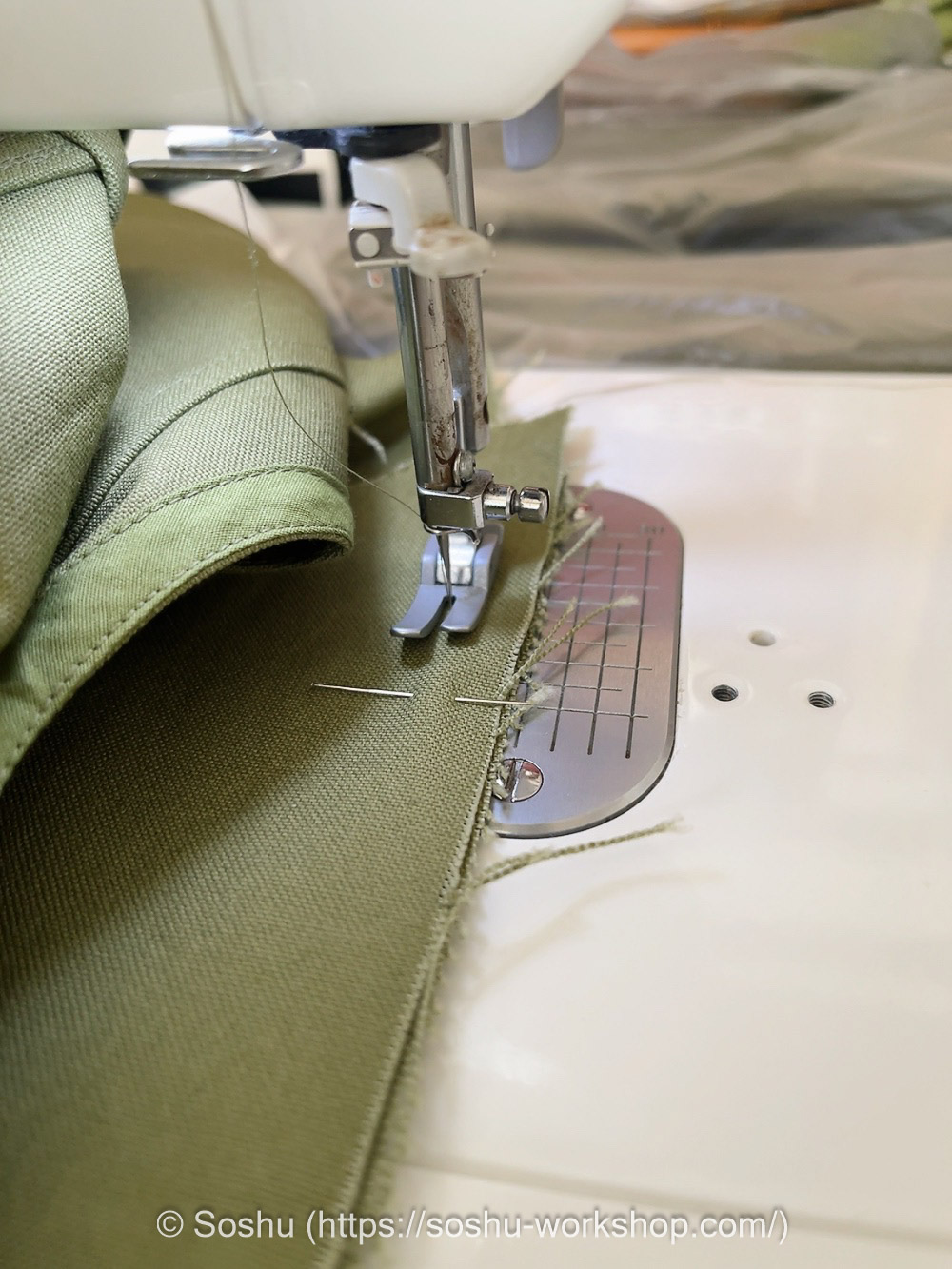
Production Process
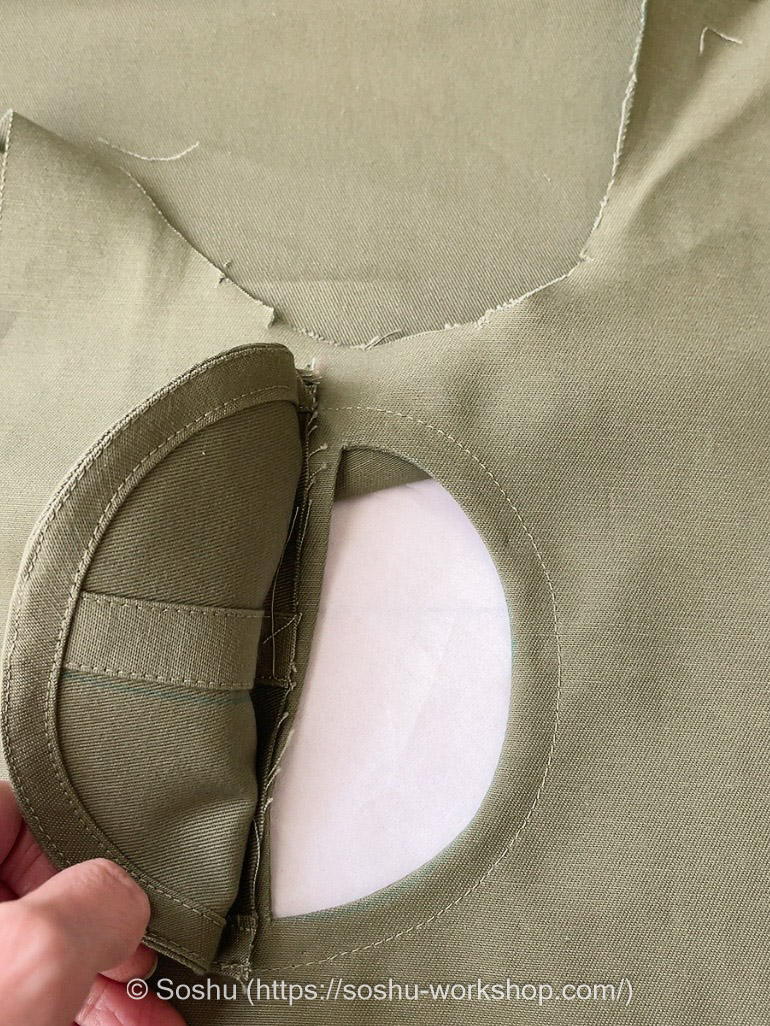
The flaps covering the side ventilation openings are sewn in a rather complex manner, and I’m told that reproducing them required considerable effort.
Footnotes
- “Revising standards regarding clothing and accessories according to Army Uniform System, Article 5” JACAR (Japan Center for Asian Historical Records), Ref.C01001561600, Eizon Documents, Class A, Category 1, 1938 (National Institute for Defense Studies) ↩︎
- “No. 3: Army Directive No. 18 – Partial Amendment to Army Directive No. 8 of 1930, April 1, 1942” JACAR (Japan Center for Asian Historical Records), Ref.C13070890900, Compilation of Army Official Documents (Army Directives), April 1, 1942 – January 22, 1944 (National Institute for Defense Studies) ↩︎
- “Army notification No. 44 Special exceptions about summer clothes wearing except south military operation place and Taiwan are fixed as left” JACAR (Japan Center for Asian Historical Records), Ref.C11110065700, 62nd Division Bulletin Compilation (Received by Independent Rapid-Fire Gun Battalion No. 22) (National Institute for Defense Studies) ↩︎