In this article, I introduce the Light Barbed Wire Cutter Pouch, Type Otsu. In old-form kanji it is written as “軽鐡條鋏携帯袋”, though I use the modern characters throughout this article. It is worth noting that even in primary sources from the period, the character “鐡” is sometimes written as “鉄”.
The Light Barbed Wire Cutters are classified as close-combat equipment. Among the items in this category are combat-oriented tools such as shields, mine detectors, and flamethrowers. The presence of equipment such as electric-proof gloves, electric-proof boots, the Type 98 electric-proof gear, and the Type 98 voltage detector suggests that countermeasures against electrified barbed wire were also taken into consideration. This primary source1 lists the close-combat equipment along with their unit purchase prices, and makes for useful reference.
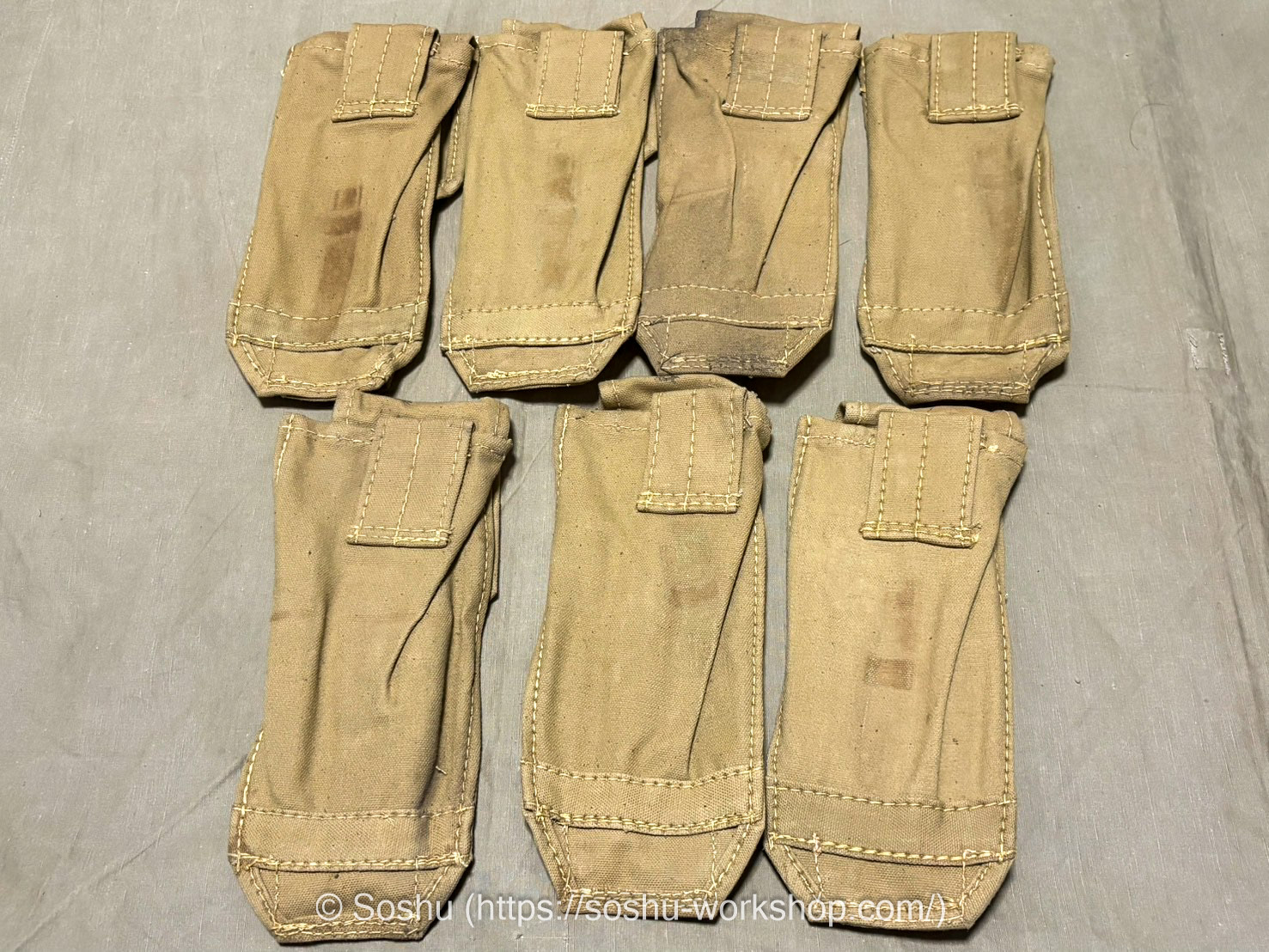
Pictured below are the Light Barbed Wire Cutter Pouches I am introducing today. The slightly yellowish one on the far right is a replica made by Nakata Shōten; the rest are originals. It seems a substantial lot of these pouches was recently discovered, and they have been appearing frequently on Yahoo! JAPAN Auction. I purchased one, and the seller appeared to be outside their area of expertise when it came to military items — they seemed to be struggling to move the stock — so I took the remainder off their hands. I currently have seven pouches in my possession.
With items like these, if you don’t acquire them while they’re available, you’ll find yourself regretting it years later when it’s too late. The standard approach is to buy when the opportunity presents itself.
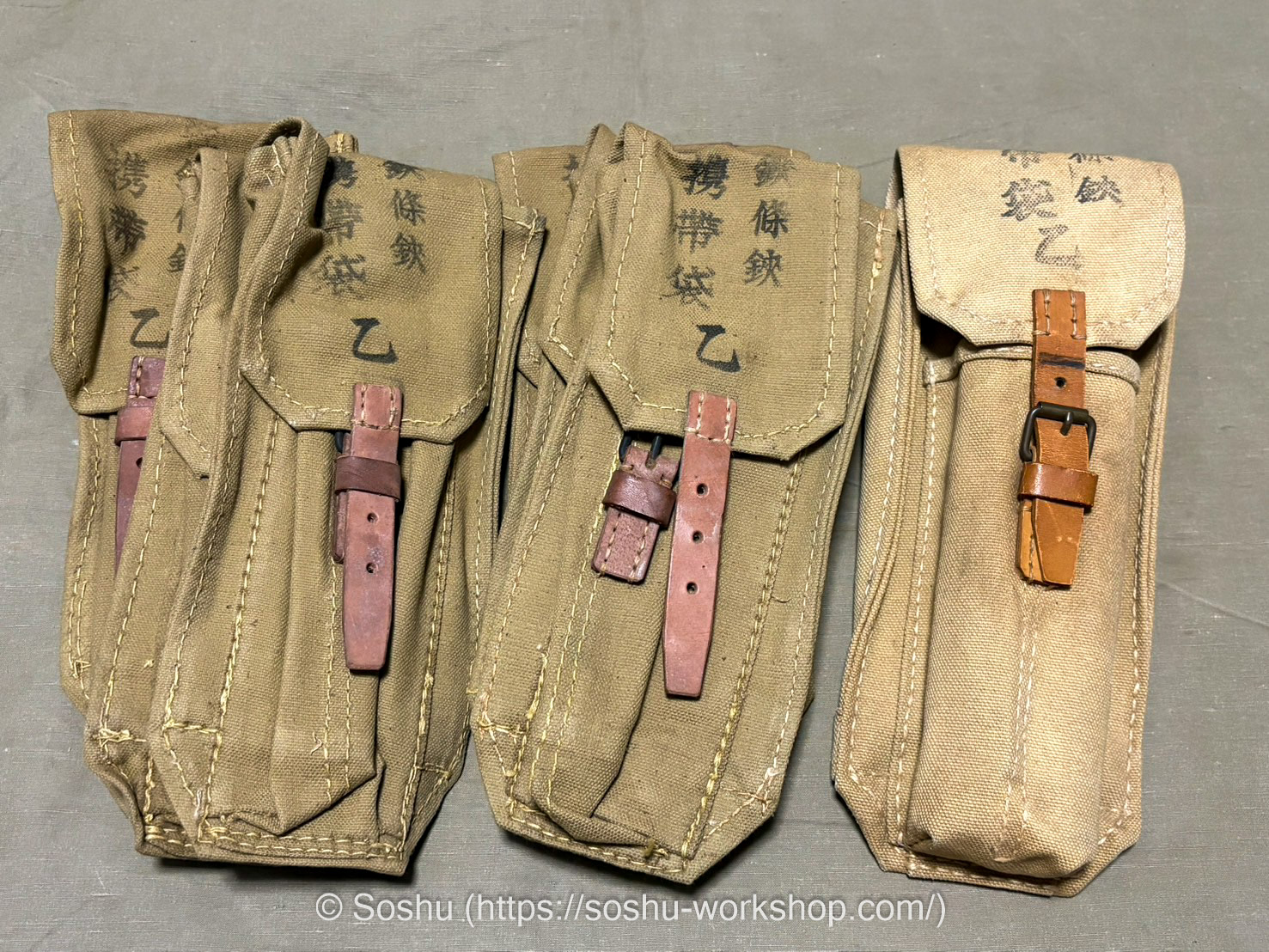
Here I have laid out all the pouches side by side. They appear to have been stored stacked on top of one another, as some have impressions left by the leather straps of other pouches on their reverse side.
In addition to the Type Otsu Light Barbed Wire Cutter Pouch introduced here, there is also a Type Ko, which features a pocket on the left side for storing the spanner used to replace the blades.
The Light Barbed Wire Cutters are said to have been issued at a rate of roughly one per infantry squad. A weapons strength table from a certain company, dated May 19442, is particularly interesting in that it records which weapons and equipment each individual soldier in every platoon and squad was carrying. According to this record, the company had five Type Ko, twenty-four Type Otsu, and one Type 93 Light Barbed Wire Cutters. The company’s crew-served weapons consisted of ten Light Machine Guns, nine Grenade Dischargers, and three heavy machine guns. The 1st through 3rd Platoons appear to have been rifle platoons, with each squad issued two to three Light Barbed Wire Cutters. Looking at the ranks of the soldiers equipped with them, they appear to have been carried by enlisted men regardless of rank — privates second class, privates first class, and superior privates alike.
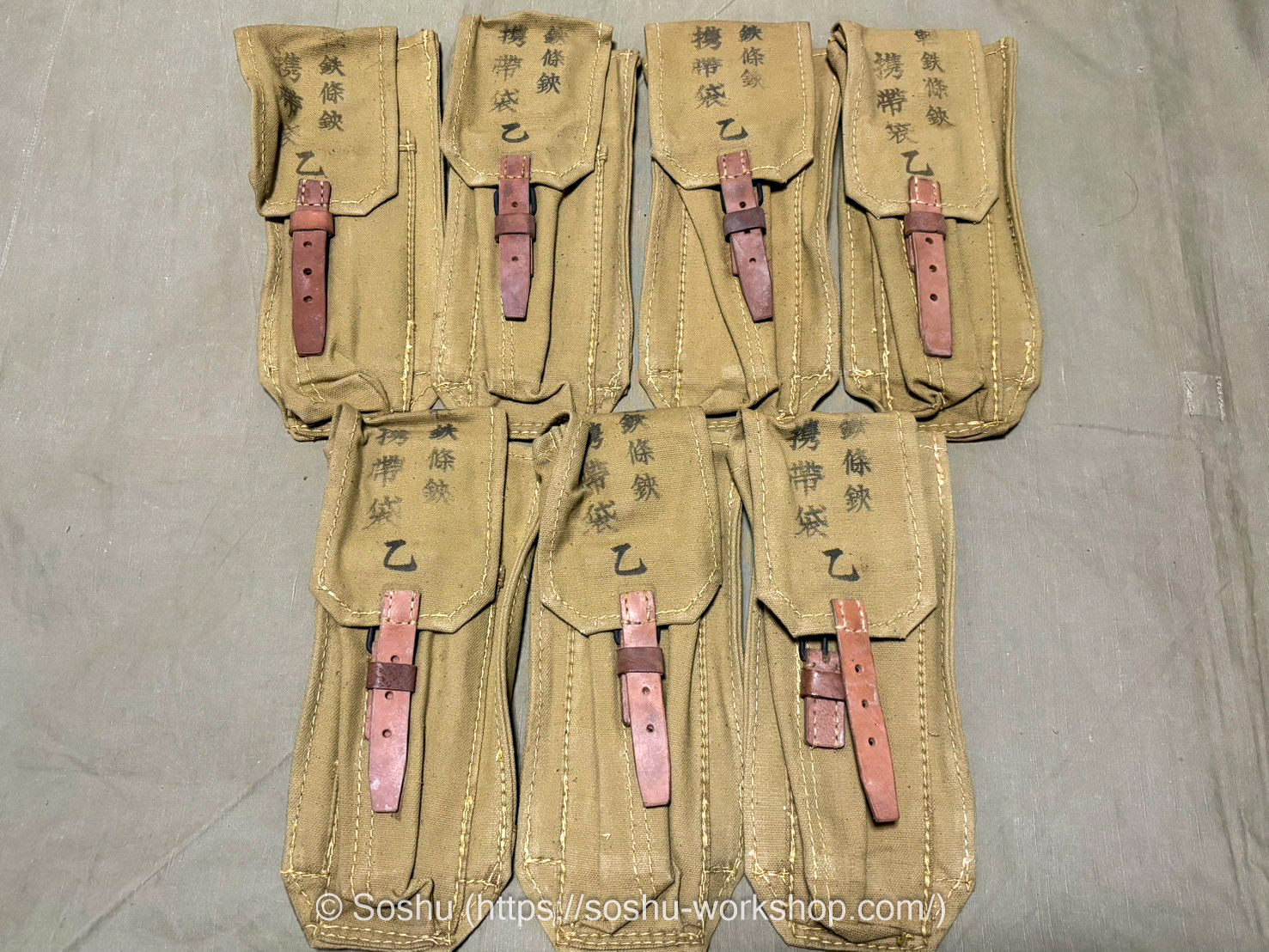
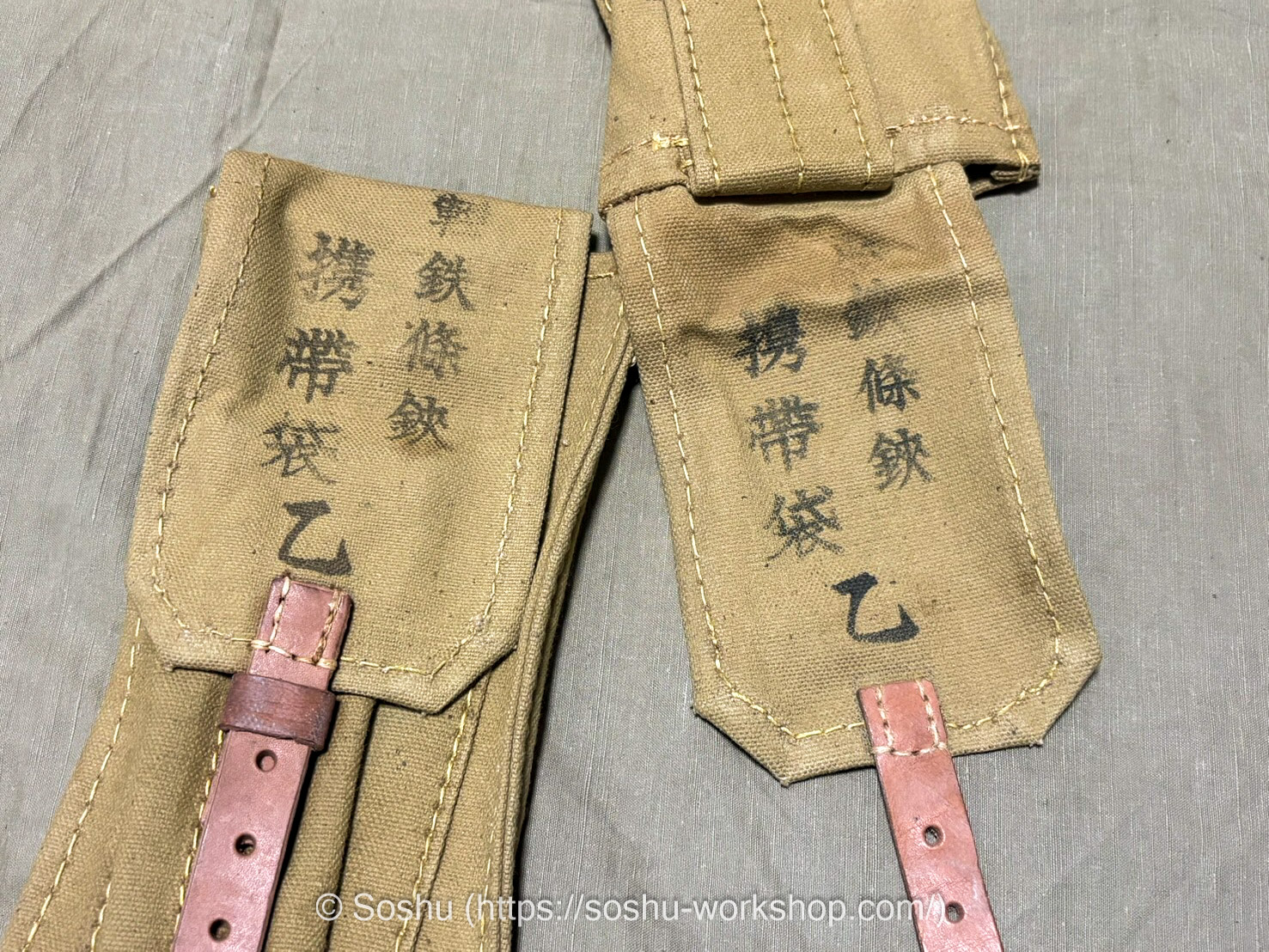
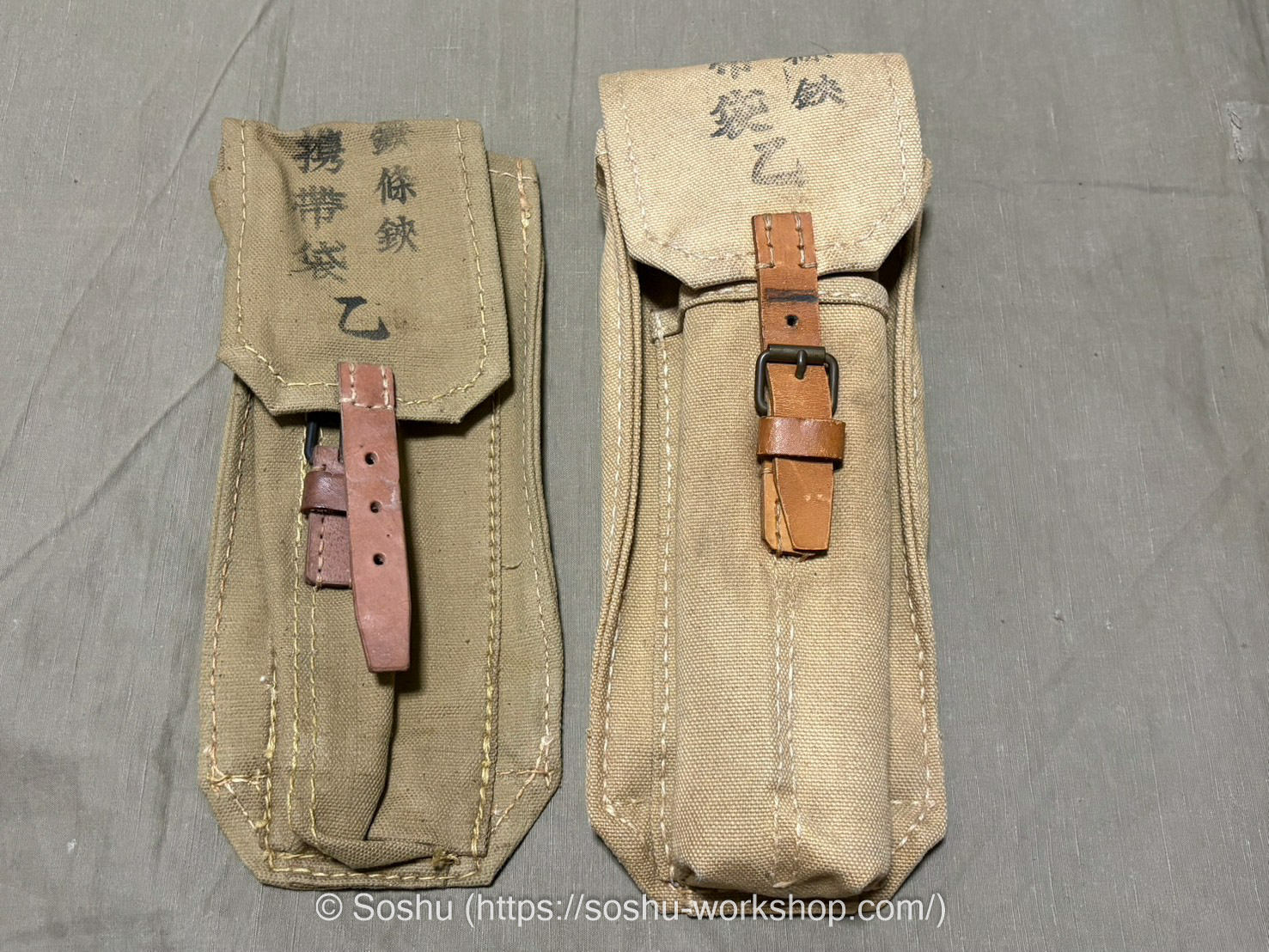
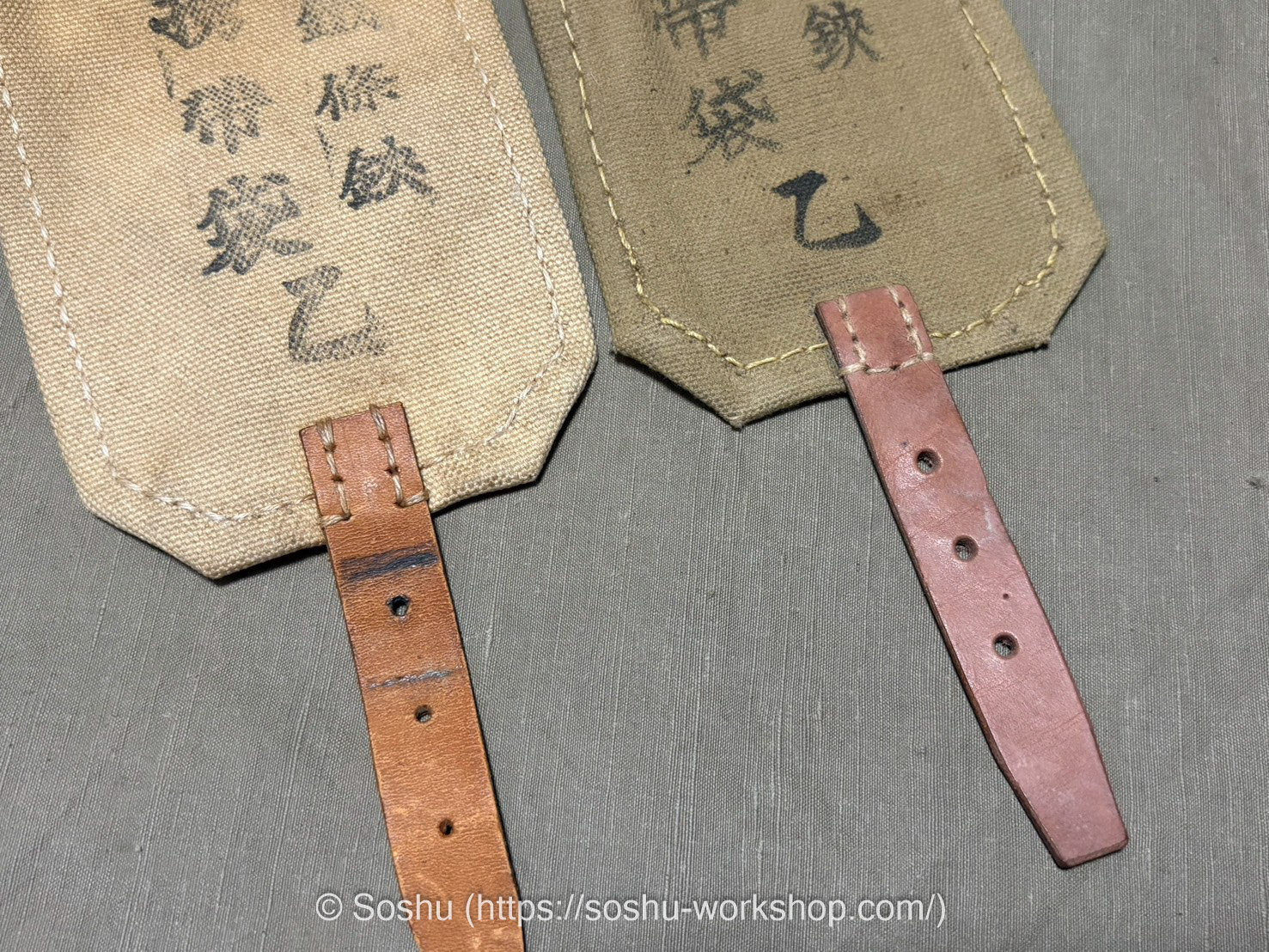
The flap is marked with the text “軽鉄条鋏携帯袋乙”. As the lettering is identical across all examples, it appears to have been applied with a stamp. On many of the pouches, the character “軽” has faded considerably.
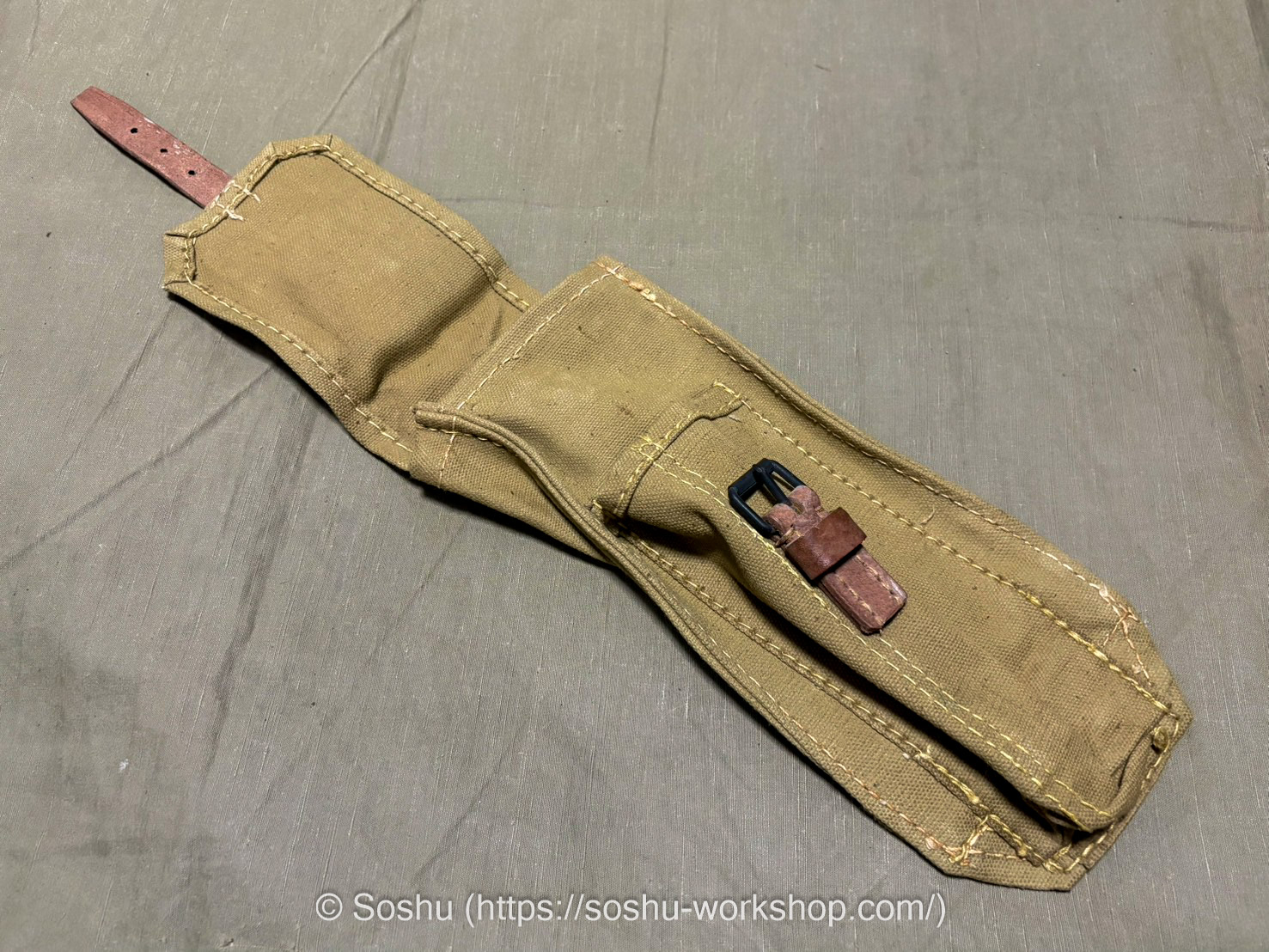
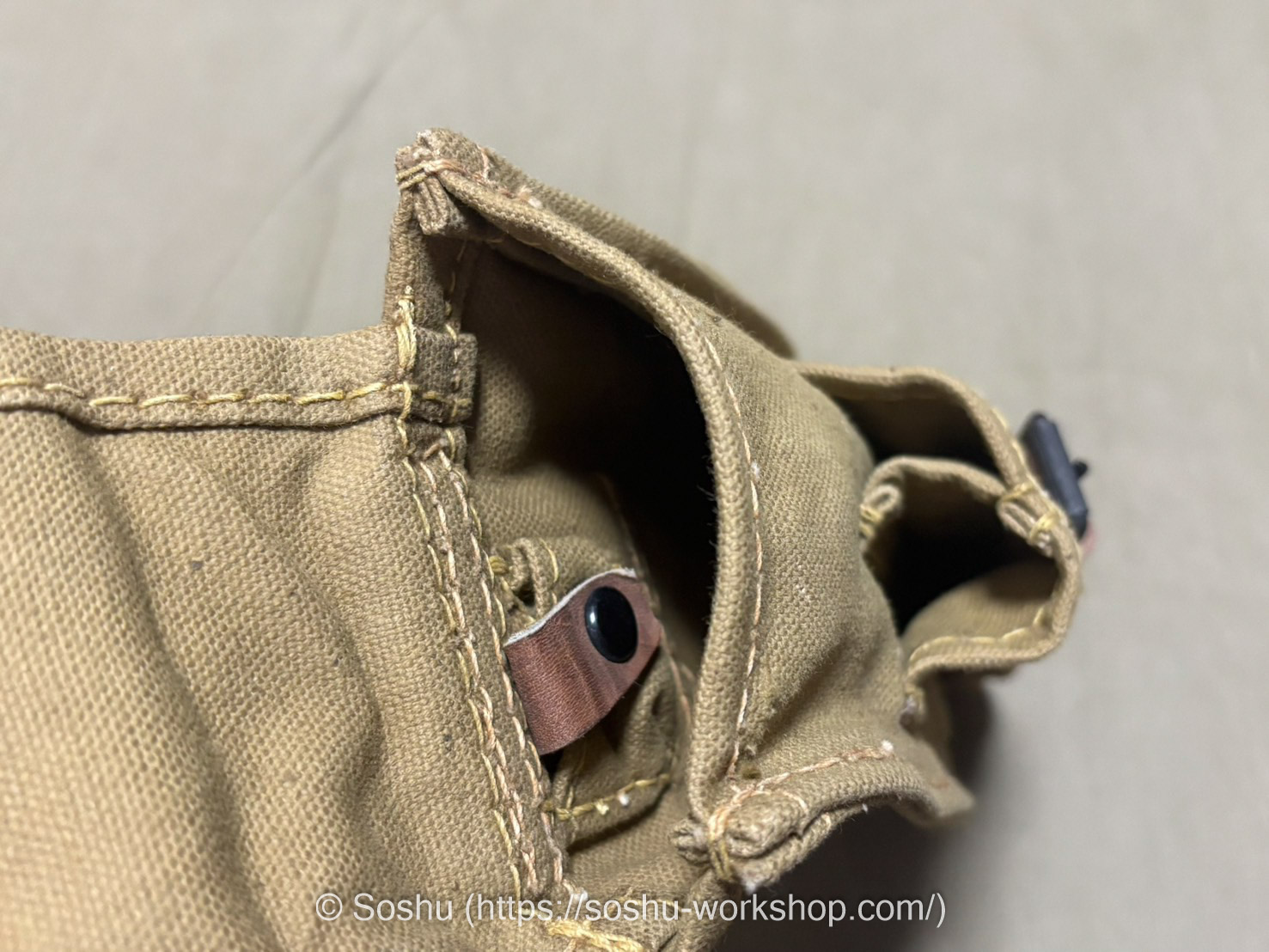
Inside there is a small pocket, used to store spare blades for the cutters.
Here I compare the originals with the Nakata Shōten replica. The one with the yellowish canvas is the replica. The size and shape are very well done.
There are two differences visible at a glance: one is the way the leather strap is sewn on, and the other is the buckle — on originals it is iron, while on the replica it is brass. Buckles on original pouches and carriers of this type are generally iron, though most replicas are made with brass.
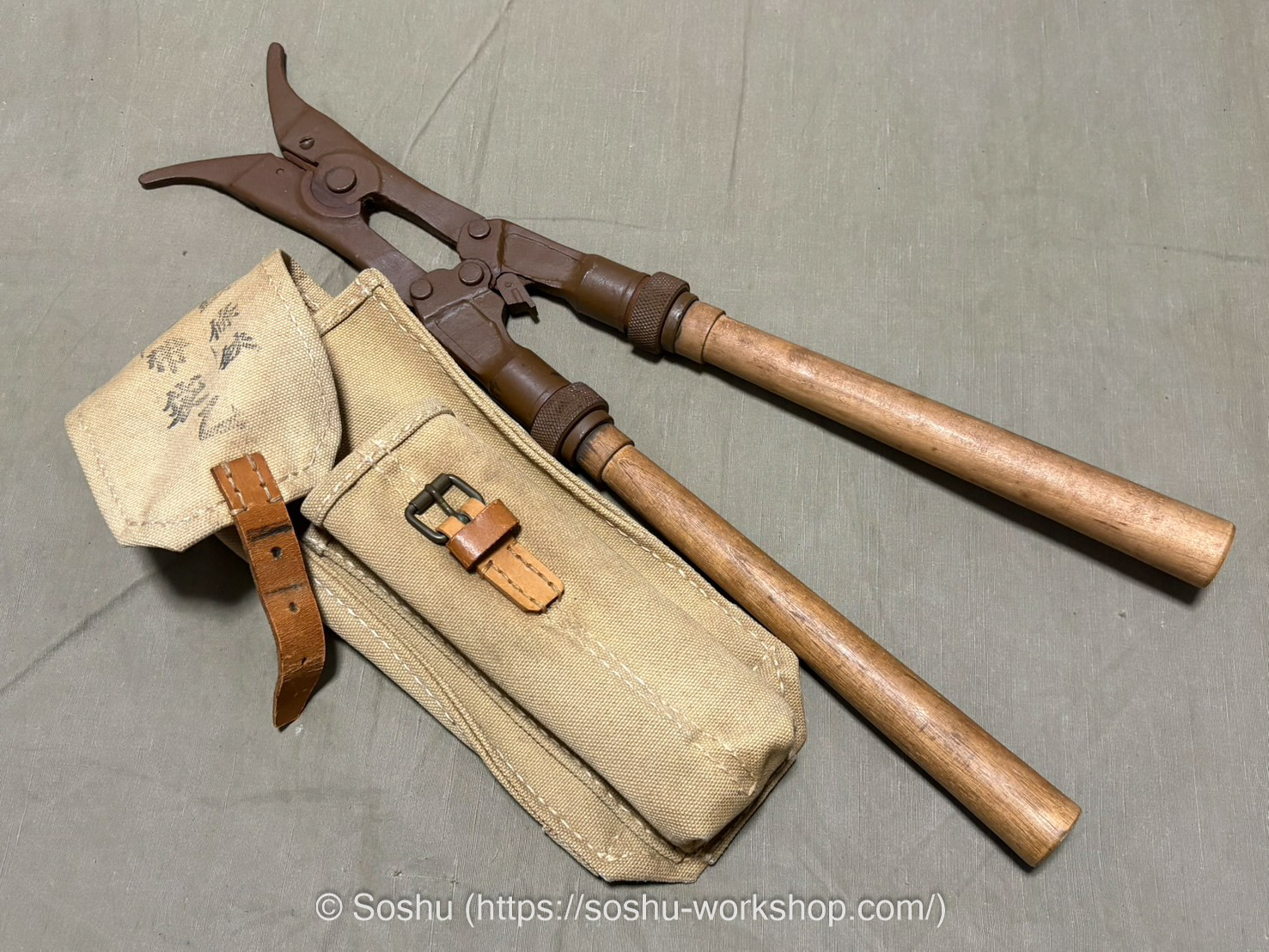
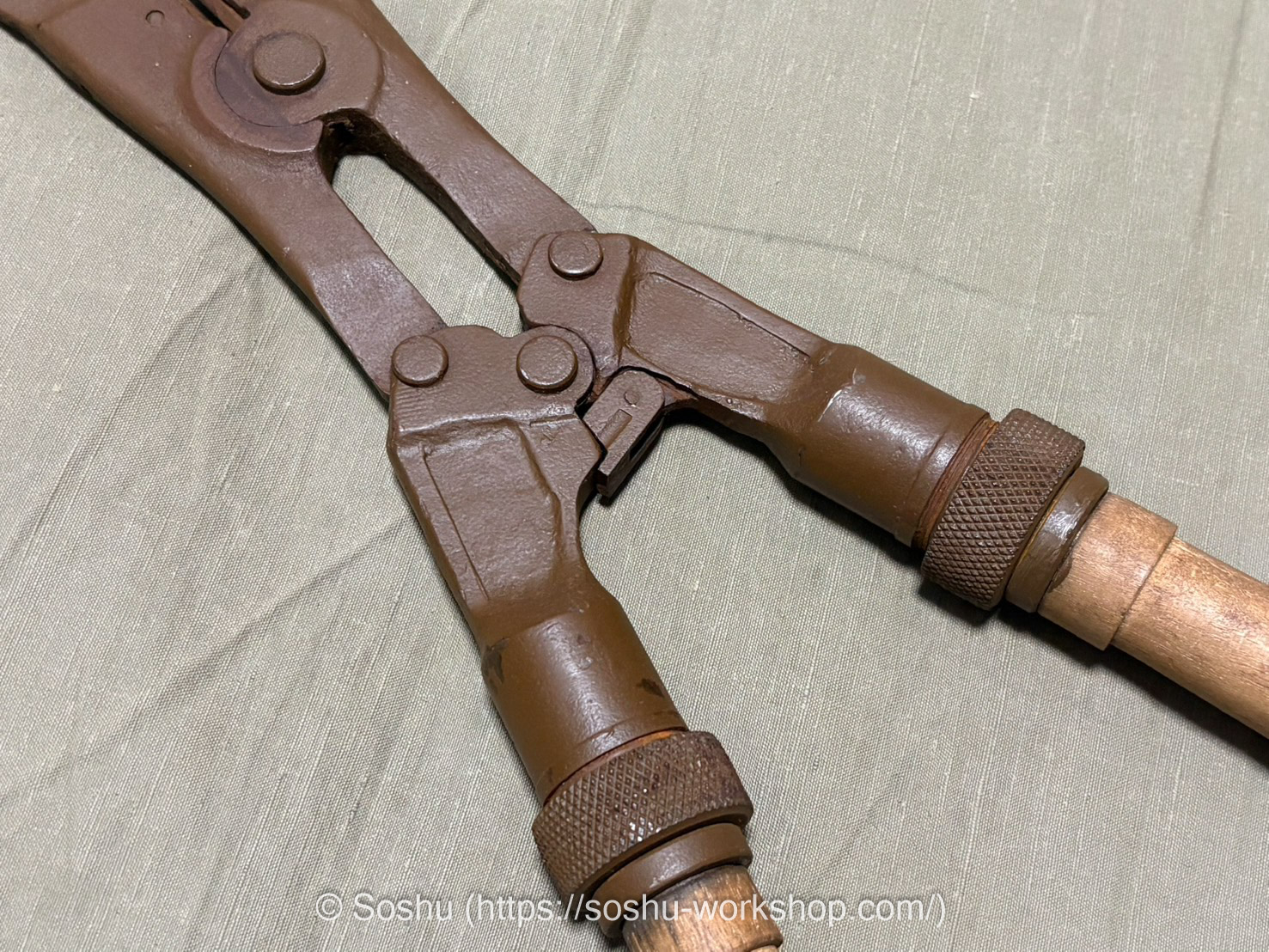
The Nakata Shōten replica comes with a set of Light Barbed Wire Cutters included. I have come across original Light Barbed Wire Cutters at auction on a few occasions, but they were well beyond the tens-of-thousands-of-yen range, so for now I am content with the replica.
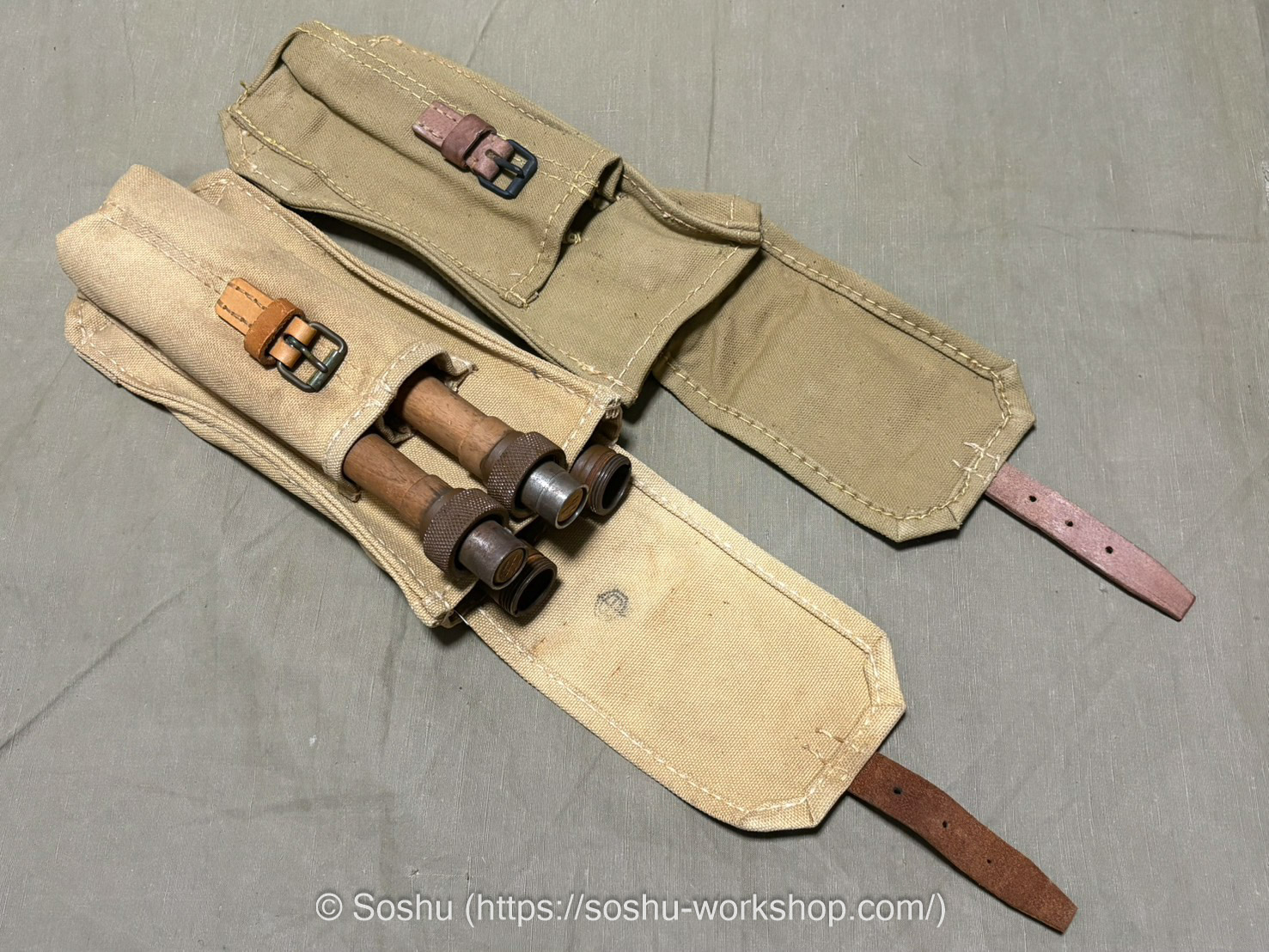
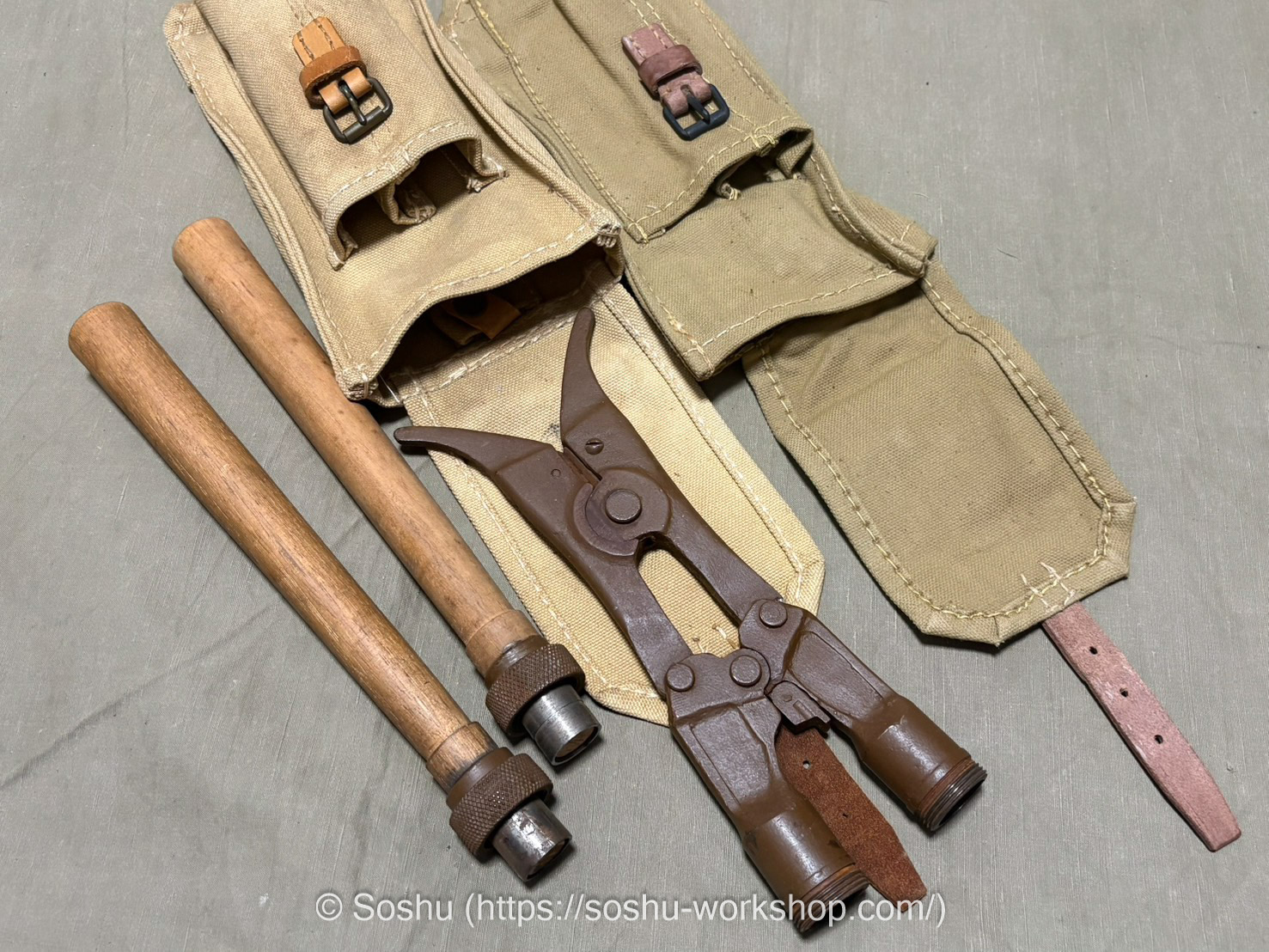
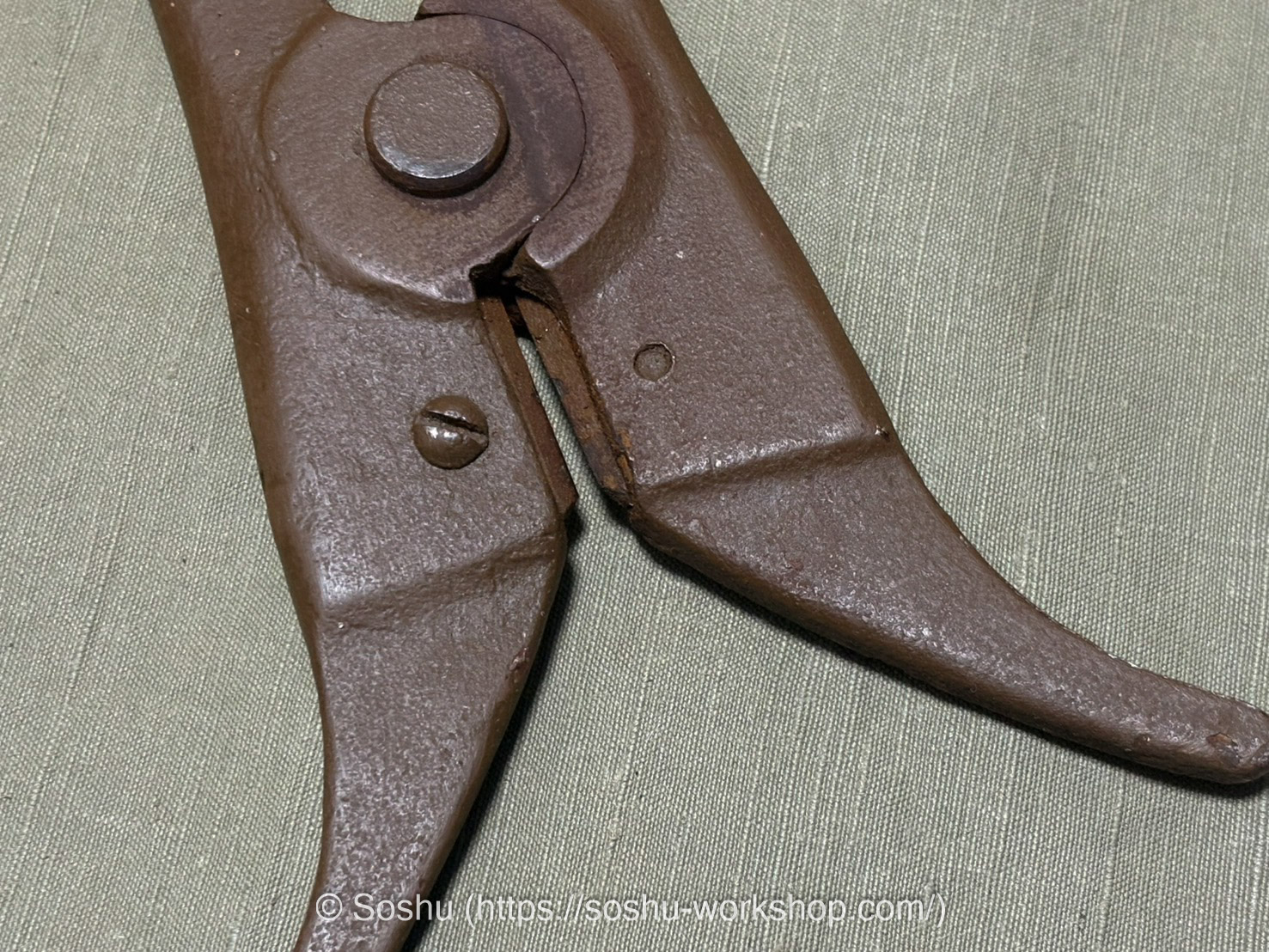
Loosening the screw at the tip of the cutters allows the blades to be replaced. As this is a replica, the blades are not sharpened, and it is not possible to actually cut wire with them.
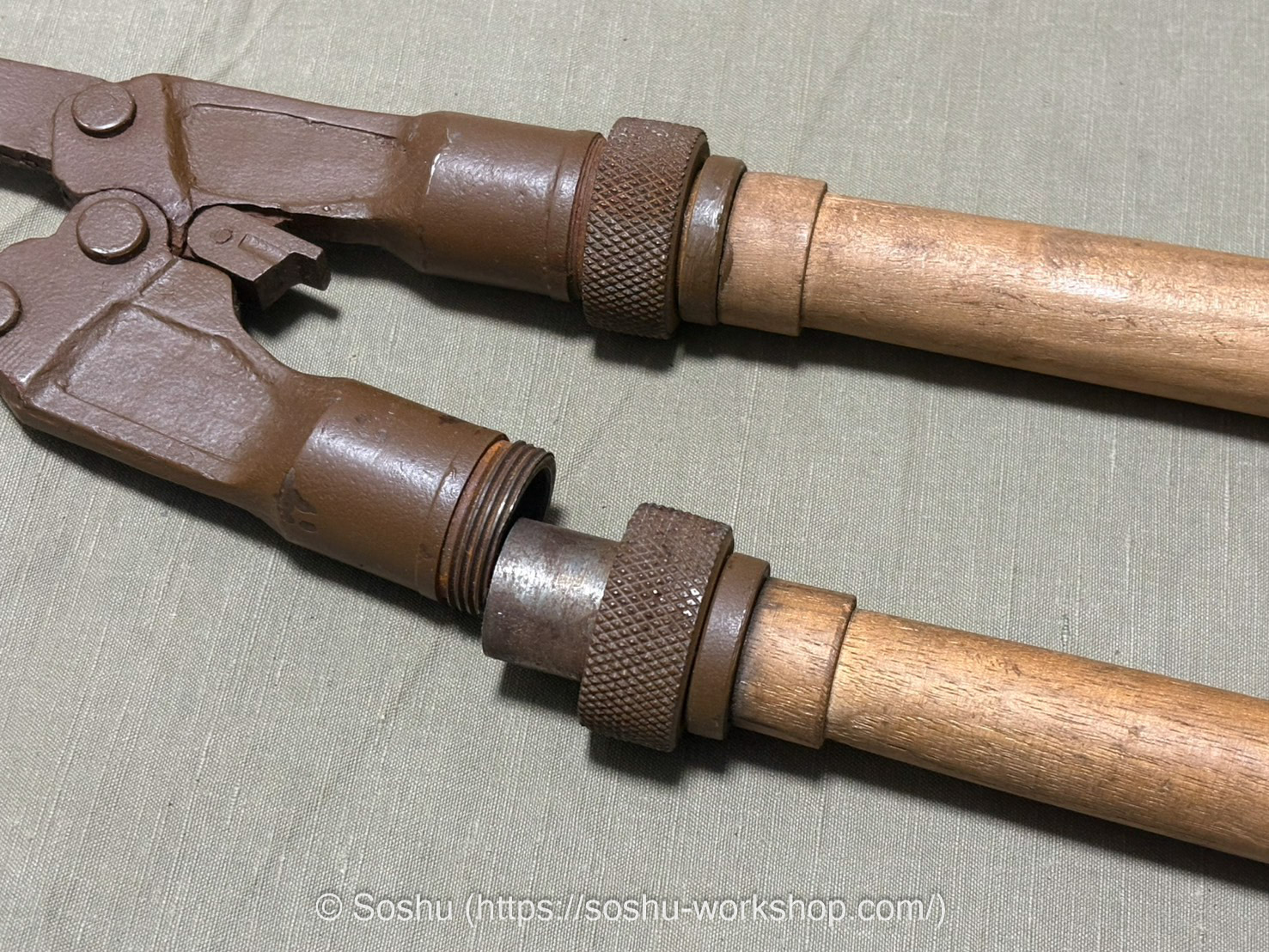
The handles are attached with screws.
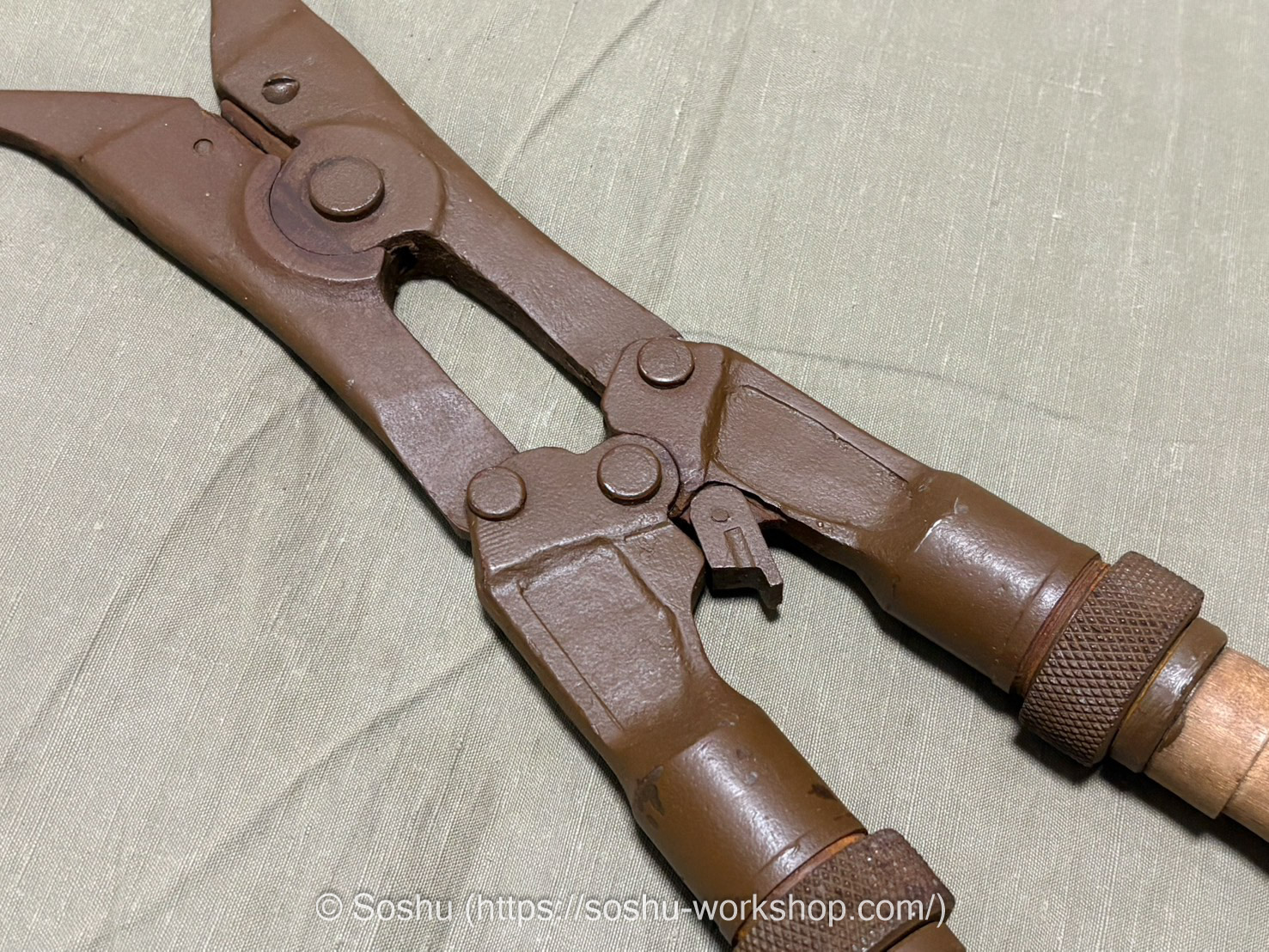
At the joint in the middle of the cutters, there is what appears to be a locking mechanism; when engaged, it prevents the blades from closing.
That concludes my introduction of the Light Barbed Wire Cutter Pouch, Type Otsu. As it is rare for a substantial number of these to appear at once, I decided to document them in this article.
I have more than I need, so I am thinking of letting a few go. They are originals, but without the Light Barbed Wire Cutters inside they are not particularly practical, so I am considering printing a set of cutters on my 3D printer at some point.
Footnotes
- “Close combat equipment” JACAR (Japan Center for Asian Historical Records), Ref.C12121780000, Unit Price List, 1940–1943 (National Institute for Defense Studies of the Ministry of Defense) ↩︎
- “May 1944, Ri-Company Weapons List, Weapons Company” JACAR (Japan Center for Asian Historical Records) Ref.C14010998800, Ri-Company Weapons List, May 1944 (National Institute for Defense Studies of the Ministry of Defense) ↩︎