This piece of equipment is called the Type 93 Luminous Pedometer, and it was used by the Imperial Japanese Army as a step counter.
In Japan, the term Manpōkei (万歩計) may sound more familiar to many people. However, “Manpōkei” is a trademark registered in 1984 by Yamasa Tokei Keiki Co., Ltd. Therefore, strictly speaking, the correct term is “pedometer.”
The Type 93 Luminous Pedometer was a type of surveying instrument. It was formally adopted in 1934 (Shōwa 9) under Army Directive No. 1210 (陸普第1210号)1, together with the Type 93 Altimeter. According to historical records, it was distributed to each division’s ordnance department, signal units, and engineer units. However, the number issued appears to have been limited to only one or two per division. For that reason, the original distribution was quite small, and it is considered a relatively rare piece of equipment today due to the limited number that have survived.
Corroborating evidence from other historical sources suggests that the Type 93 Luminous Pedometer was also issued to the Siege Engineer Headquarters2 and the Engineer School3. In particular, a directive addressed to the former includes the phrase “for reconnaissance in preparation for position assault.” It is therefore thought that the Type 93 Luminous Pedometer was used as one of the engineer instruments to calculate distance based on step count.
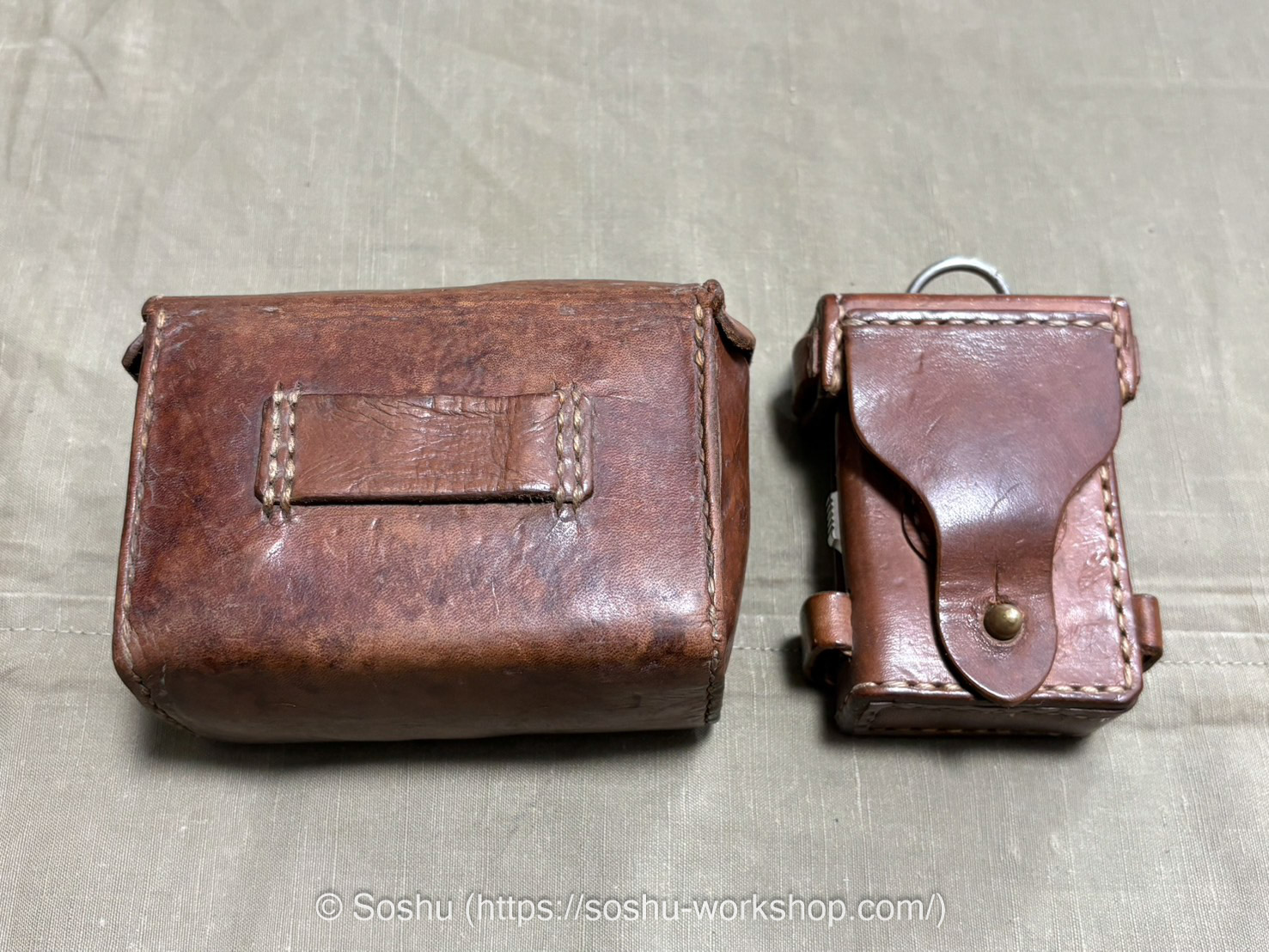
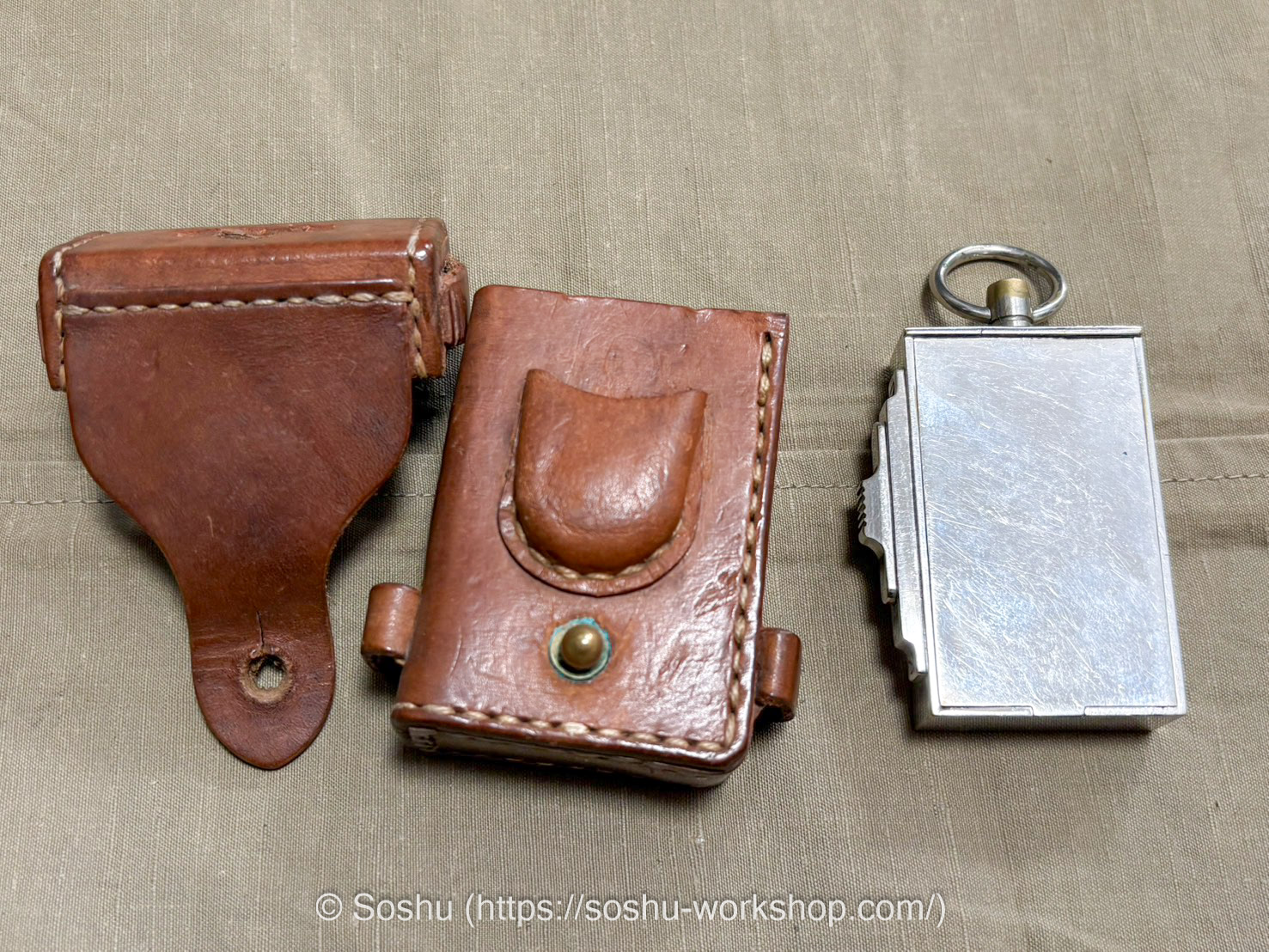
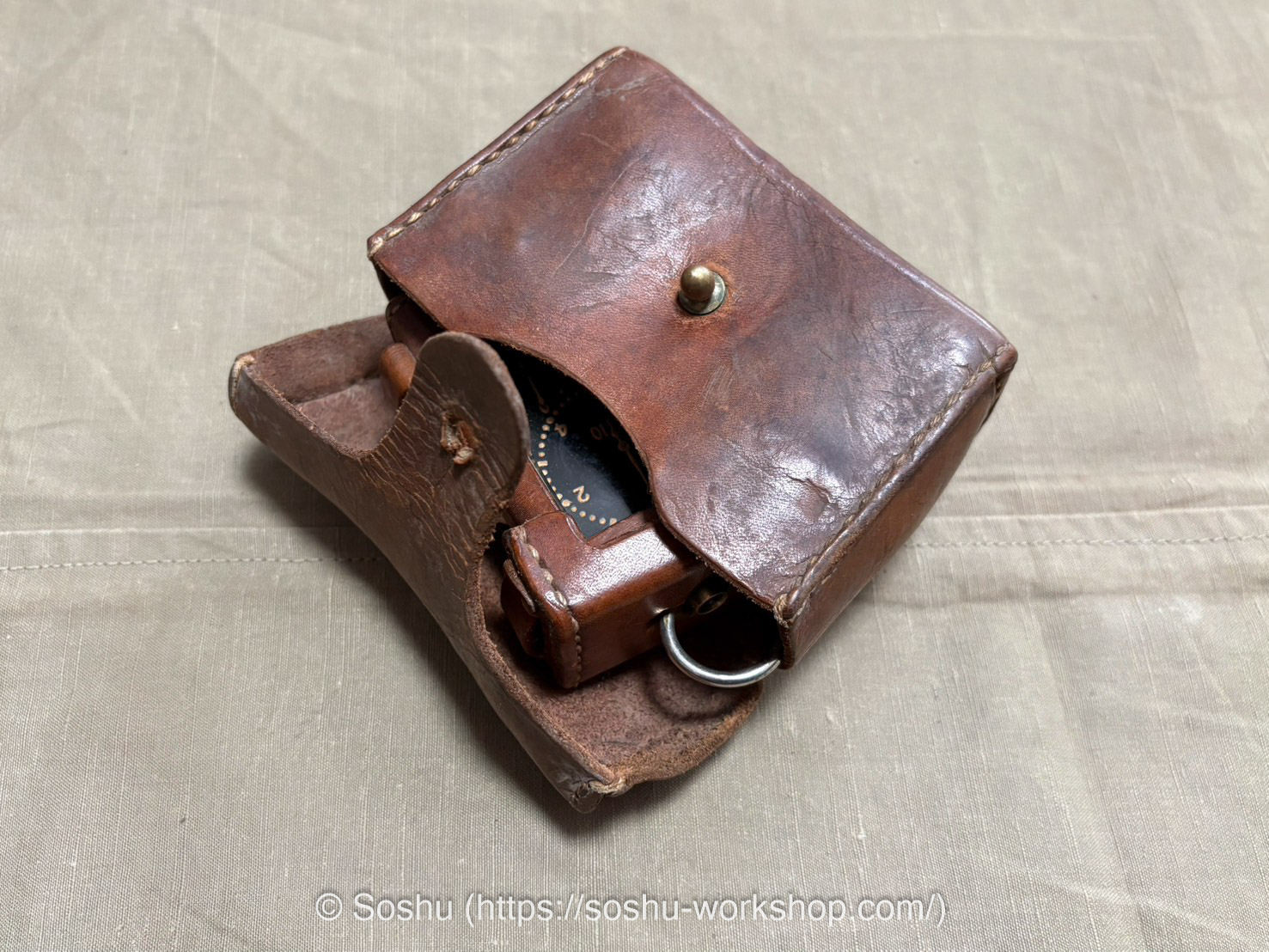
This set consists of the storage pouch and the pedometer unit itself. Originally, the pedometer was equipped with a leather neck strap for wearing it around the neck, and it also had a clip-like fitting, presumably intended for attaching it to the waist or belt. However, these parts are missing from this particular example.
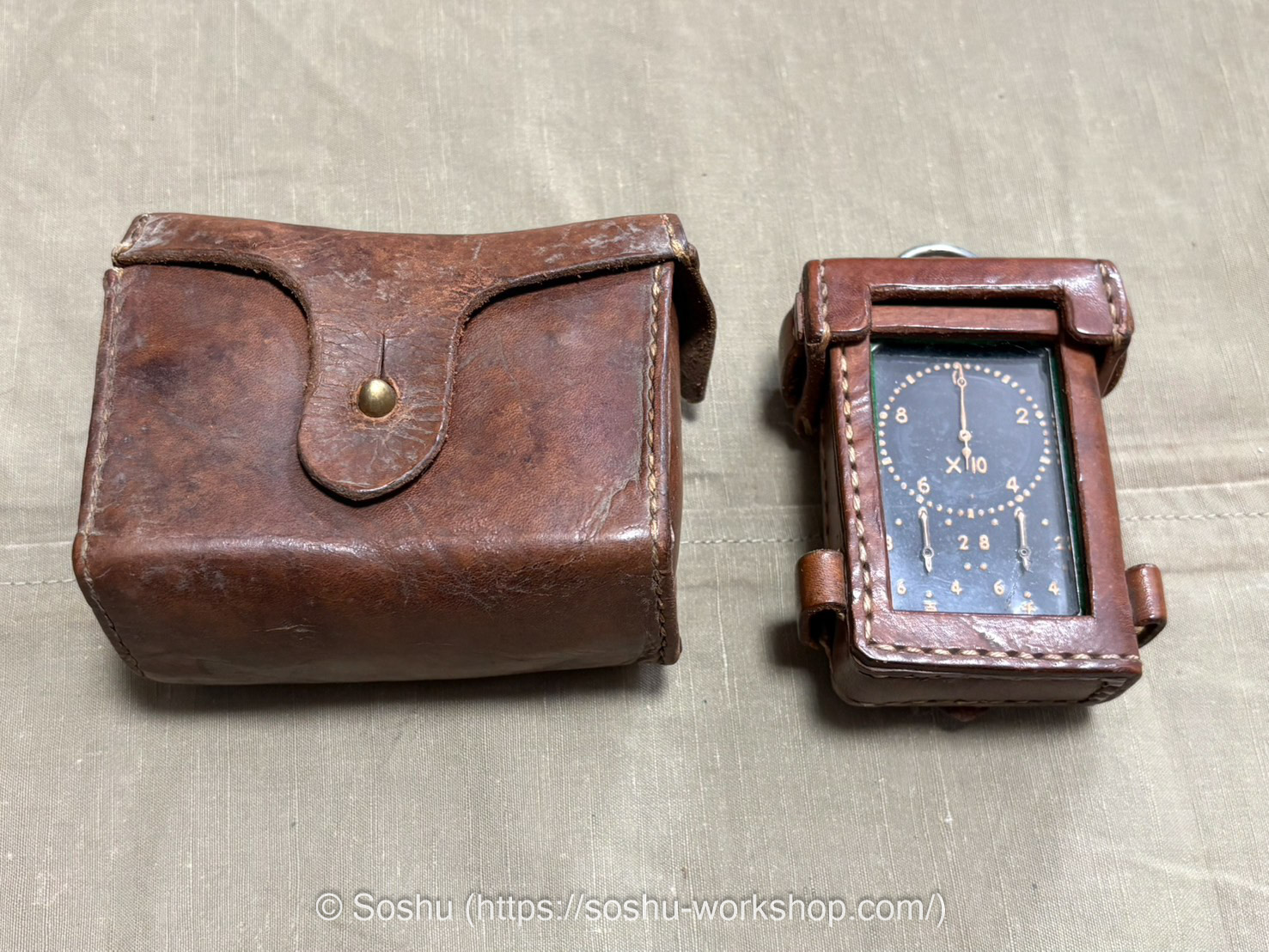
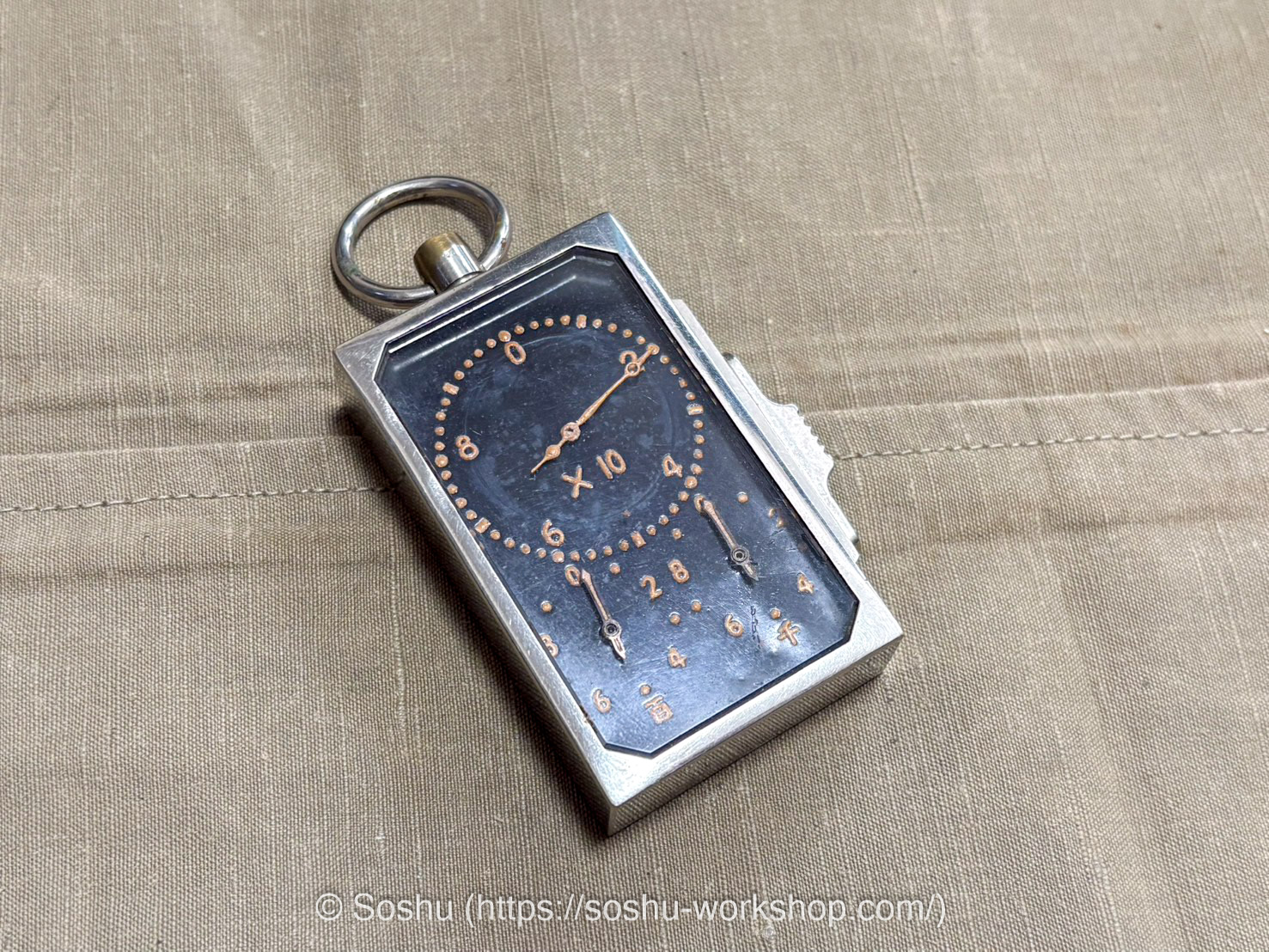
This is the pedometer unit itself. Originally, a leather neck strap was attached around the outer edge of the case for wearing it around the neck.
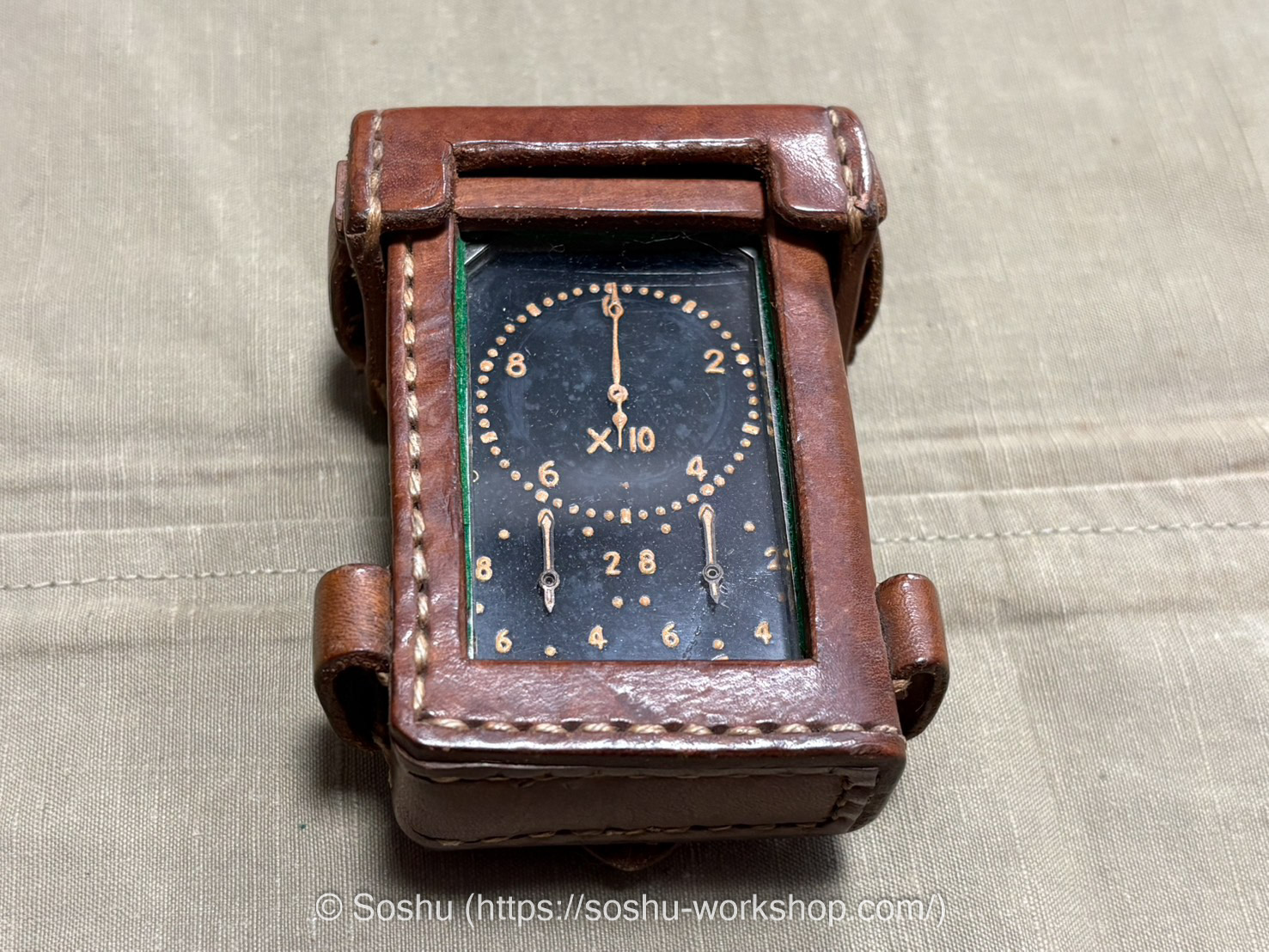
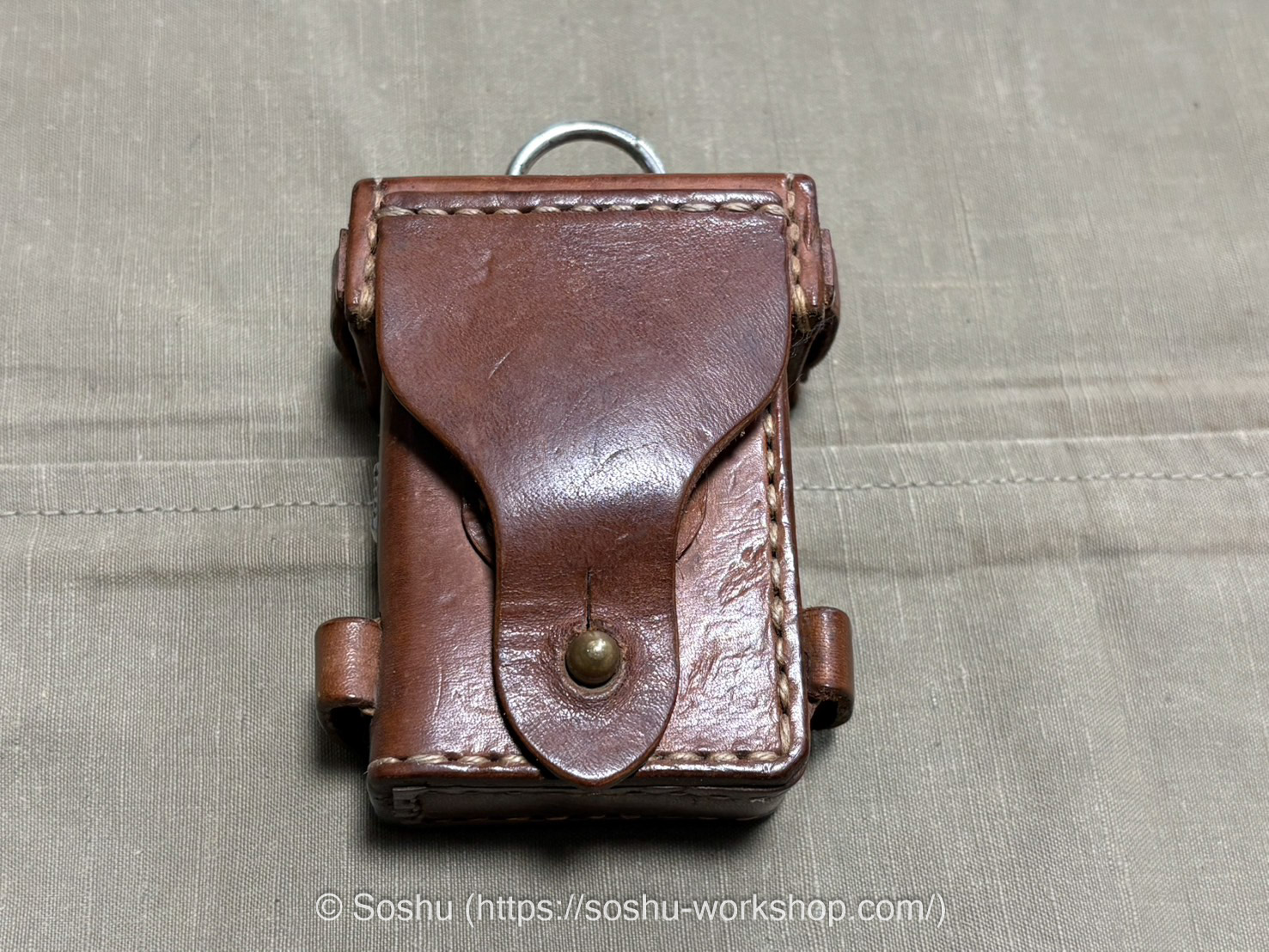
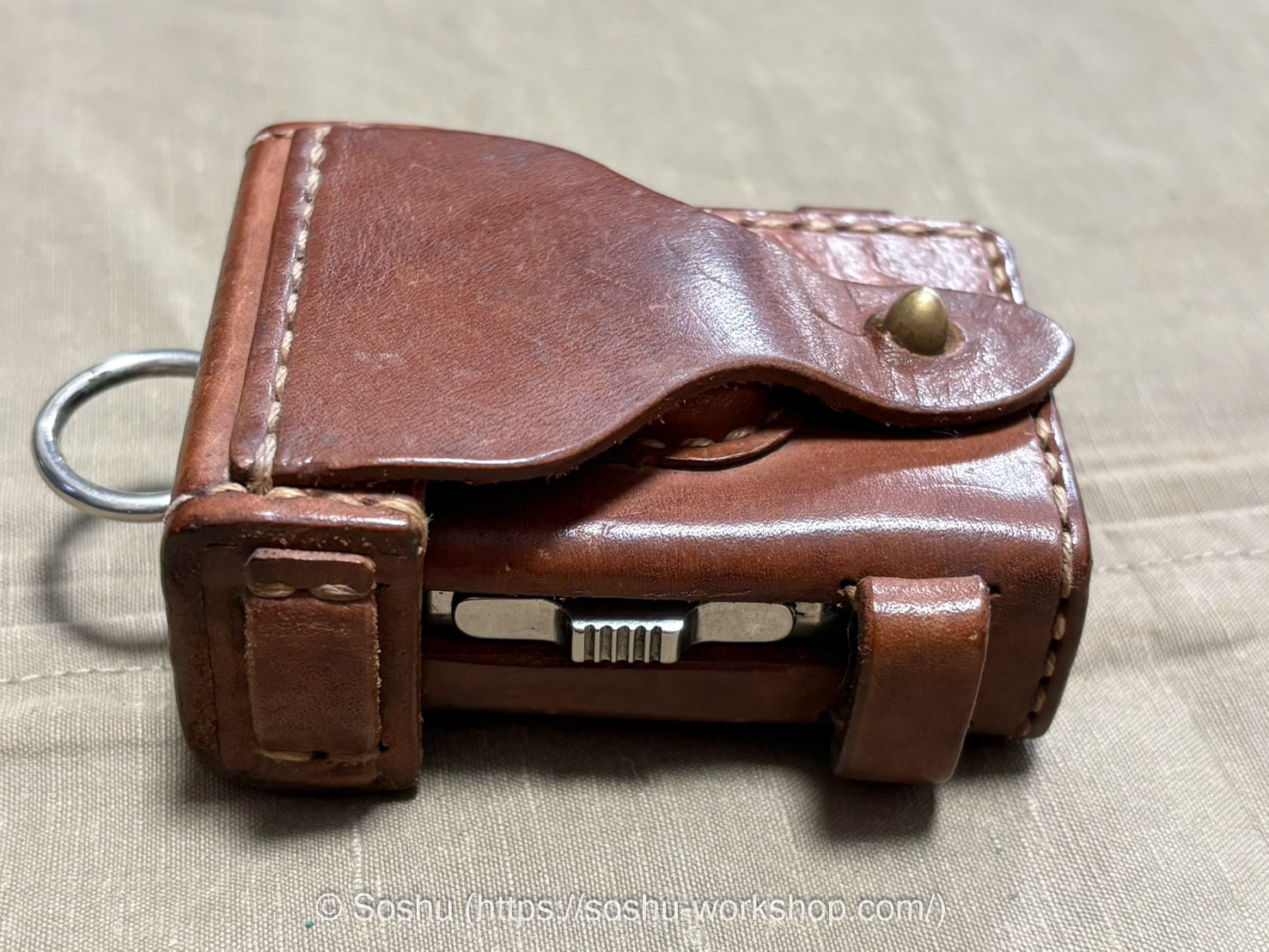
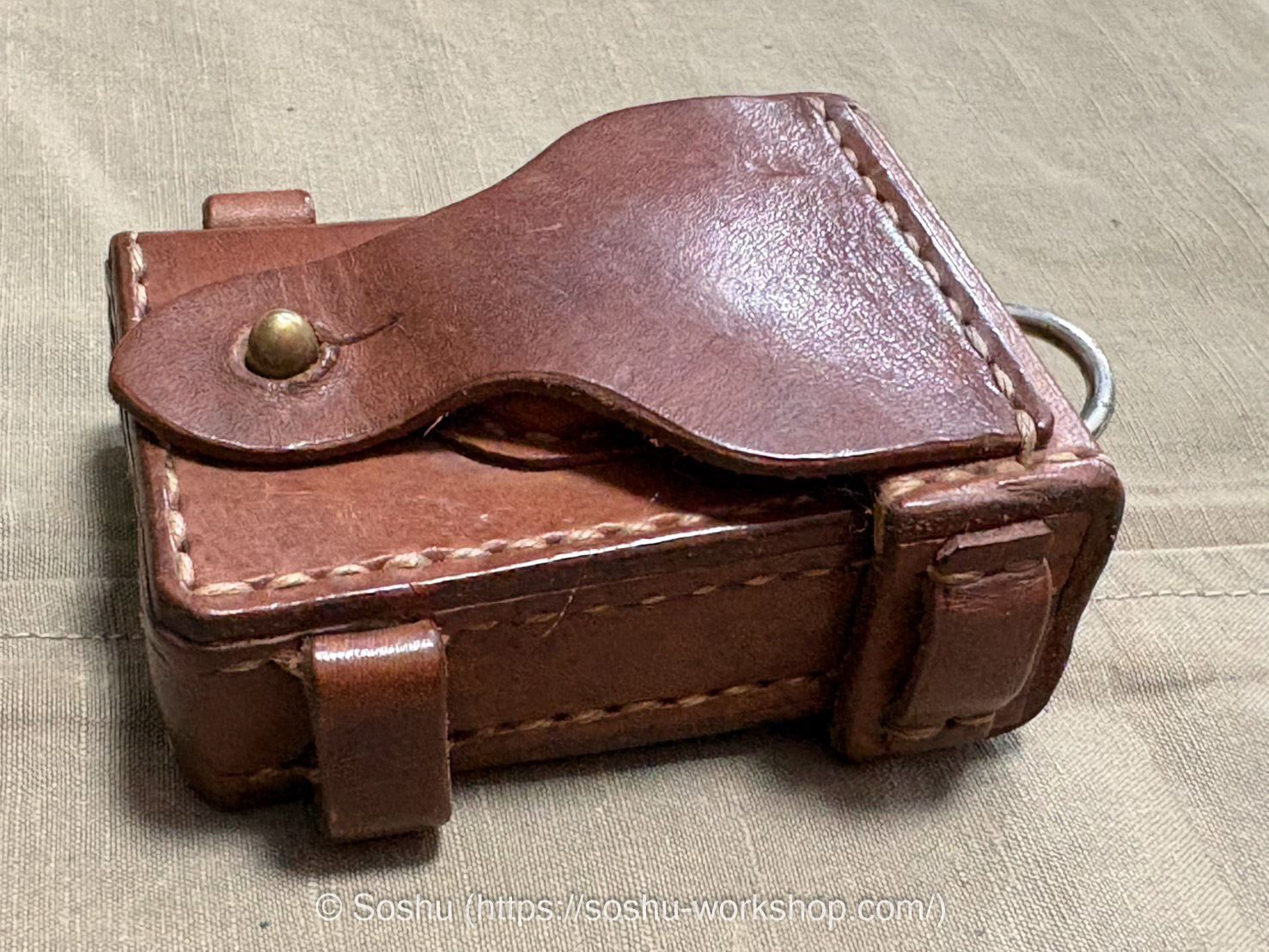
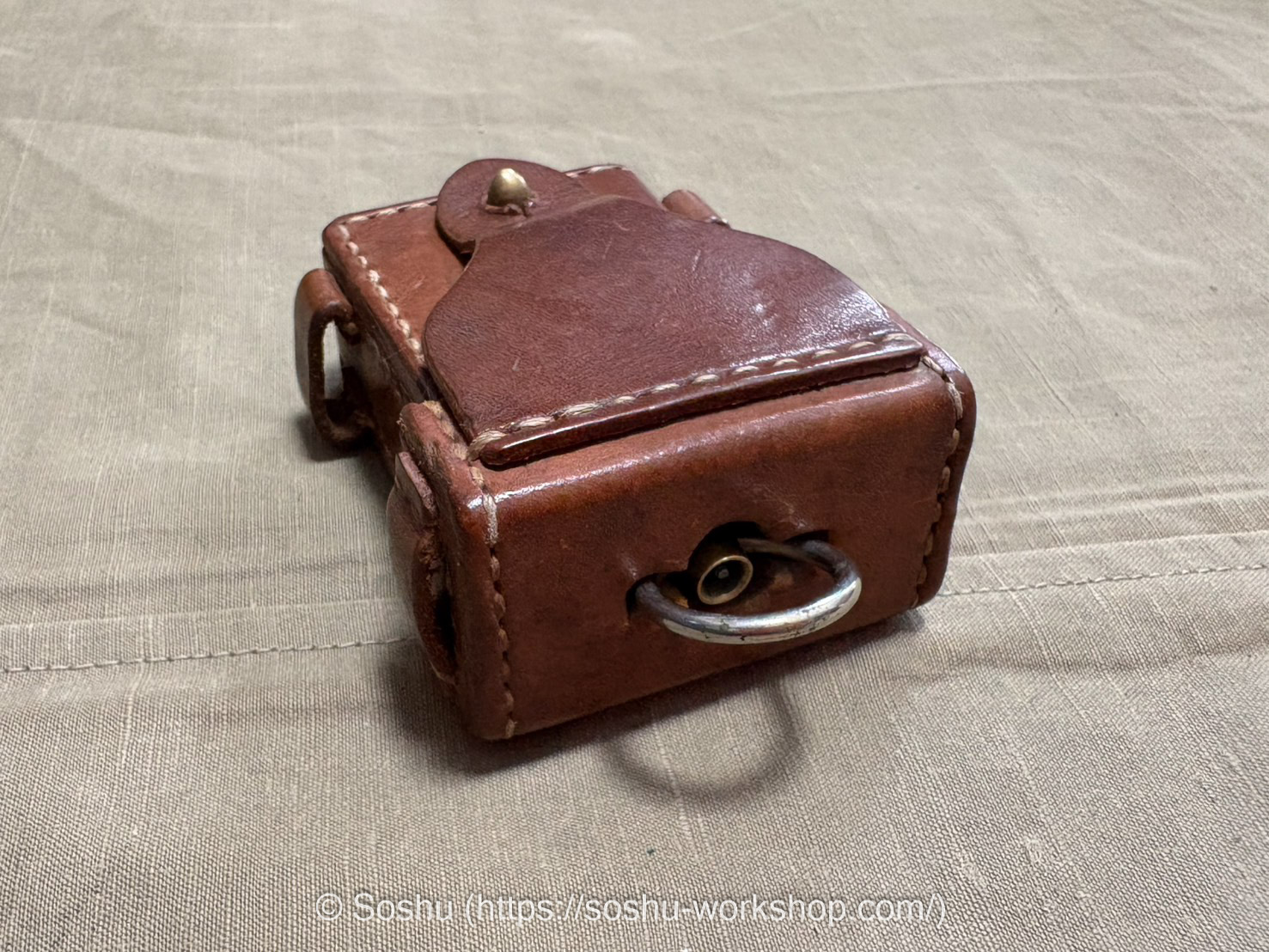
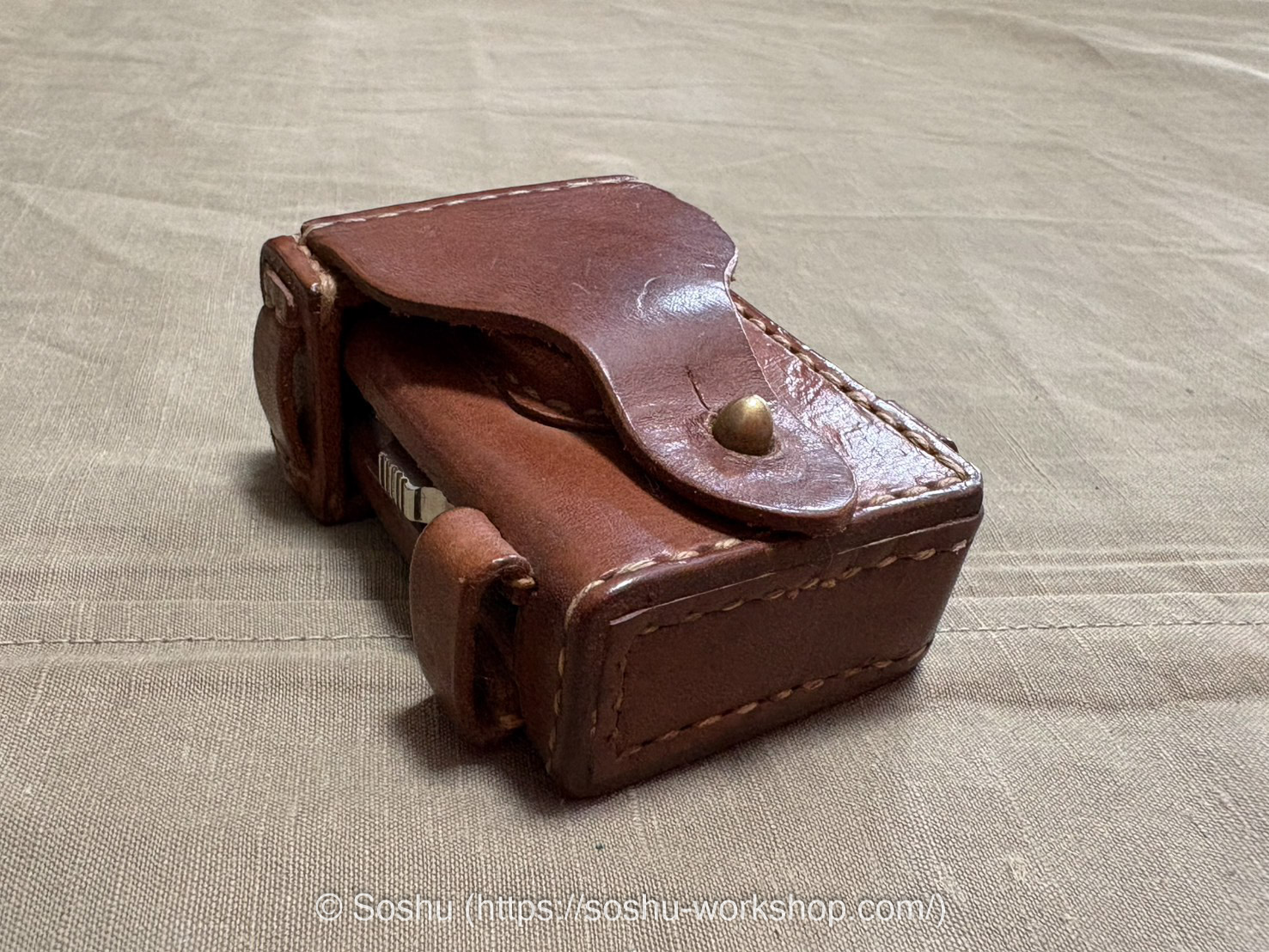
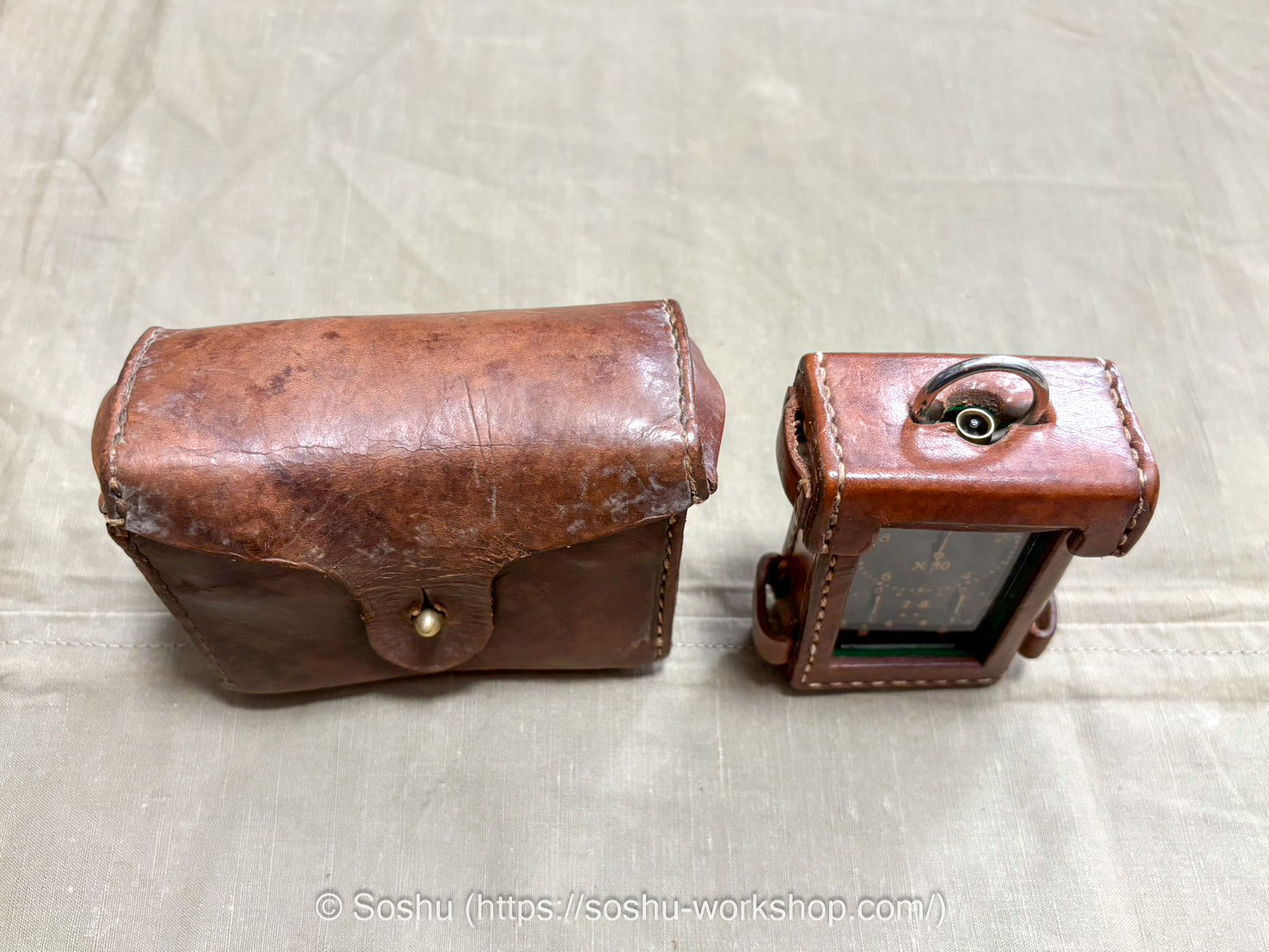
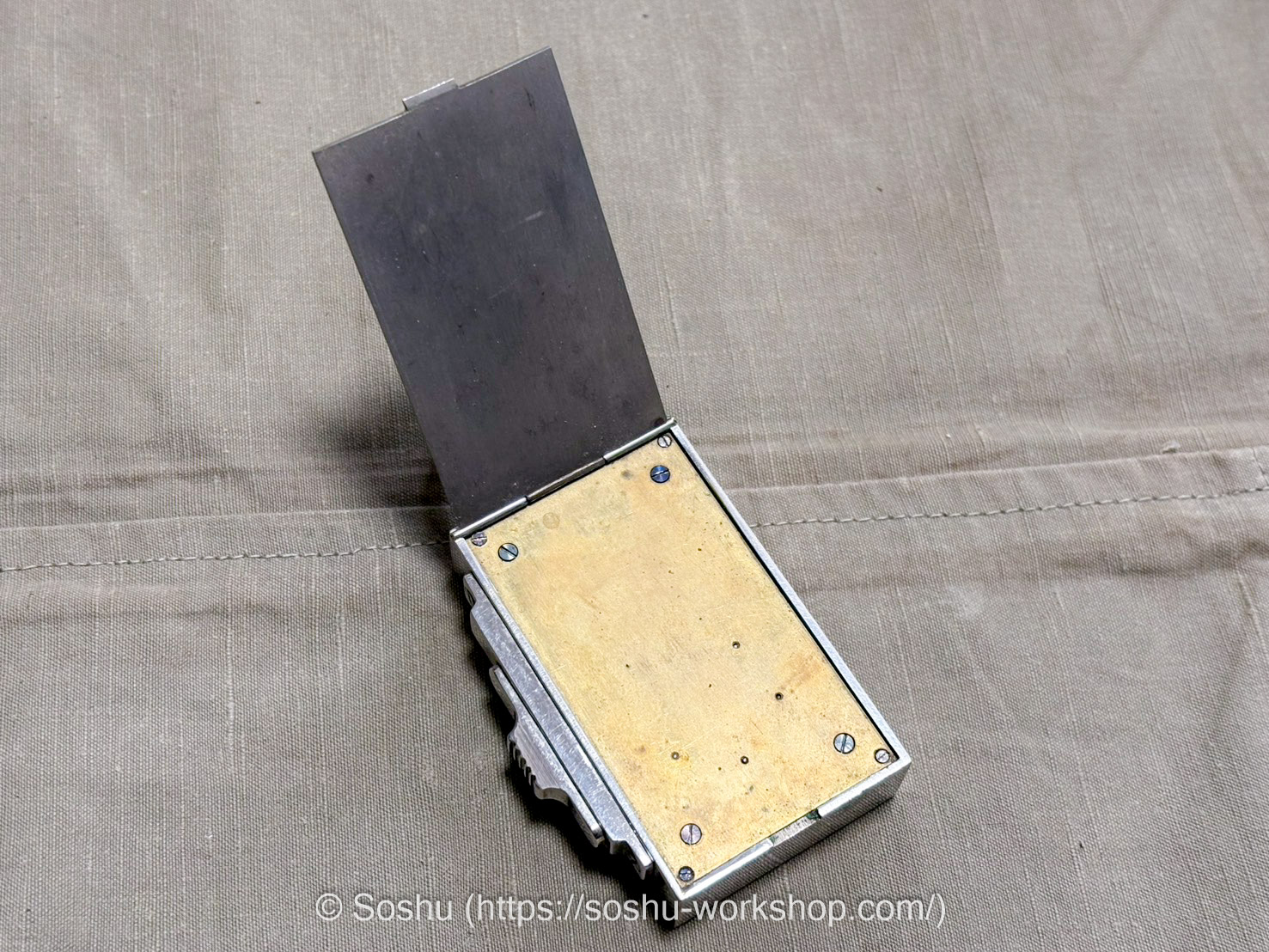
This shows the pedometer unit separated from its leather case. The U-shaped pocket on the back was originally designed to hold a clip-like component, but that part is missing on this example. Judging from its shape, it was likely intended to be attached by clipping it onto a belt or waist strap. It is presumed that the device would first be hooked by the ring at the top of the unit, and then secured to the belt with the clip.
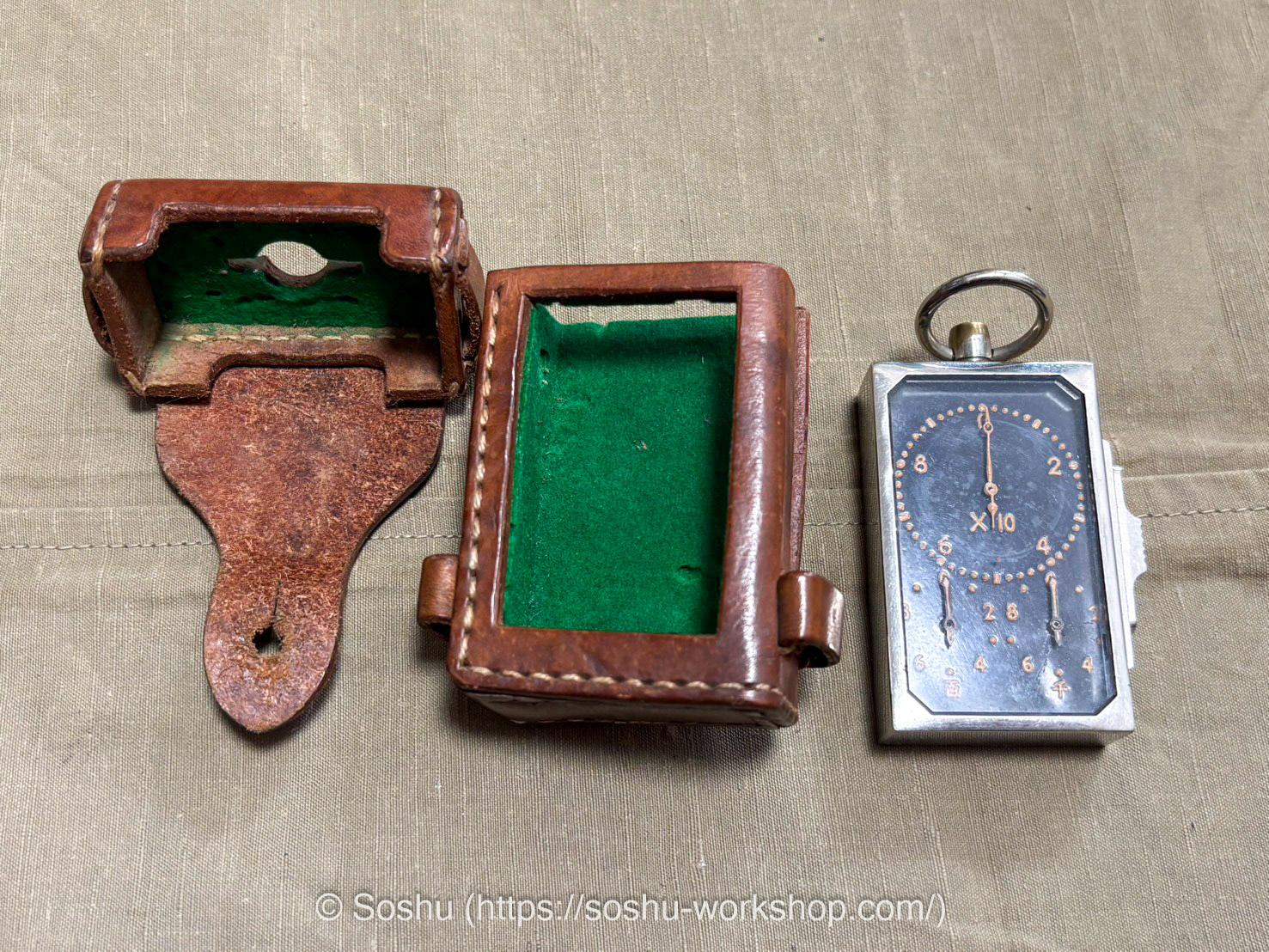
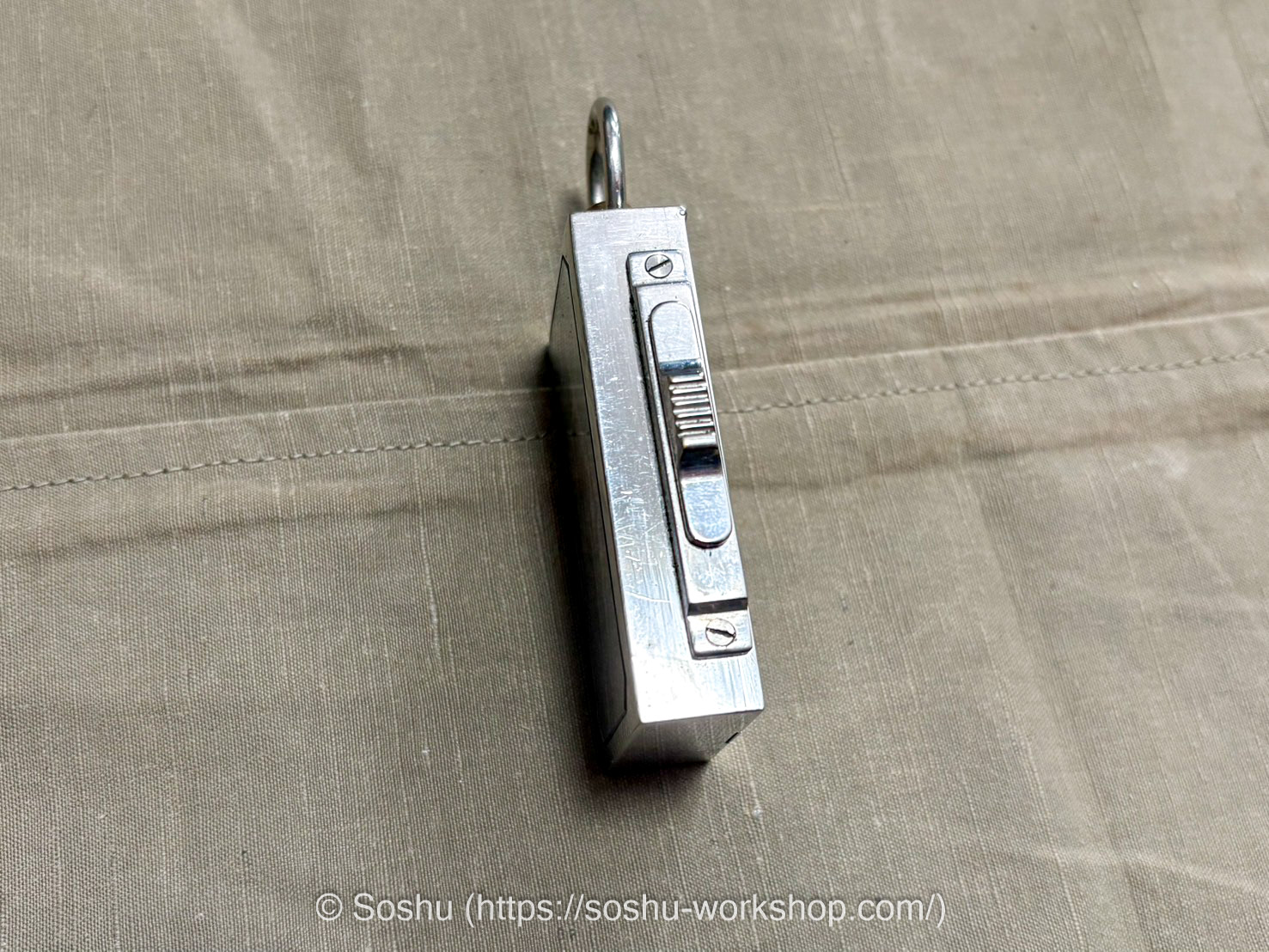
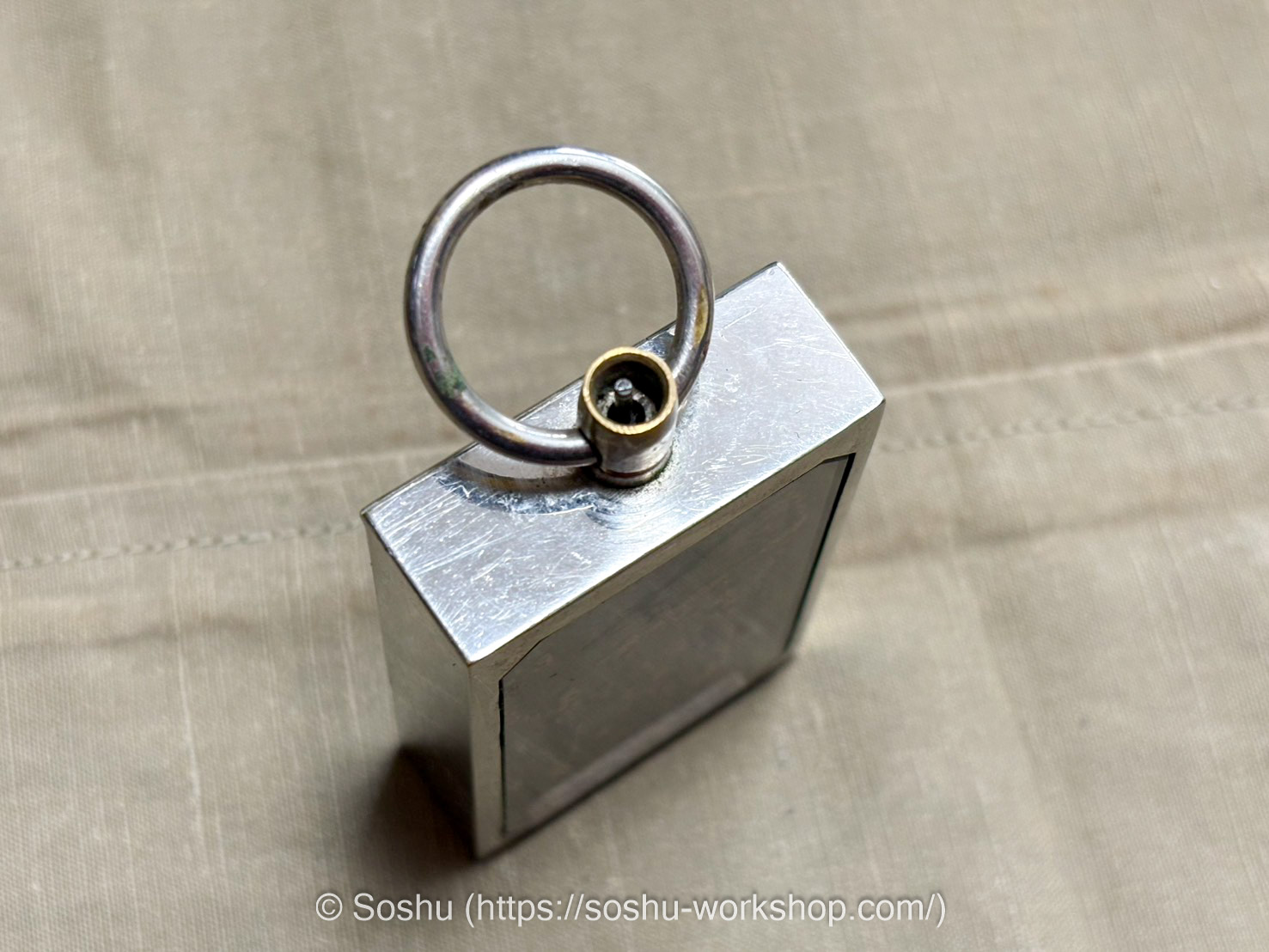
This particular example is still in working condition. When the switch on the right side is turned, measurement begins, and if the unit is shaken, the counter increases one increment at a time, much like a modern pedometer. There is also a small button built into the ring shaft at the top of the unit. By pressing this button, the counter can be reset to zero.
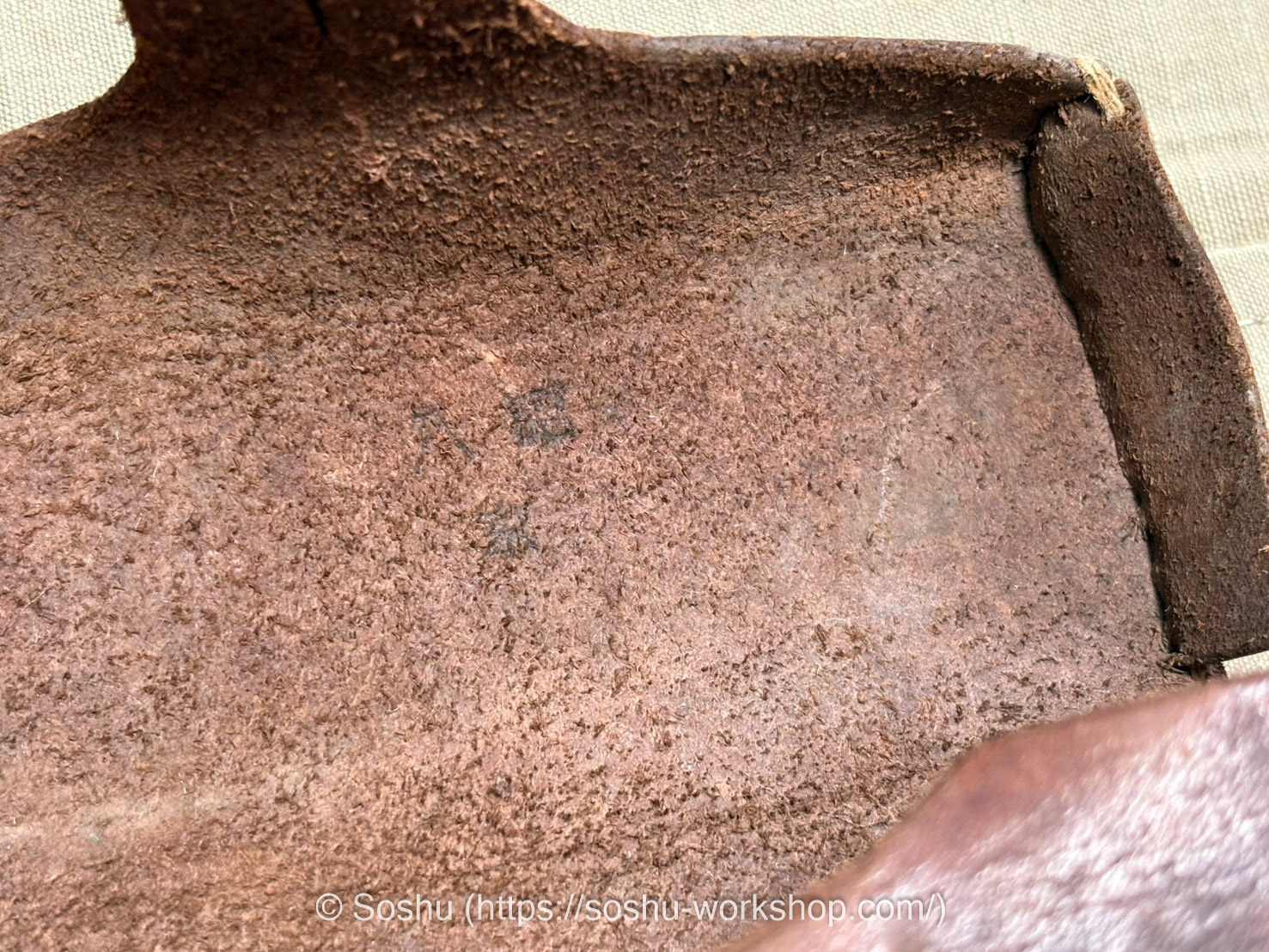
This is the carrying pouch. On the inside of the flap, a faint inspection stamp indicating government issue can still be seen. Judging from the shape of the belt loop, it was designed to be worn vertically. The loop is quite narrow—just barely wide enough for a belt to pass through.
Footnotes
- “Authorizing standard for Model 93 hypsometer of surveying equipment and 1 other item” JACAR (Japan Center for Asian Historical Records), Ref.C01001332700, Permanent Documents, Series A, Class 5, Vol. 2, 1934 (National Institute for Defense Studies, Ministry of Defense) ↩︎
- “Increasing tactical equipment” JACAR (Japan Center for Asian Historical Records), Ref.C01006914900, Permanent Documents, Series B, Class 2, Vol. 3, 1937 (National Institute for Defense Studies, Ministry of Defense) ↩︎
- “Lending and specially consigning ordnance” JACAR (Japan Center for Asian Historical Records), Ref.C01002154400, Permanent Documents, Series B, Class 2, Vol. 3, 1936 (National Institute for Defense Studies, Ministry of Defense) ↩︎