The Tube Bag was standardized in 1919 (Taishō 8) and continued to be used with virtually no changes in shape until the final stages of the Greater East Asia War. Although pre-made Tube Bags already existed before that, they were not officially standardized until Taisho 8.
According to the document “Regulations for the Standardization of the Tube Bag for Non-commissioned Officers and Soldiers”1, the following points were revised when it was officially standardized.
- Change of fabric
- The conventional unsai cloth had been used, but it was considered too thick. It was therefore replaced with a tea-brown, heavy-weave cotton fabric treated for water resistance.
- Change of shape
- The sewing method and the opening structure were revised, and a new cord was added to close the opening.
- Enlarged dimension
- The overall size was increased to make it easier to take the mess kit in and out.
It appears that the short cord used to close the opening of the Tube Bag did not exist prior to its standardization. Furthermore, the drawings in this document show only the lower securing cord, with no corresponding cord on the opposite side. In Tube Bags from the Shōwa period, securing cords are present on both sides of the opening, suggesting that the upper securing cord was added at a later time.
Documents relating to the Tube Bag exist as far back as the Russo–Japanese War. Reviewing these sources, we find opinions praising the Tube Bag as highly effective for combat in light marching order2, it was changed so that replacement soldiers for field units would be issued a Tube Bag instead of a Backpack.3 During the Russo-Japanese War, Tube Bags were used extensively, and many instructions were issued for improvements based on combat experience. Waterproofing seems to have been a particular concern, and as a temporary measure, rubberized cloth bags4 were arranged.
The backpack and the Tube Bag essentially overlapped in function, and issuing both items could be considered wasteful—or even a luxury—in a sense. For this reason, when material shortages began during the Greater East Asia War, there was a growing tendency for only one of the two items to be issued.
Based on the primary sources I have reviewed, examples of units being issued only the Tube Bag, without a backpack, begin to appear around 1941 (Showa 16). By 1942 (Showa 17), it seems that the majority of cases involved issuing only the Tube Bag.
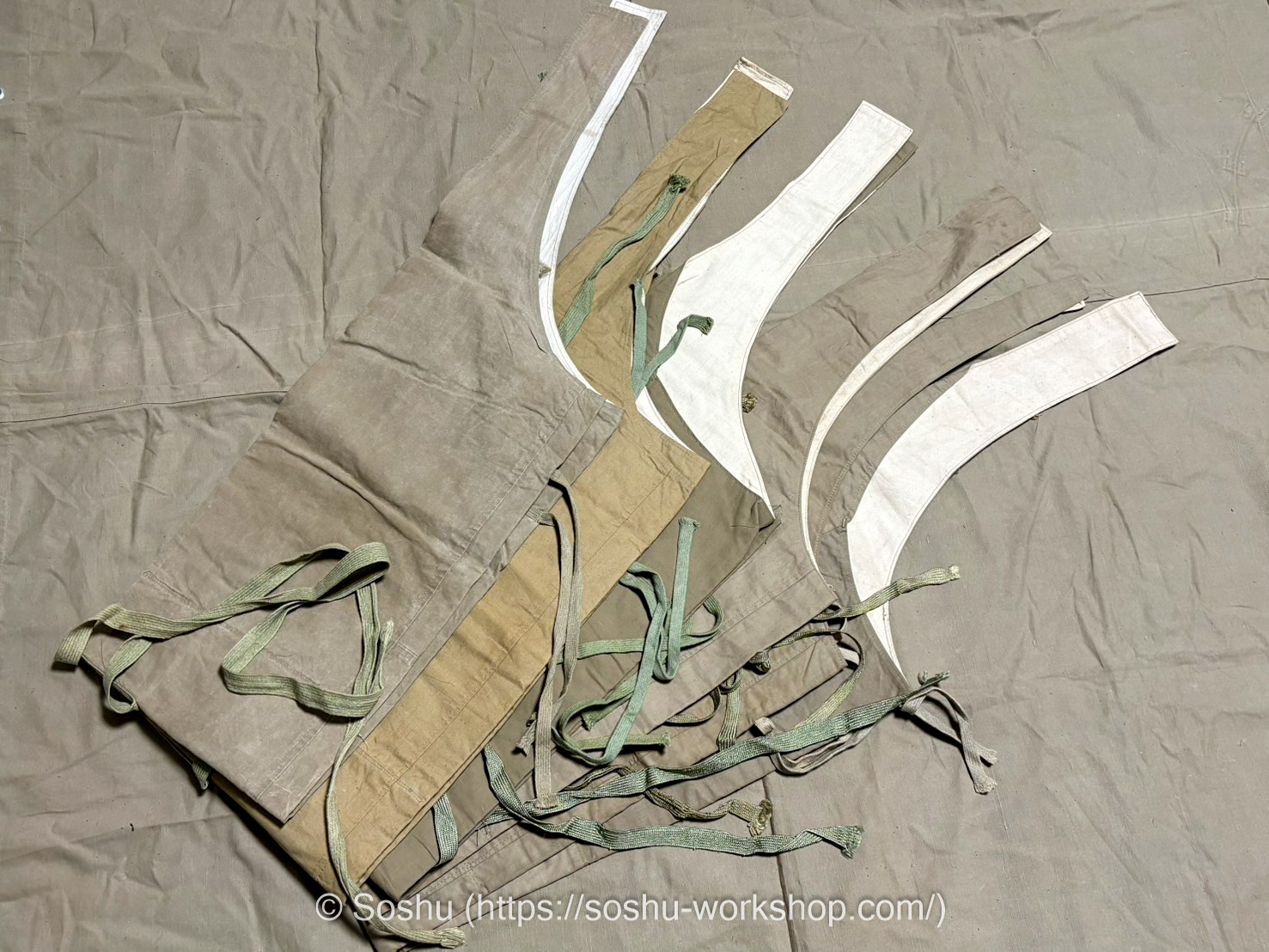
Shōwa 10 (1935) issue, Osaka Army Clothing Depot
There are signs of use, but none of the securing cords are missing, and the cords themselves are made of cotton and of good quality. It is also interesting that both the unit designation and the owner’s name are written on it.
What is particularly noteworthy is that the owner’s name has been written repeatedly in several places. The name was even deliberately written over the stamped markings, to the point that the original stamp can no longer be identified.
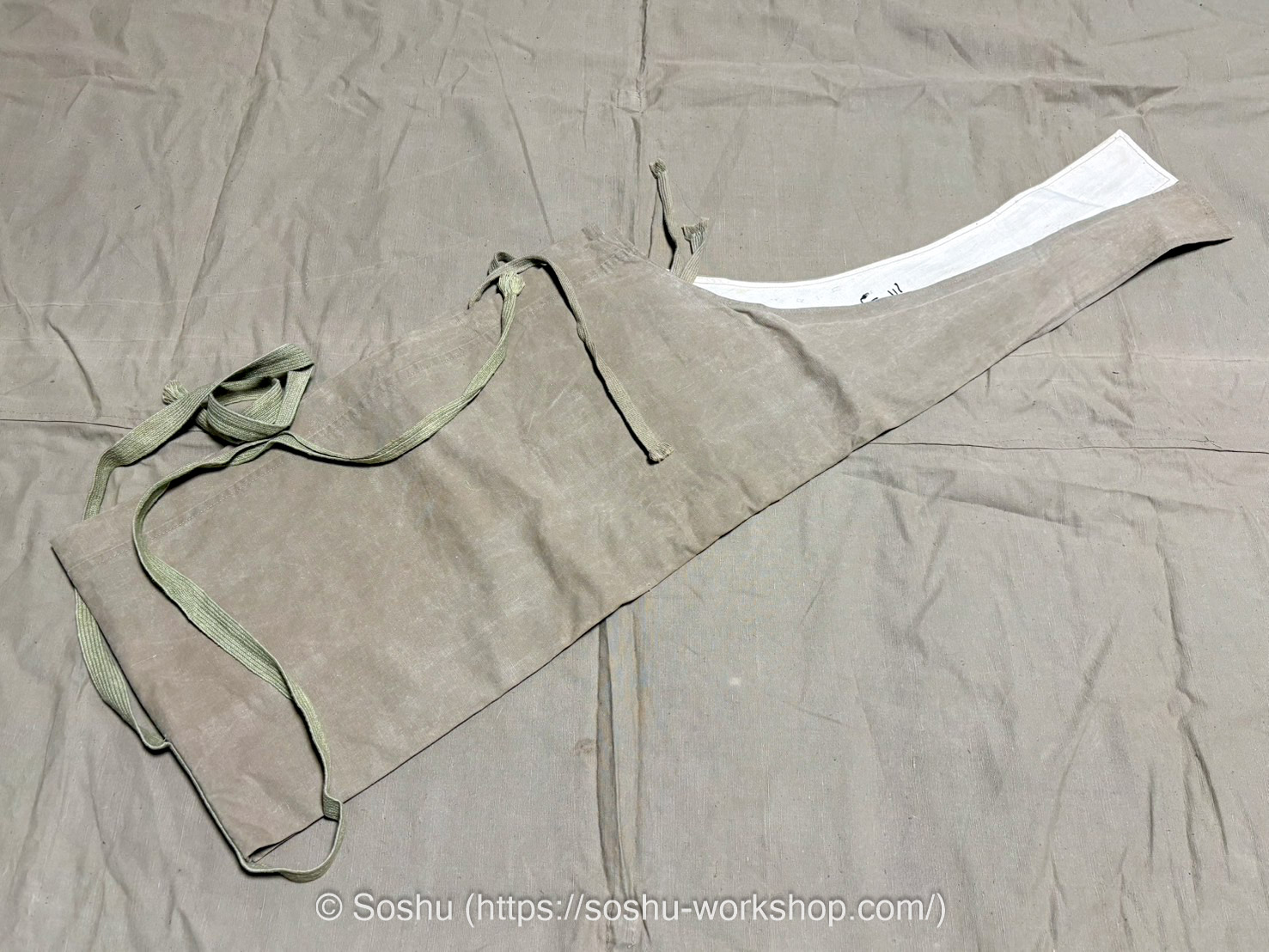
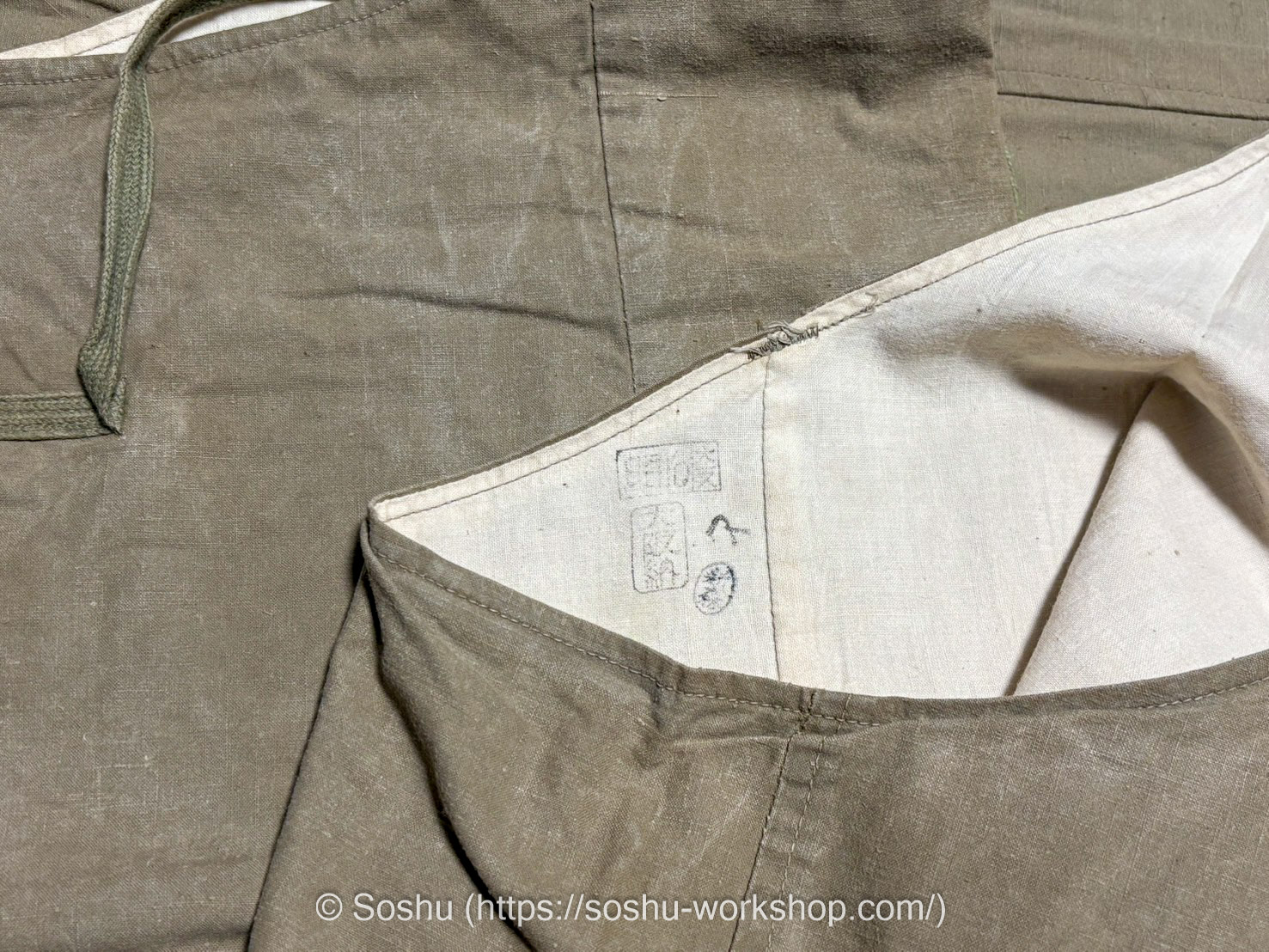

Shōwa 17 (1942) issue, Army Clothing Depot
This is an unused dead-stock item, and the quality of the main fabric is excellent. Compared to examples from 1944 (Showa 19), the fabric feels slightly thicker. The closure cords are also made of cotton and are in very good condition.
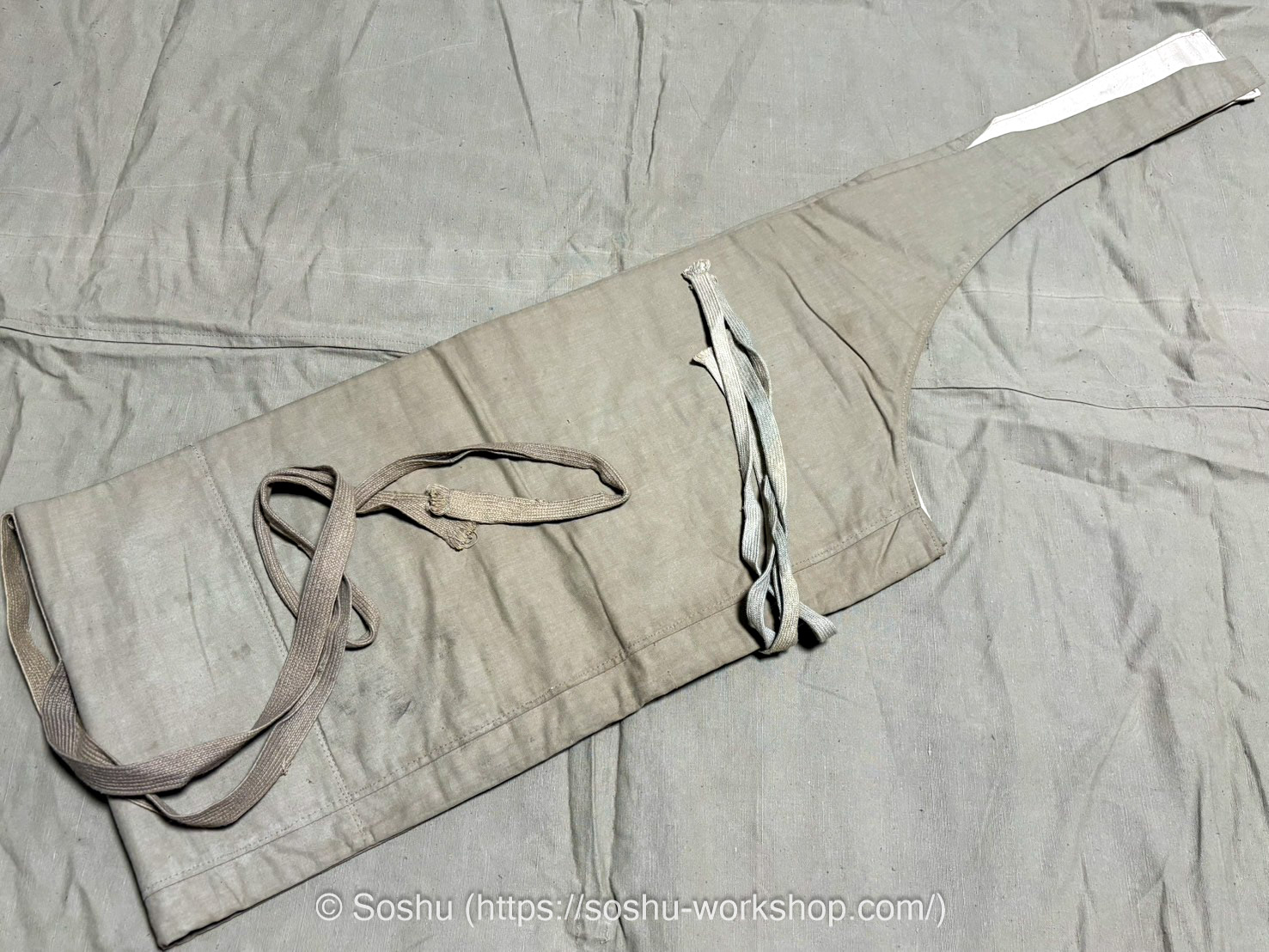
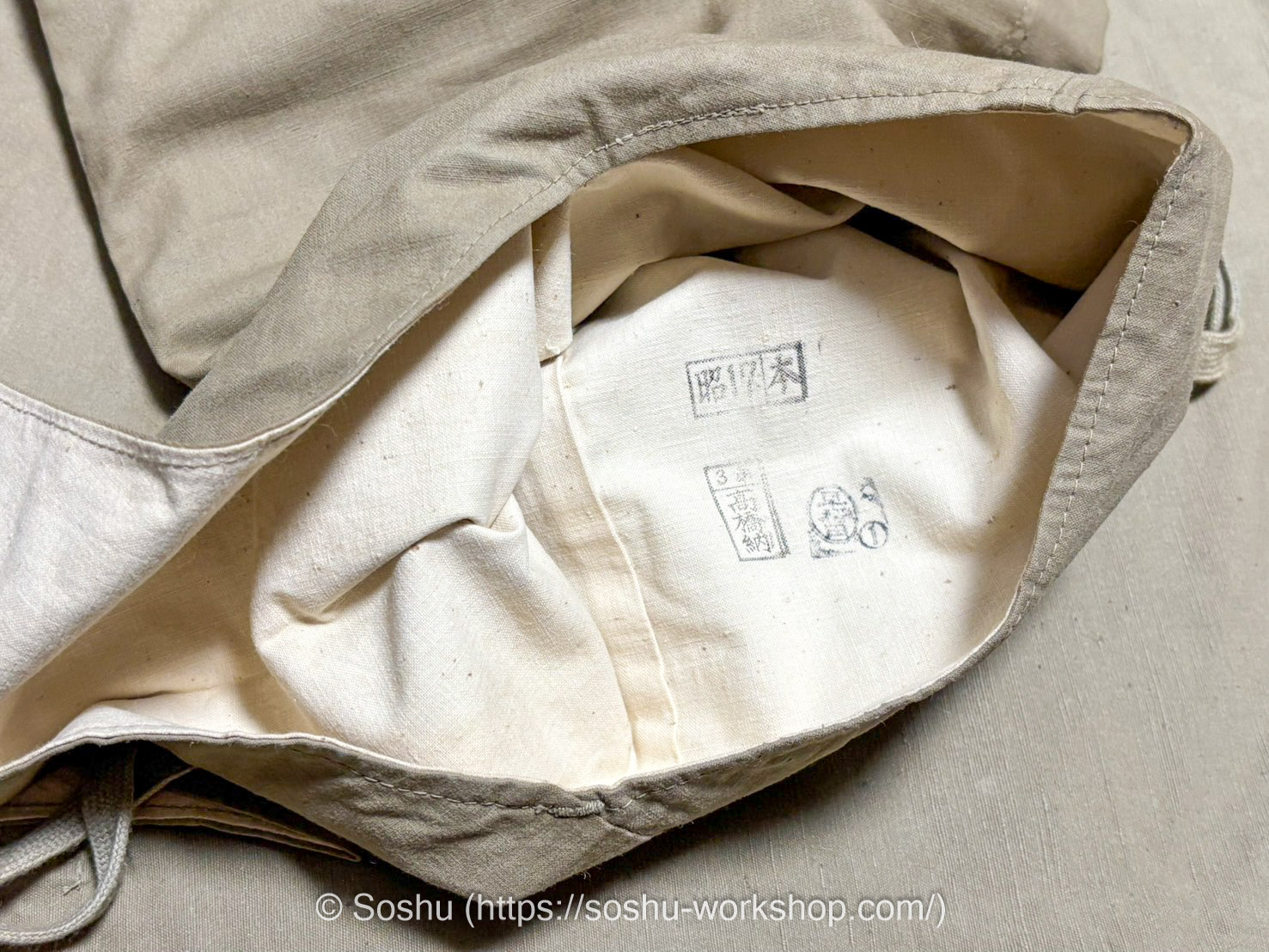
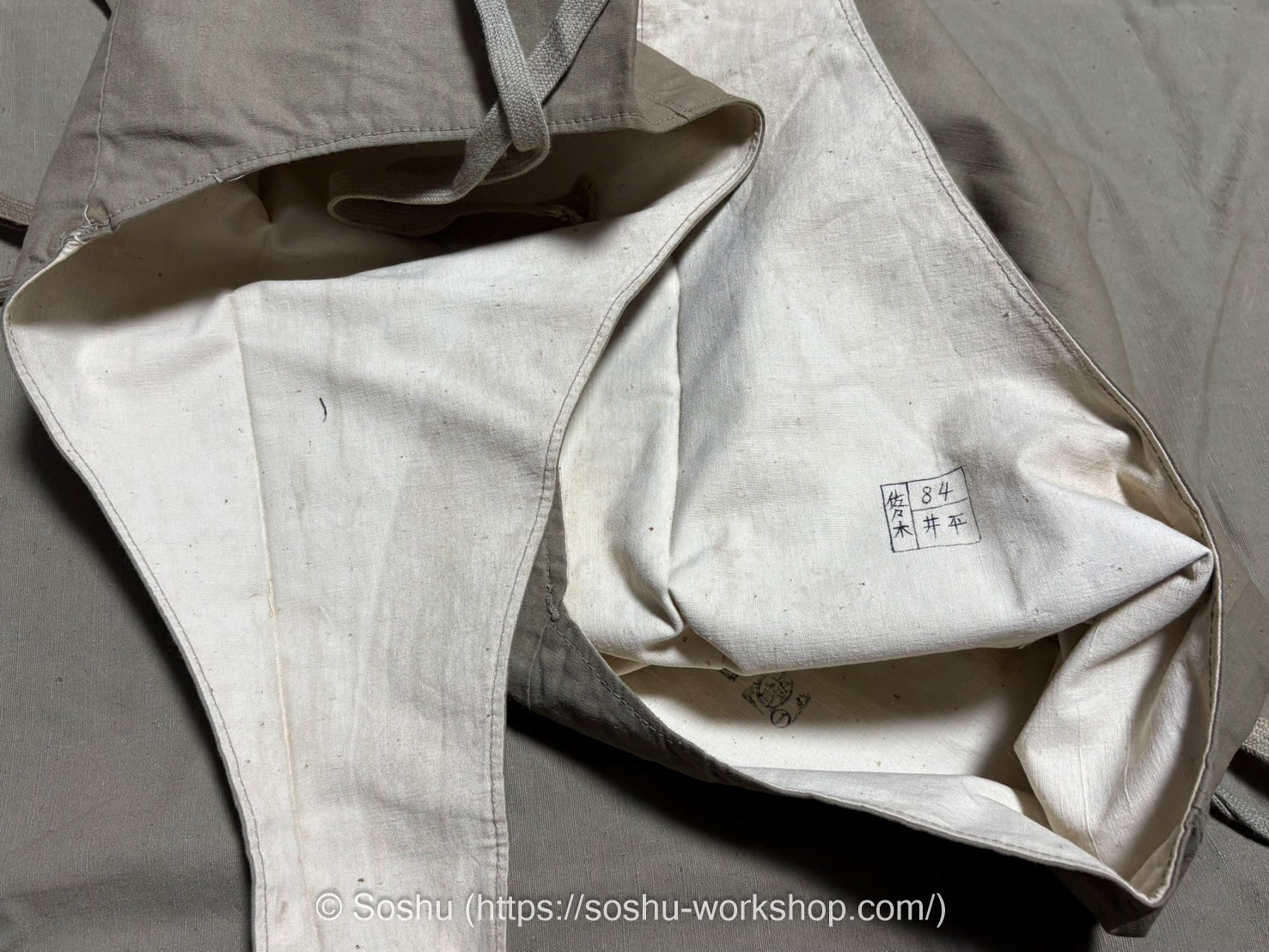
Shōwa 19 (1944) issue, Osaka Army Clothing Depot
The fabric is a khaki color with a strong yellowish tone. There are slight signs of use, but overall it is in excellent condition. The closure cords are also made of cotton and are in very good shape.

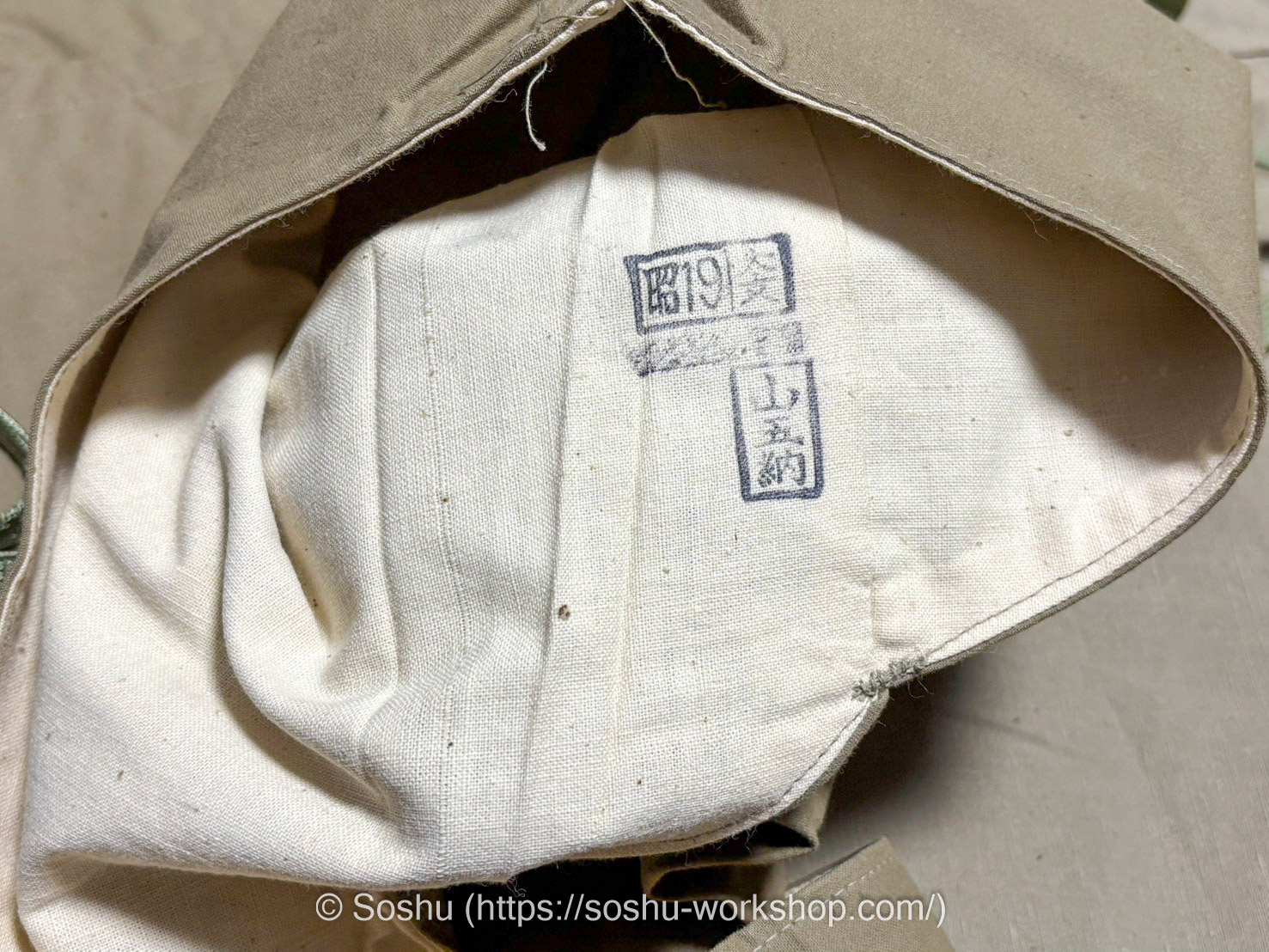
Shōwa 19 (1944) issue, Osaka Army Clothing Depot
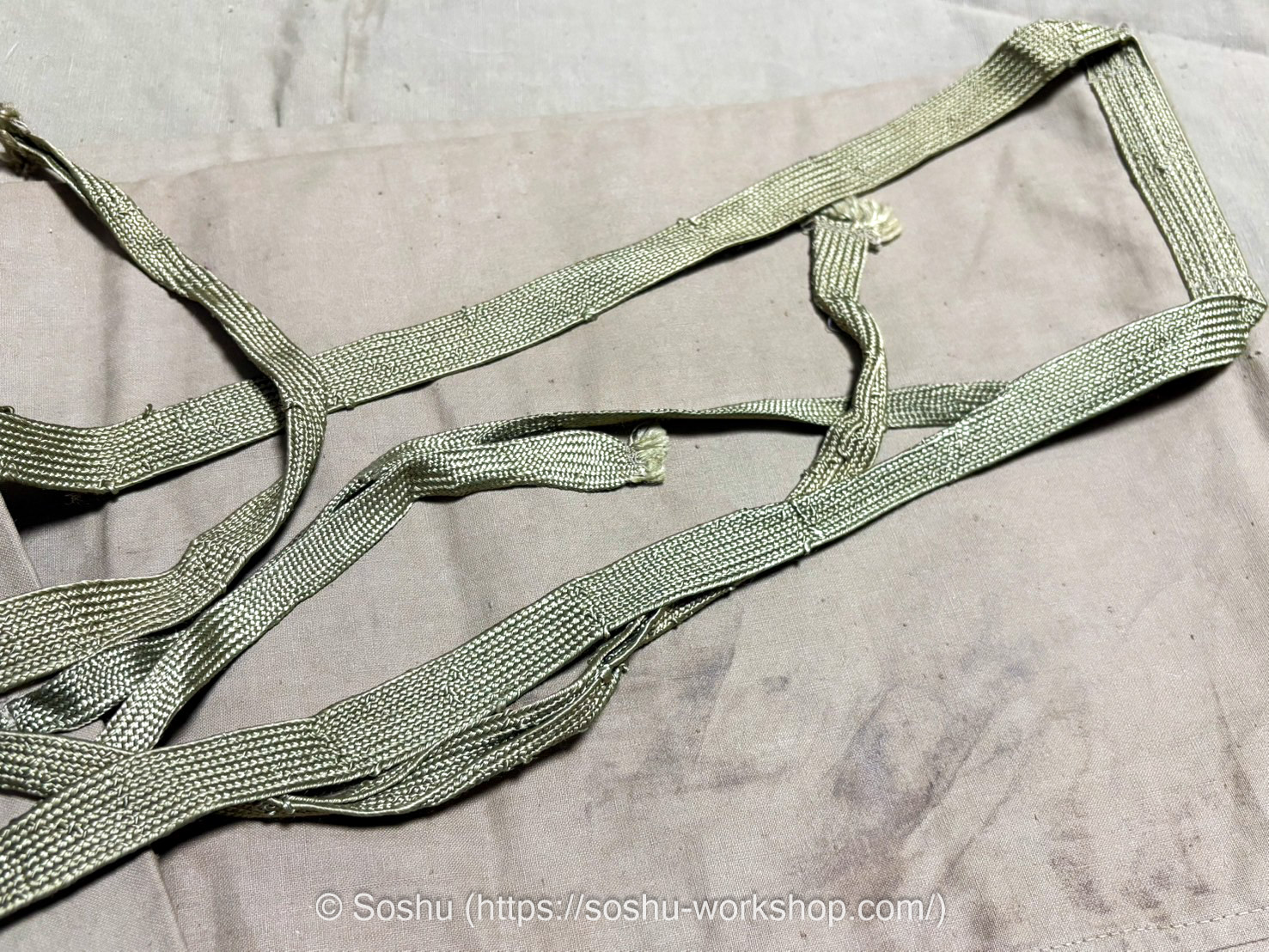
An unused dead-stock piece. The upper and lower closure cords are made of cotton, but the long center cord is made of staple-fiber. Overall, the condition is excellent; however, the staple-fiber cord has areas where the fibers were already forming small pills from the beginning, showing its lower quality.


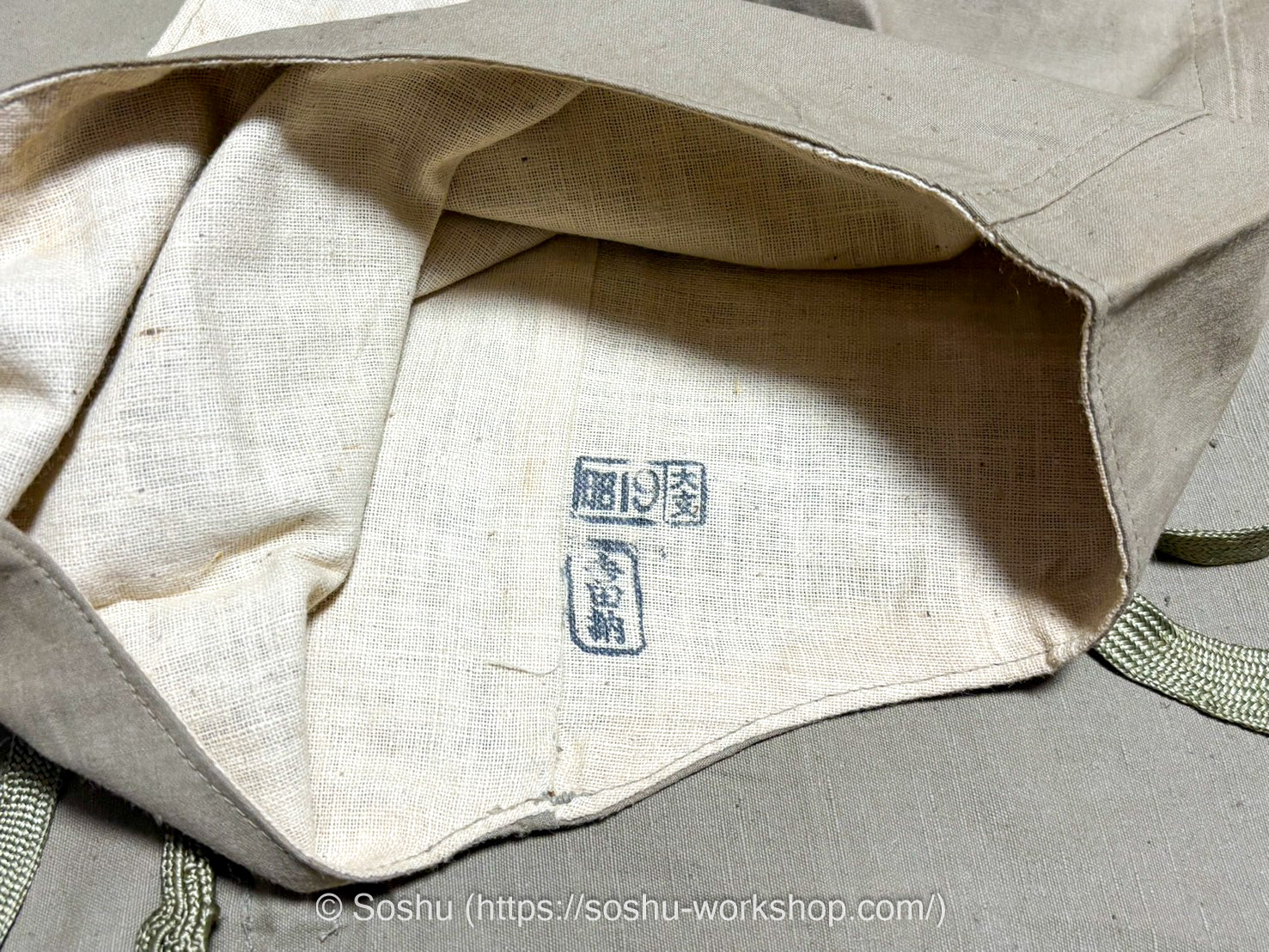
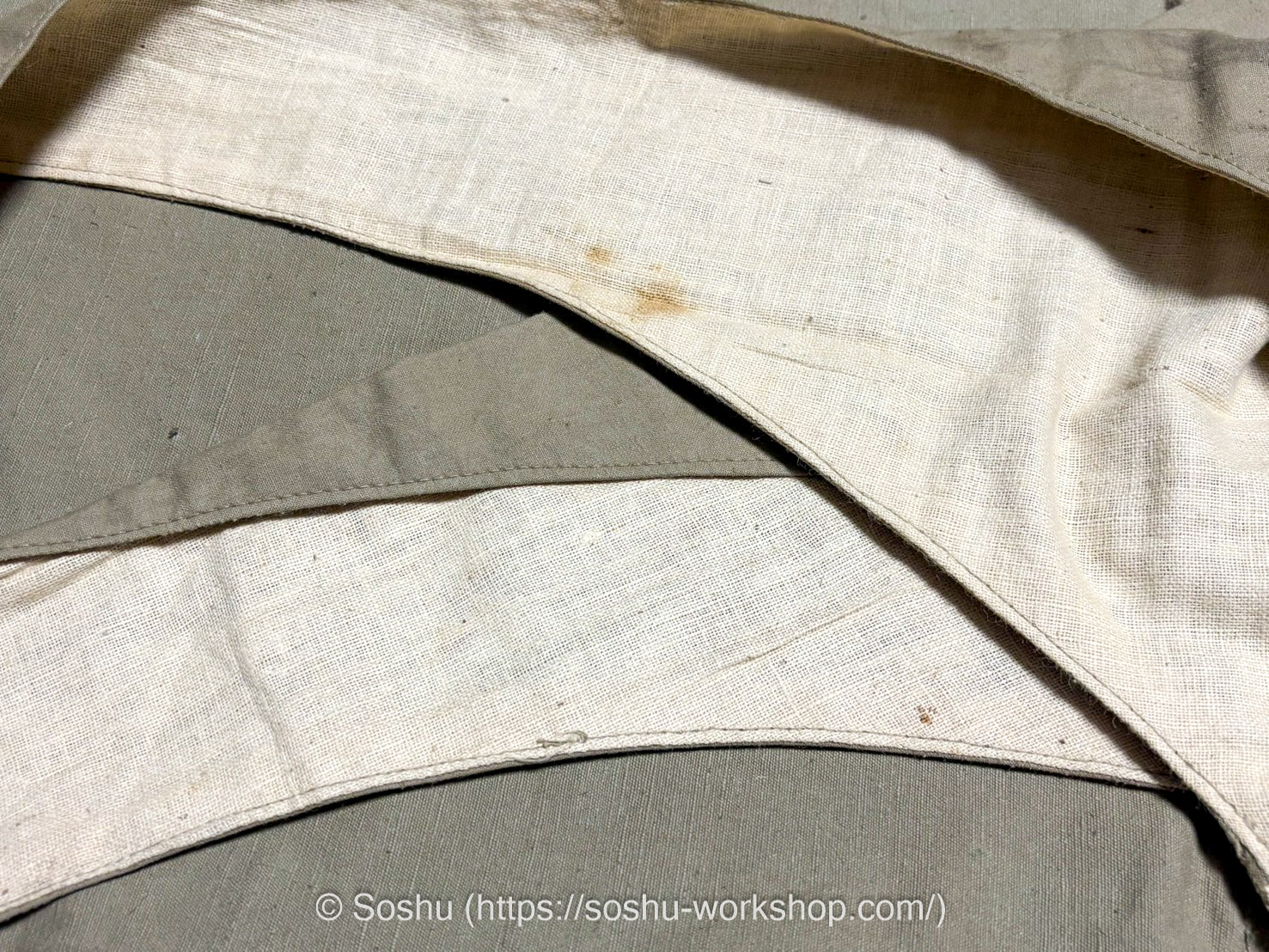
Shōwa 19 (1944) issue, Osaka Army Clothing Depot
An unused dead-stock piece. Overall it is clean, but the lining of the main body is made of staple fiber, giving it a thin and somewhat flimsy feel. All of the closure cords are also made of staple fiber, and the fibers have formed small pills in various places, clearly indicating the low quality of the material.

Footnote
- “Regulations for the Standardization of the Tube Bag for Non-commissioned Officers and Soldiers” JACAR (Japan Center for Asian Historical Records) Ref. C02030872300, Permanent Documents, Category A, No. 1, Taisho 8 (National Institute for Defense Studies, Ministry of Defense). ↩︎
- “Regarding the Carriage of Tube Bags in Place of Backpacks” JACAR (Japan Center for Asian Historical Records), Ref. C03026062500, Meiji 37, Manchuria Daily Reports, December 21–31 (Volume 3) (National Institute for Defense Studies). ↩︎
- “Regarding the Carrying of the Tube Bag” JACAR (Japan Center for Asian Historical Records) Ref. C03025561600, Meiji 37, “April, from the 1st to the 15th” (National Institute for Defense Studies, Ministry of Defense). ↩︎
- “Regarding Rubberized Cloth Bags Attached to Tube Bags as Substitutes for Backpacks” JACAR (Asian Historical Records Center) Ref.C03027932300, Meiji 38, “Mandai Diary, Early April” (Defense Ministry, Defense Research Institute) ↩︎