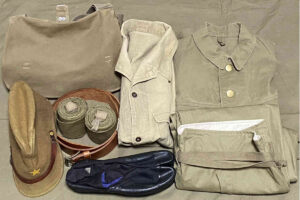
This time, I will be introducing wool leggings from the period of the Greater East Asia War.
The specifications of wool leggings were largely standardized around the end of the Meiji era, and they continued to be used with no major changes until 1945.
Although they are often collectively referred to as “wool leggings of the Greater East Asia War period,” there were in fact various colors and materials.
The approximate period of use can often be identified by the color, so when recreating historical military uniforms, it is advisable to take these differences into consideration.
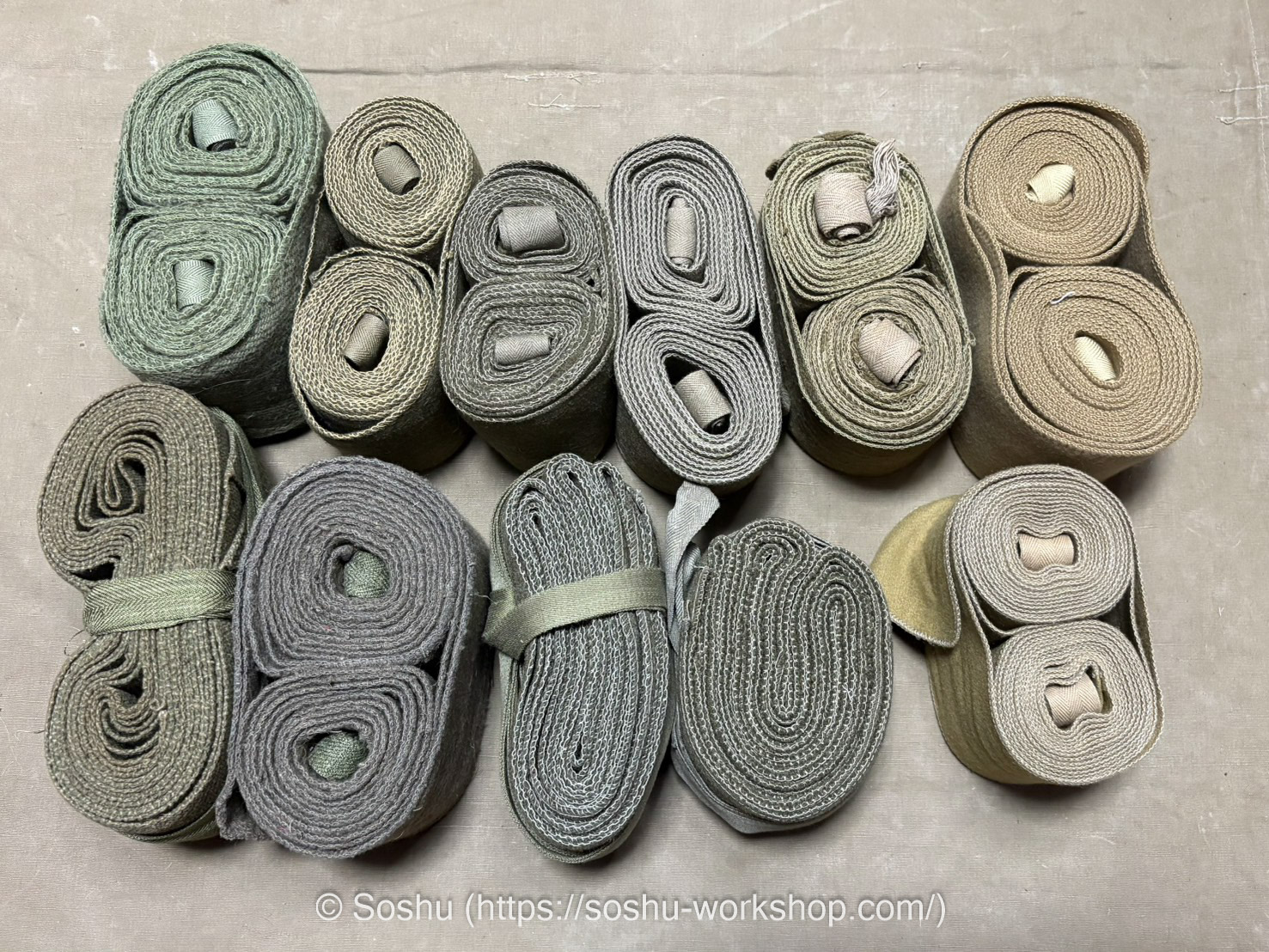
Wool Leggings of the Stand-Collar Era
The wool leggings shown below are replicas made by Nodani. These slightly yellowish wool leggings represent an early type, dating from the Taisho period through the early Showa period. They pair well with uniforms such as the Type 45 Tunic and Trousers or the Type 5 Tunic and Trousers.
Authentic examples in this particular color are quite rare and are seldom seen today.
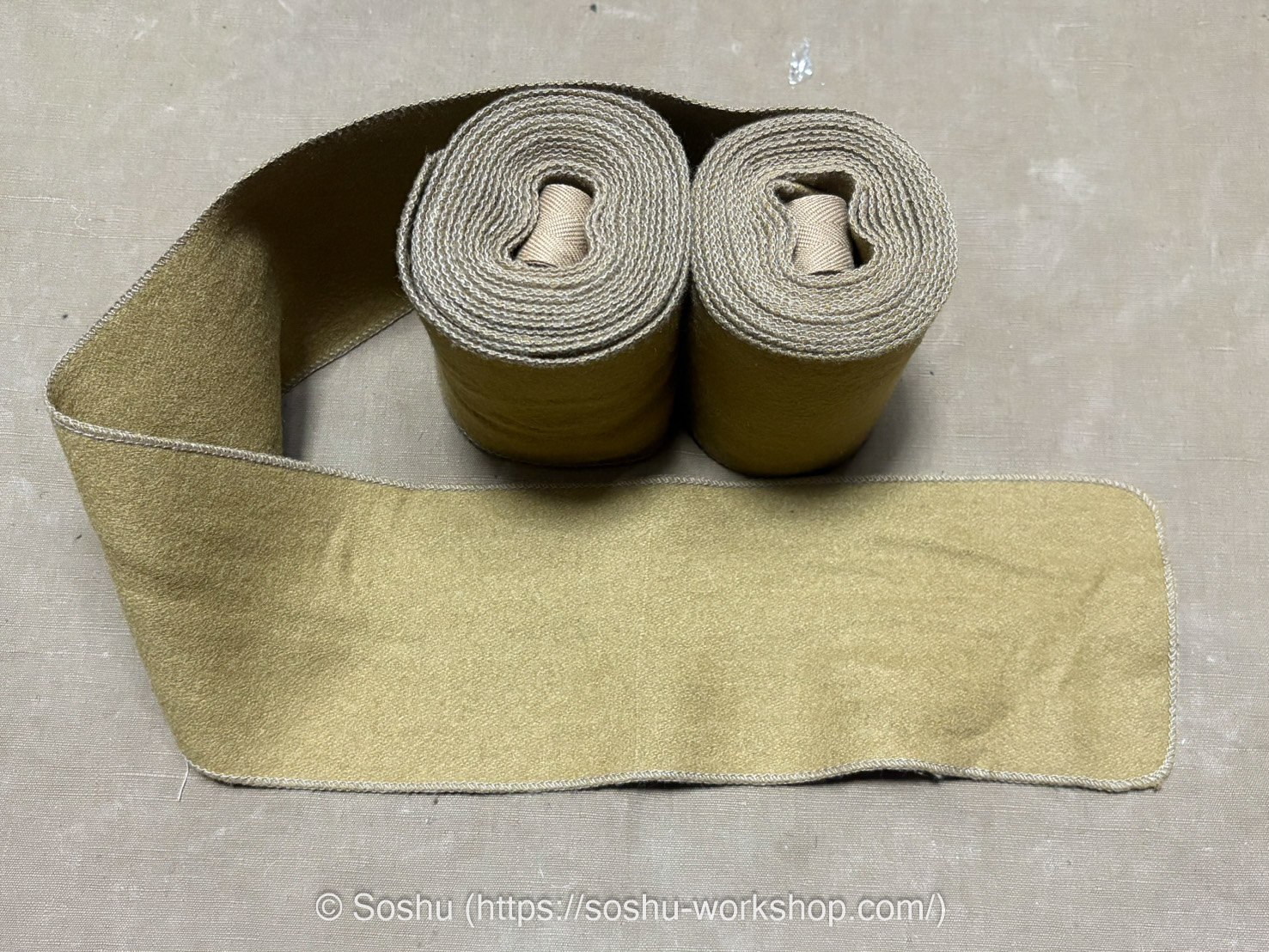
These are replicas made by Furutakaya. This brownish color is intended to represent the period from around Shōwa 6 (1931), during the Manchurian Incident, through roughly Shōwa 16–17 (1941–1942). They would suit impressions of the Type 5 Tunic and Trousers worn on the Chinese mainland, as well as early-war uniforms from the Southern Front.
Original examples of this color are also rarely seen.
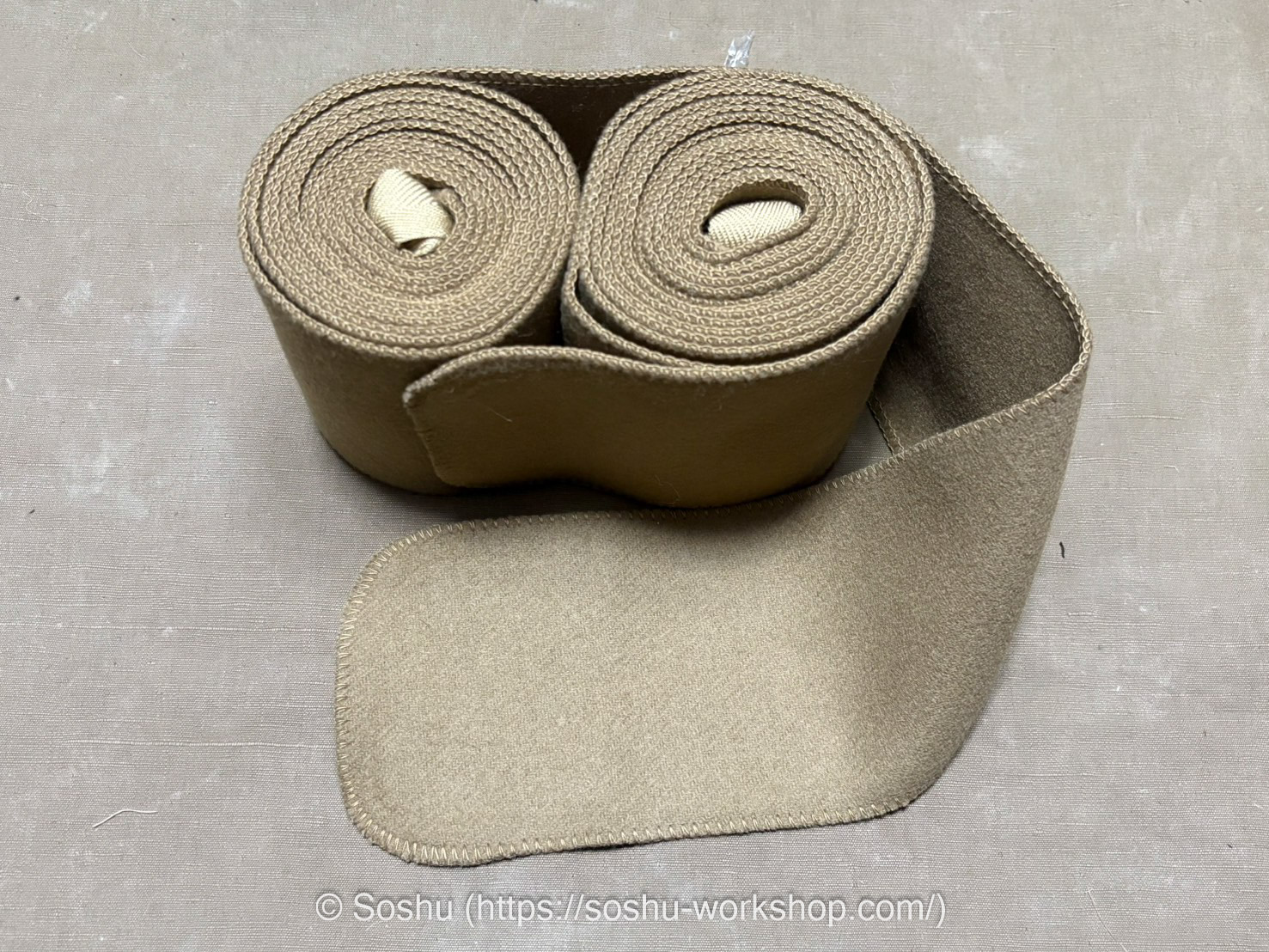
Wool leggings for the Southern Front
In the latter half of the Greater East Asia War, roughly from around 1943 onward, the color of wool leggings changed to a dark green, taking into account their use on the Southern Front. These are generally considered the standard late-war type of wool leggings.
As of 2025, authentic dark green wool leggings are relatively obtainable.
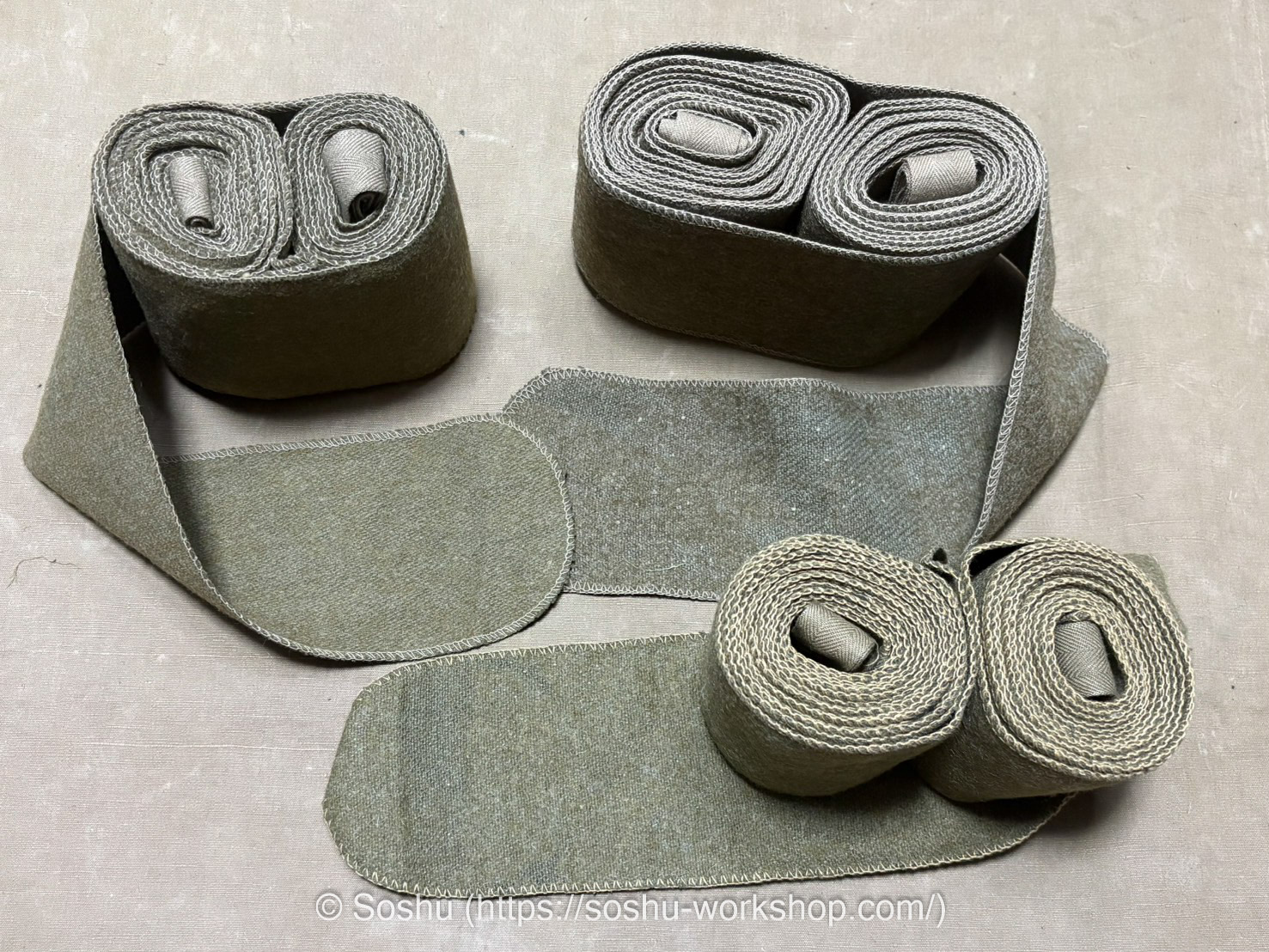
This pair is written with the wearer’s branch, “Signals”(通信) and the surname “Okada”(岡田), but overall it is in near-unissued condition.
Because the cotton ties are short, it cannot be wrapped in the combat style. Some late-war wool leggings have shorter ties and shorter bodies as a result of material conservation measures.
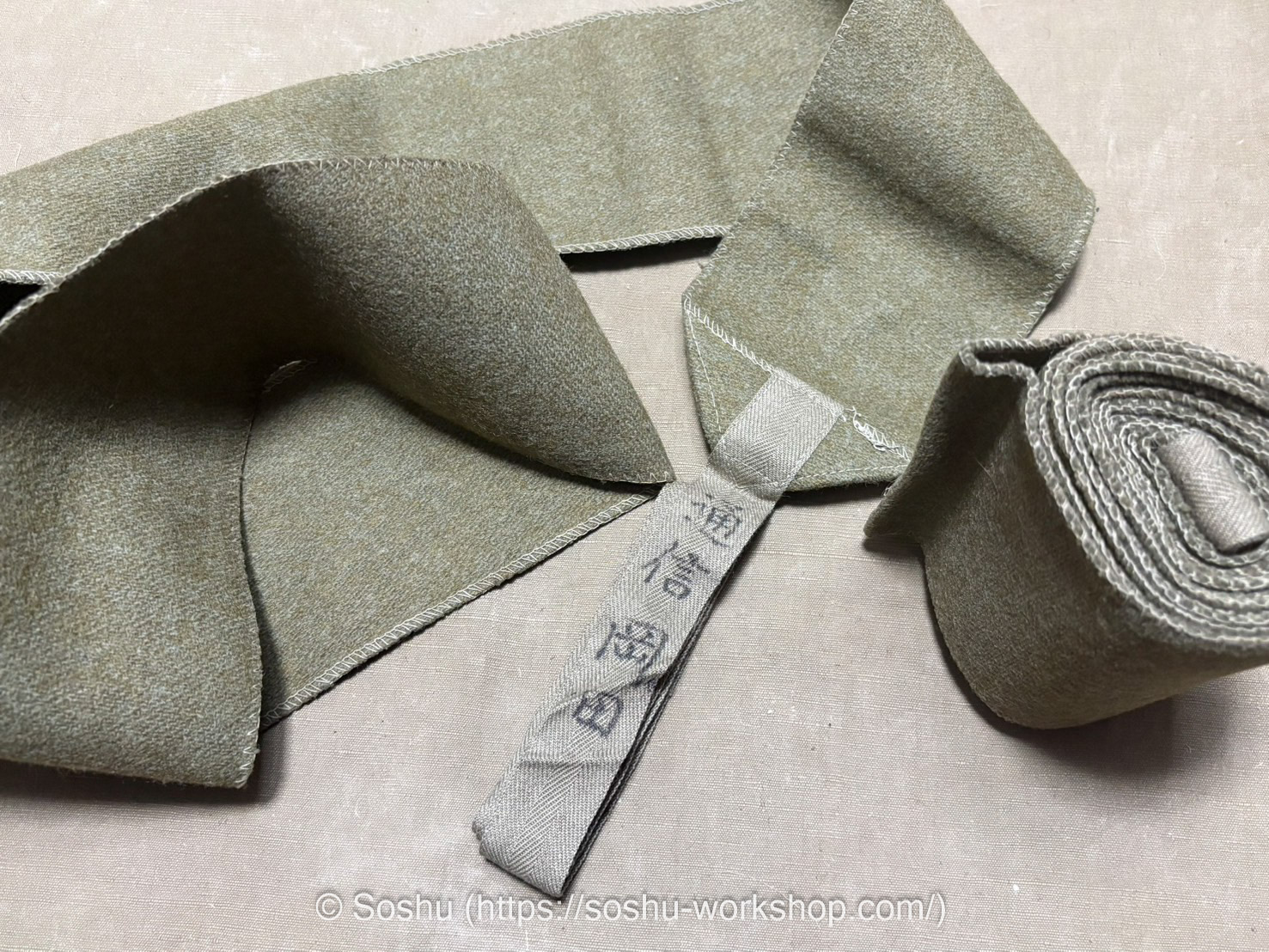
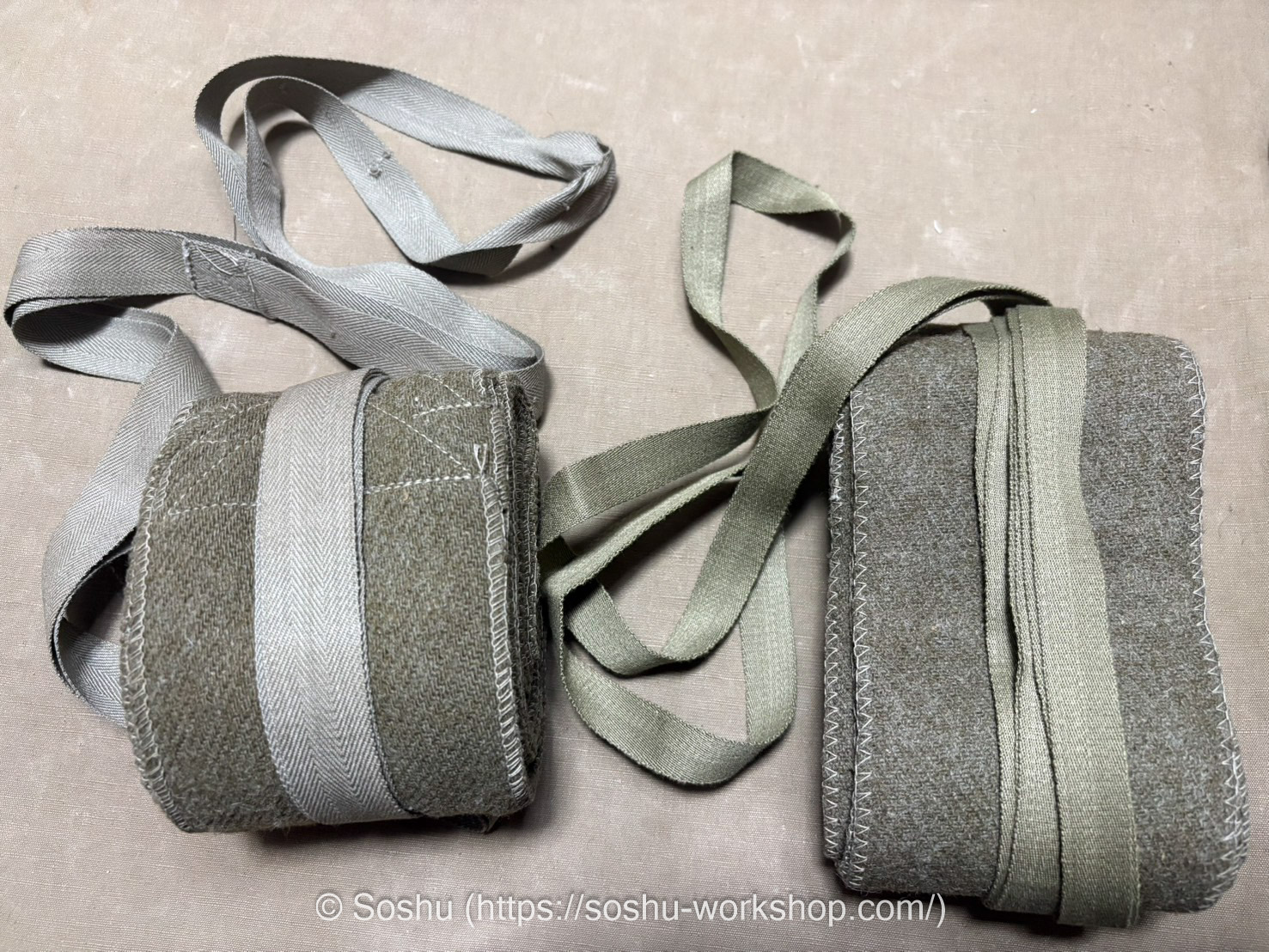
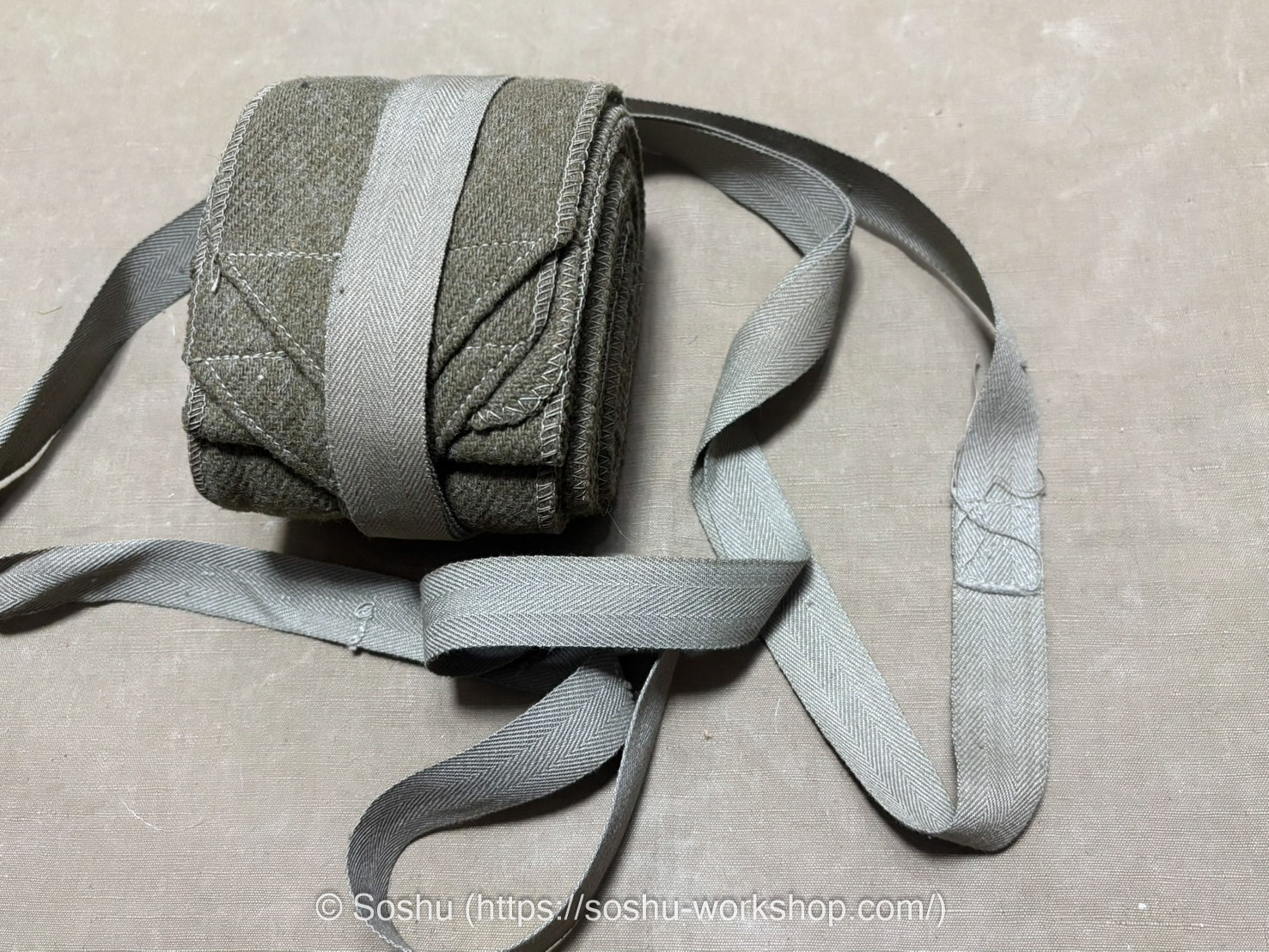
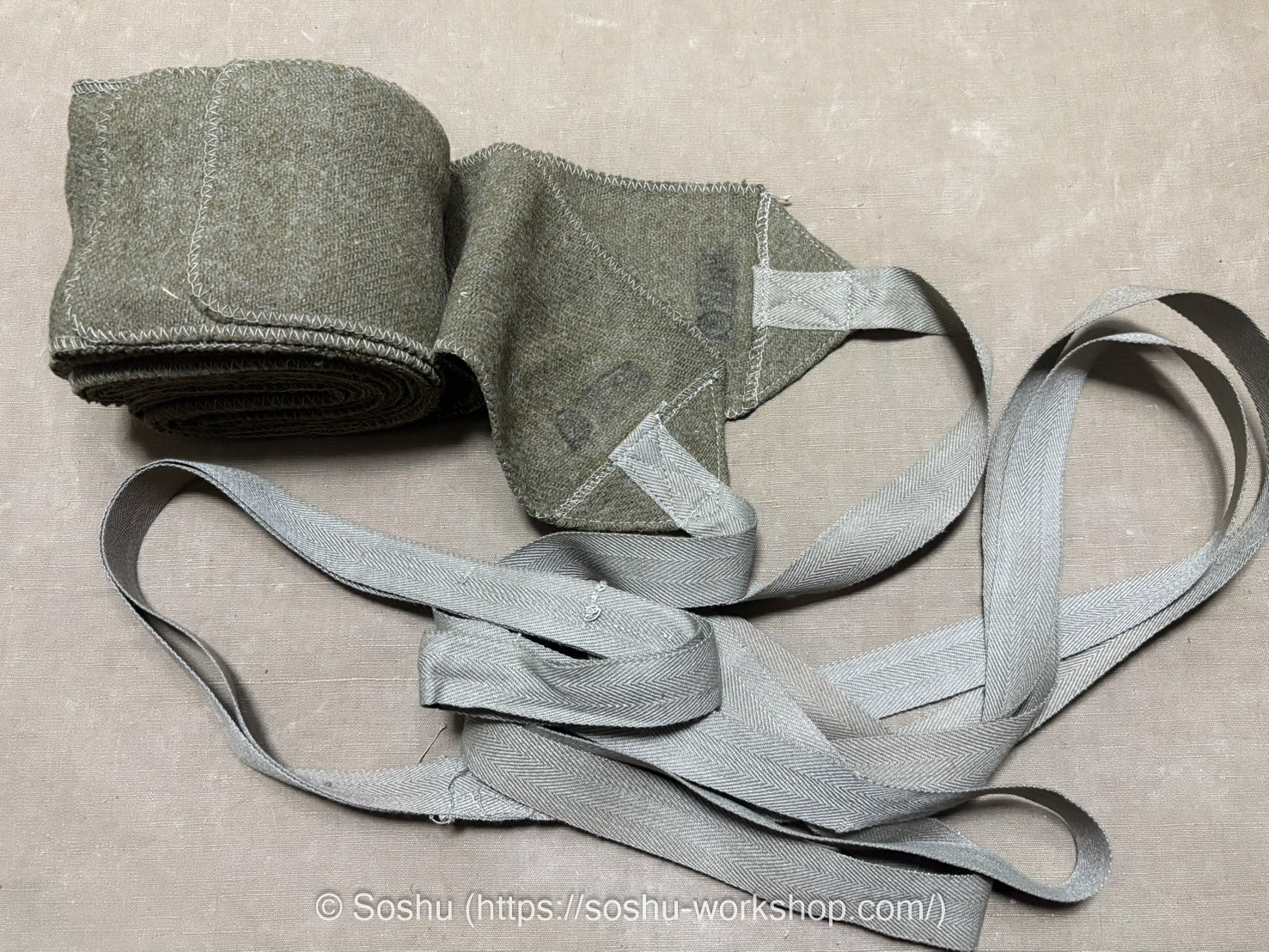
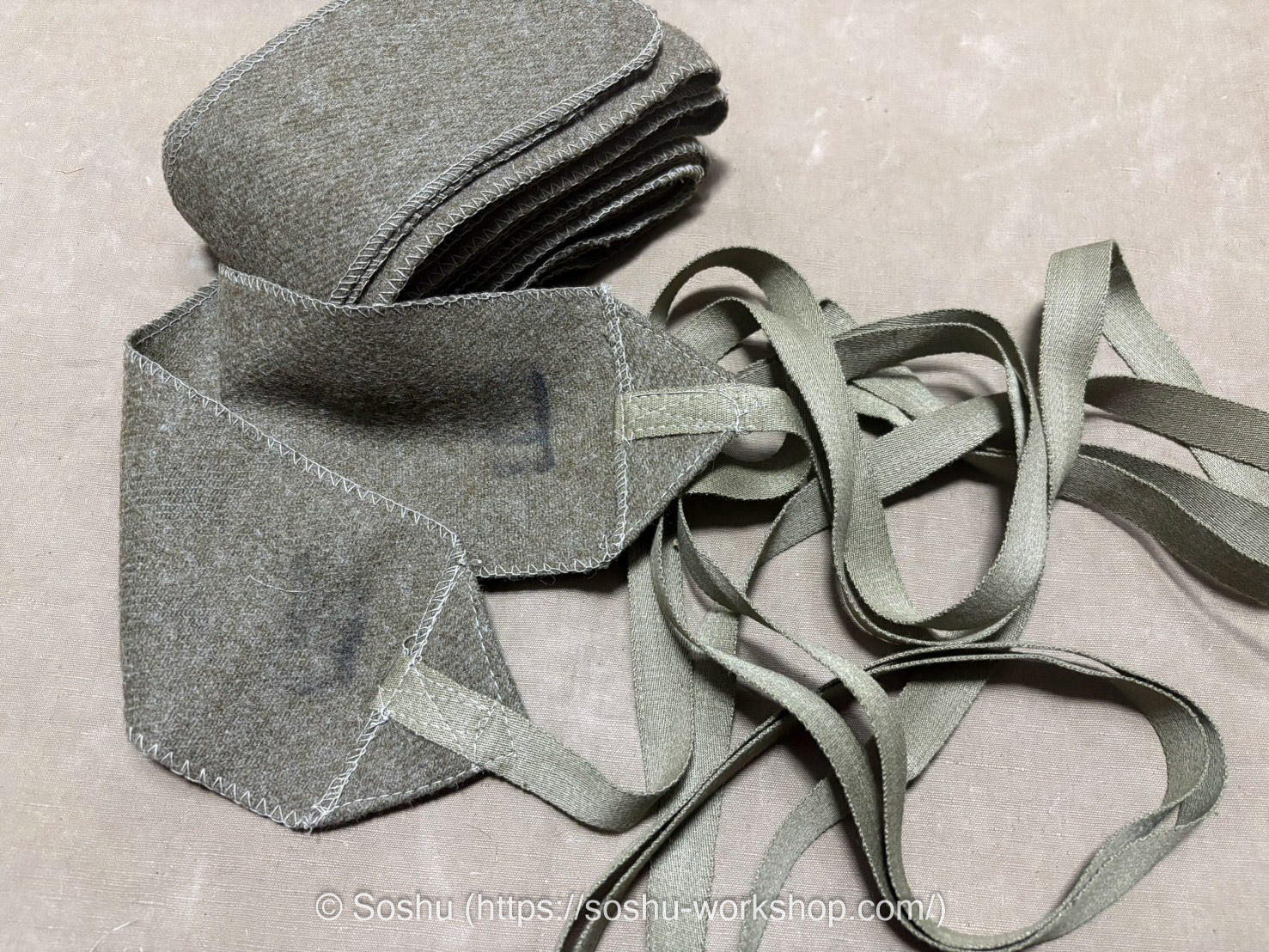
The two pairs introduced below are both completely unused items.
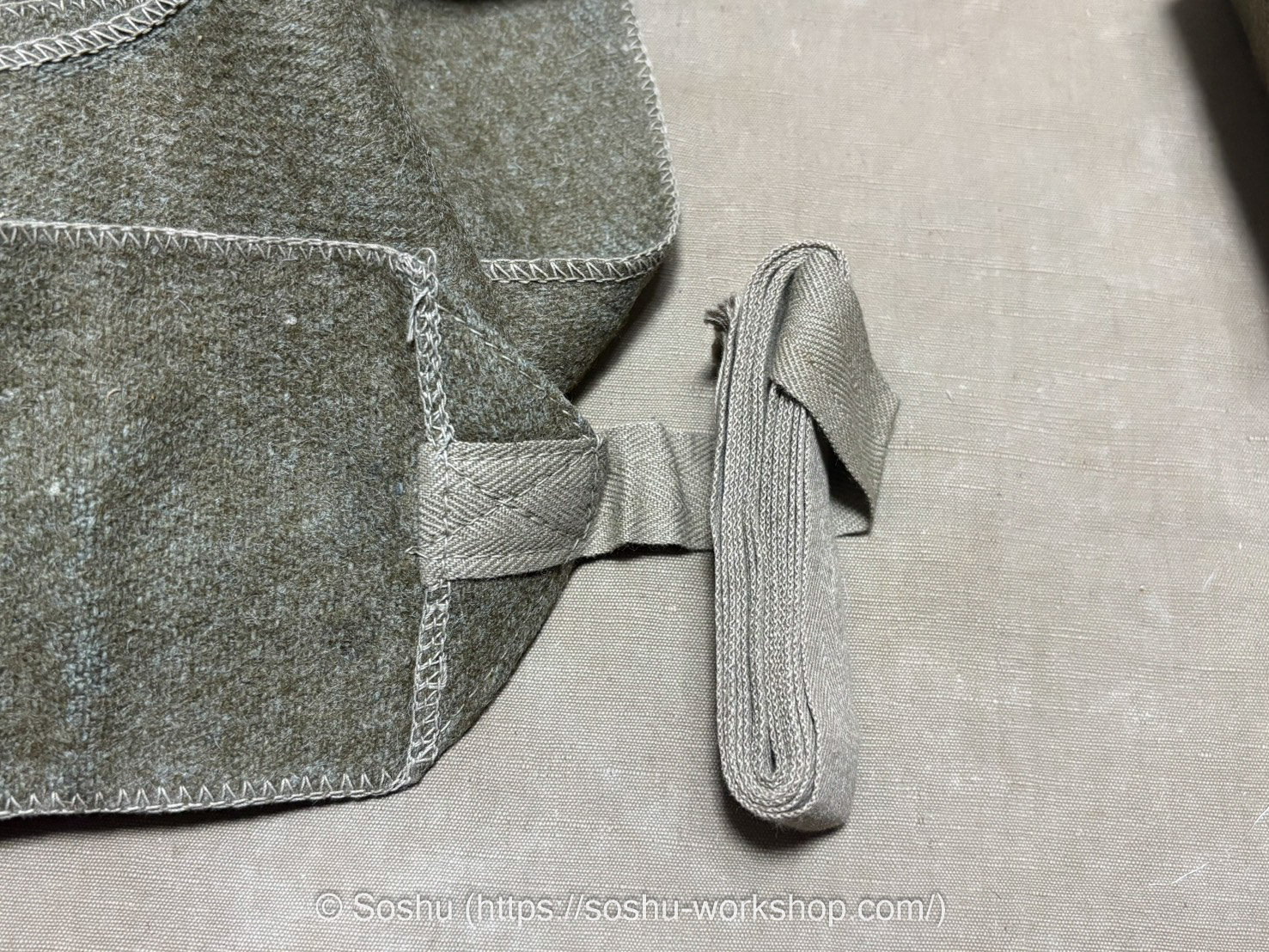
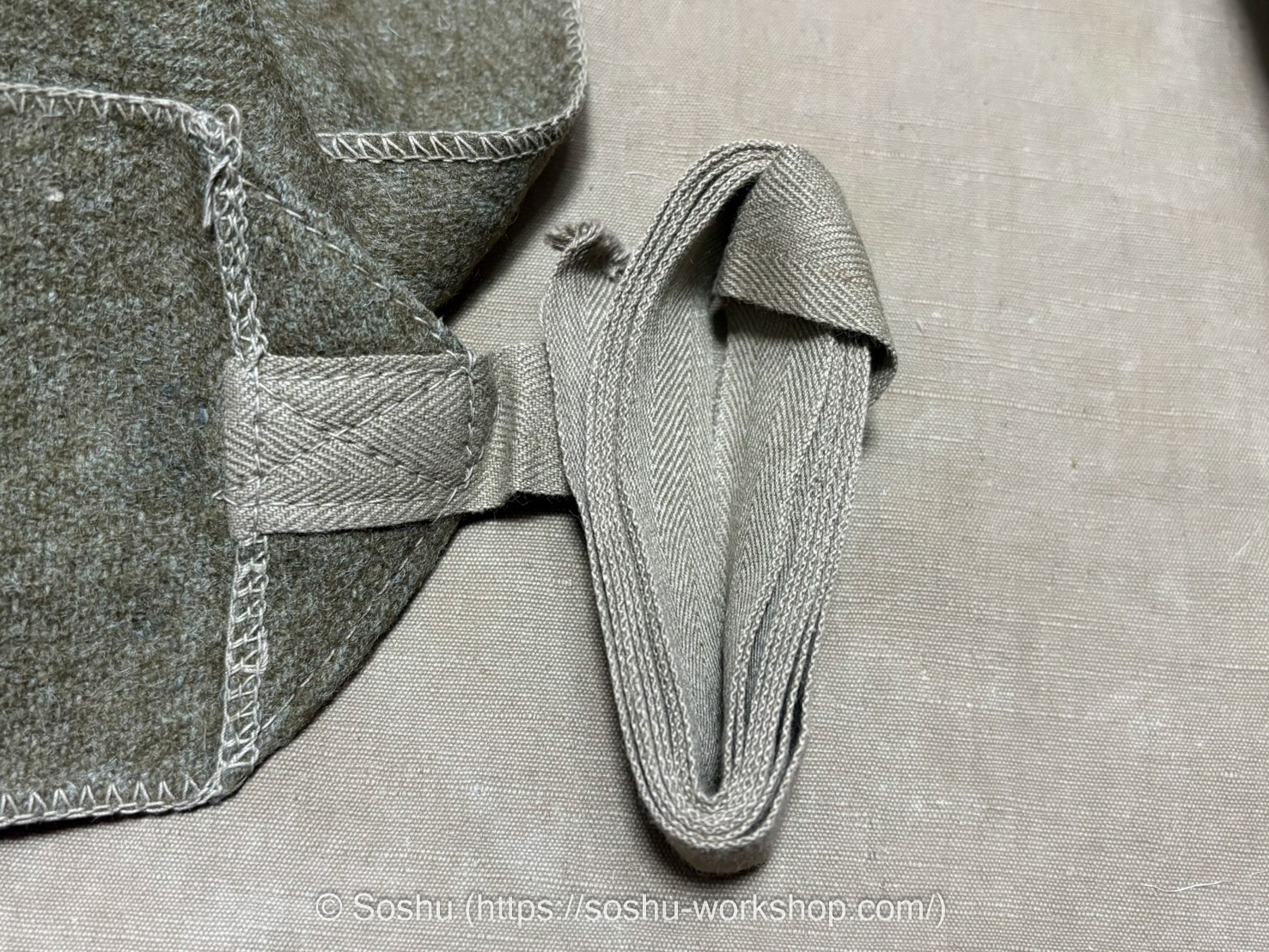
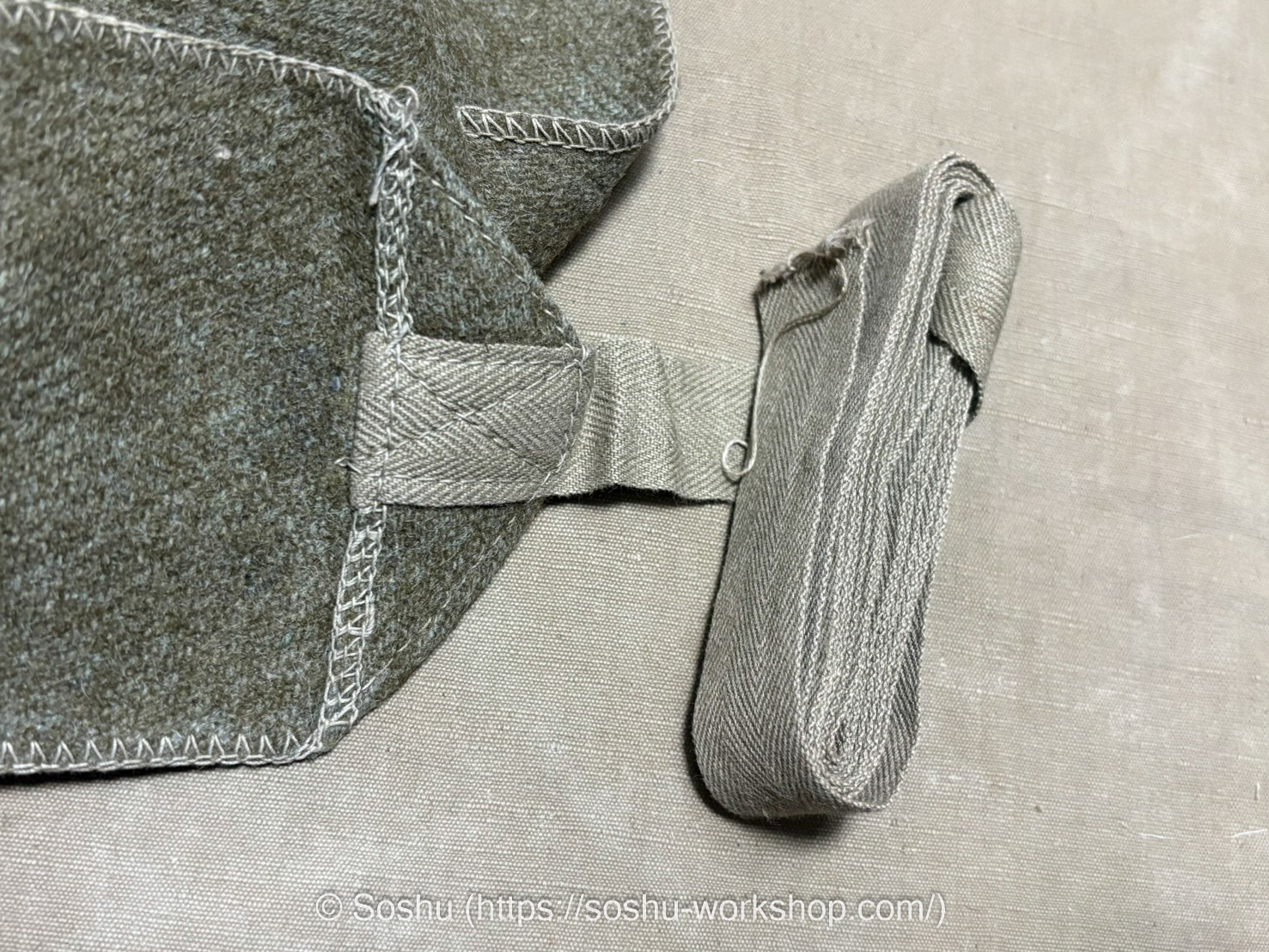
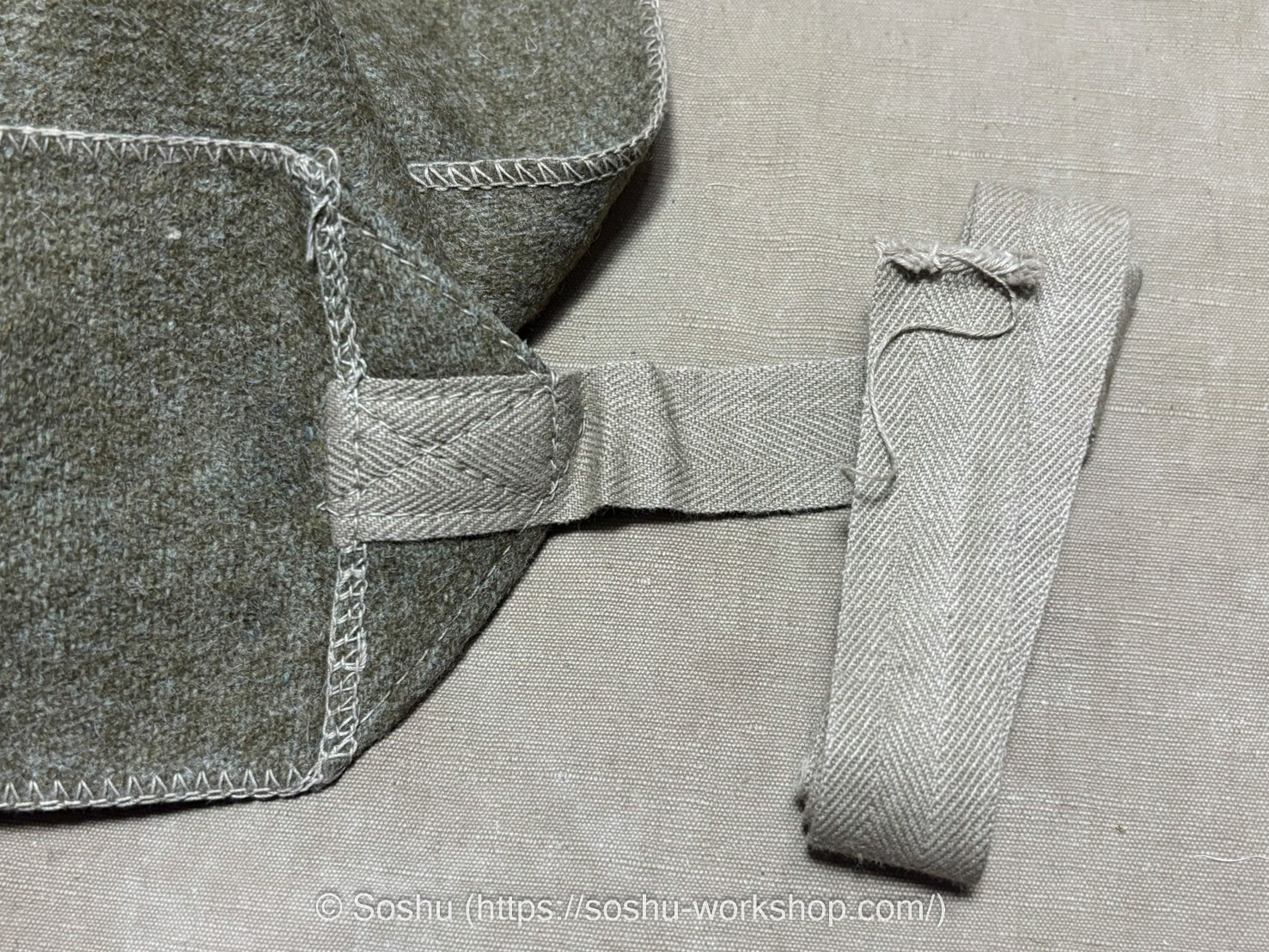
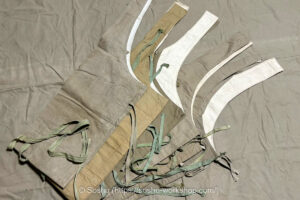
When wool leggings were manufactured, the left and right pieces were connected by a single long cotton tie, as shown in the photograph. When worn, this tie was cut to separate the left and right leggings, and each was used individually.
Interestingly, even though the tie appears to be a single continuous length of cotton cord, in some cases it was extended by joining additional sections when the original length was insufficient.
Late-War Wool Leggings
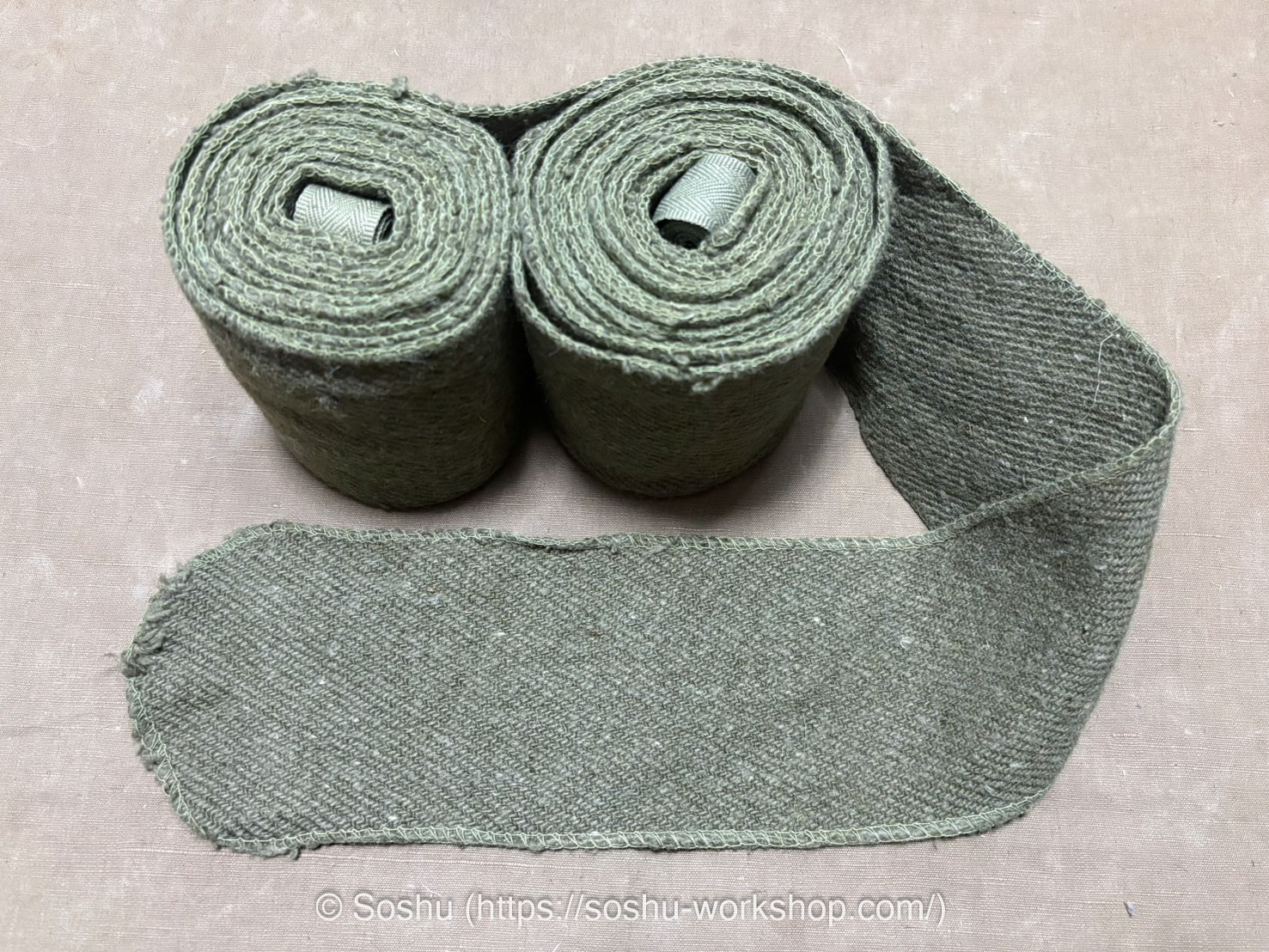
The items introduced below show considerable variation in their specifications. They are likely very late-war examples or possibly civilian-made items.
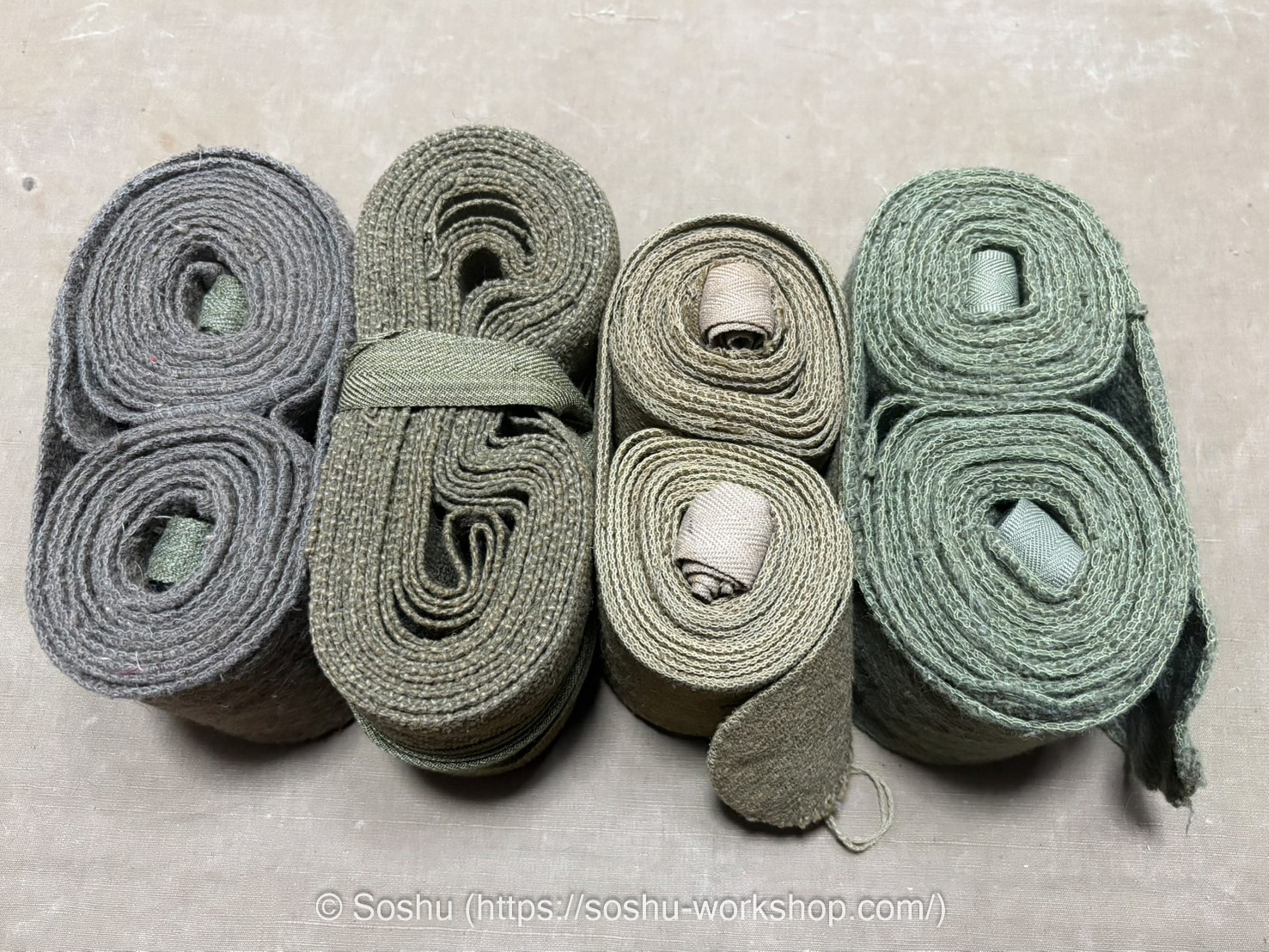
This pair has a slightly stronger green tone. The cotton ties are long enough for a combat wrap, making them very practical, so I used them frequently for airsoft games.
Both the cotton ties and the leggings themselves are slightly shorter, but the material is still sturdy.
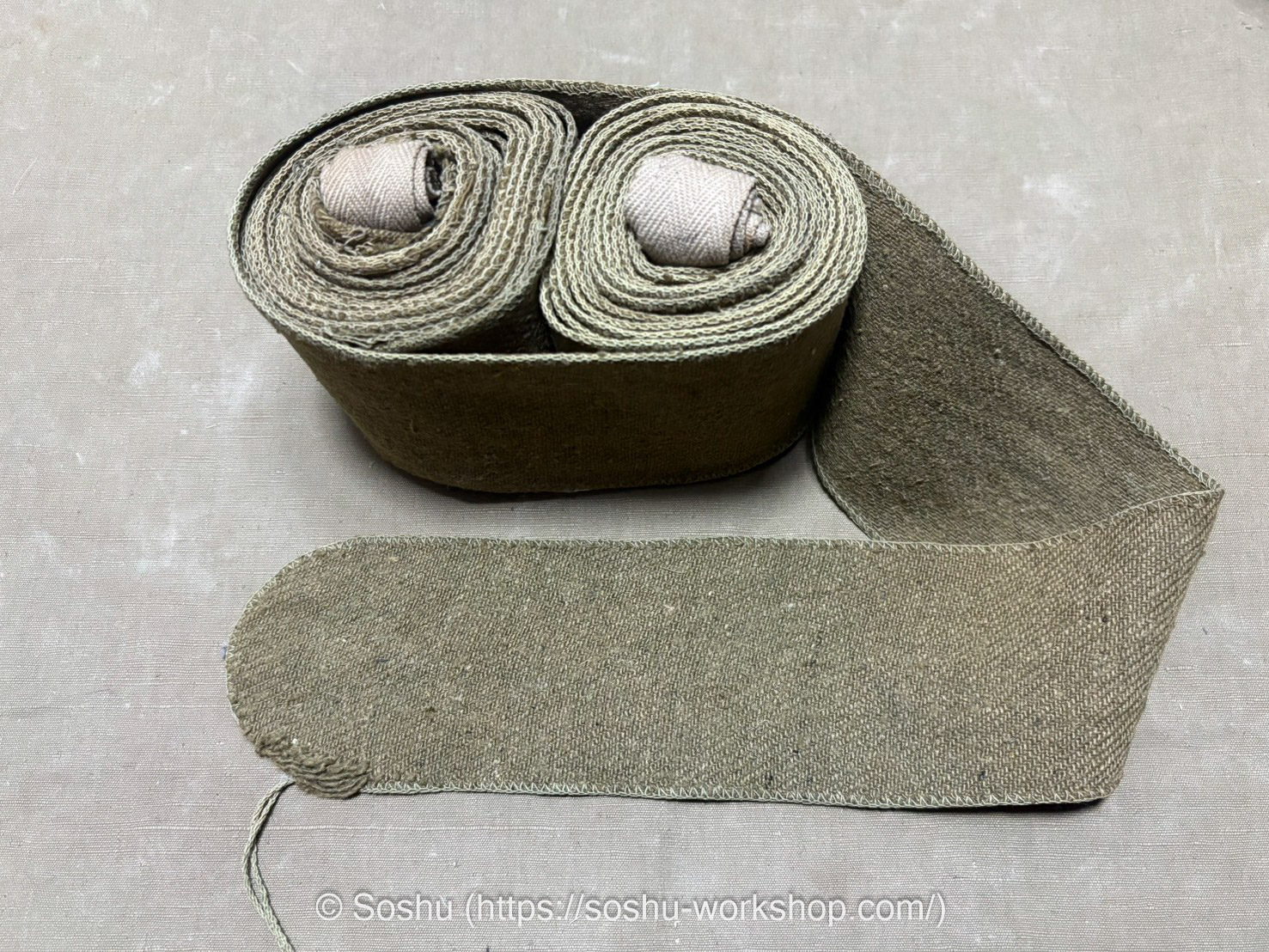
This item is unused, but the material of the body is different.
This is the poorest-quality example. The ties are made of staple fiber (rayon) rather than cotton and may snap if pulled too hard.
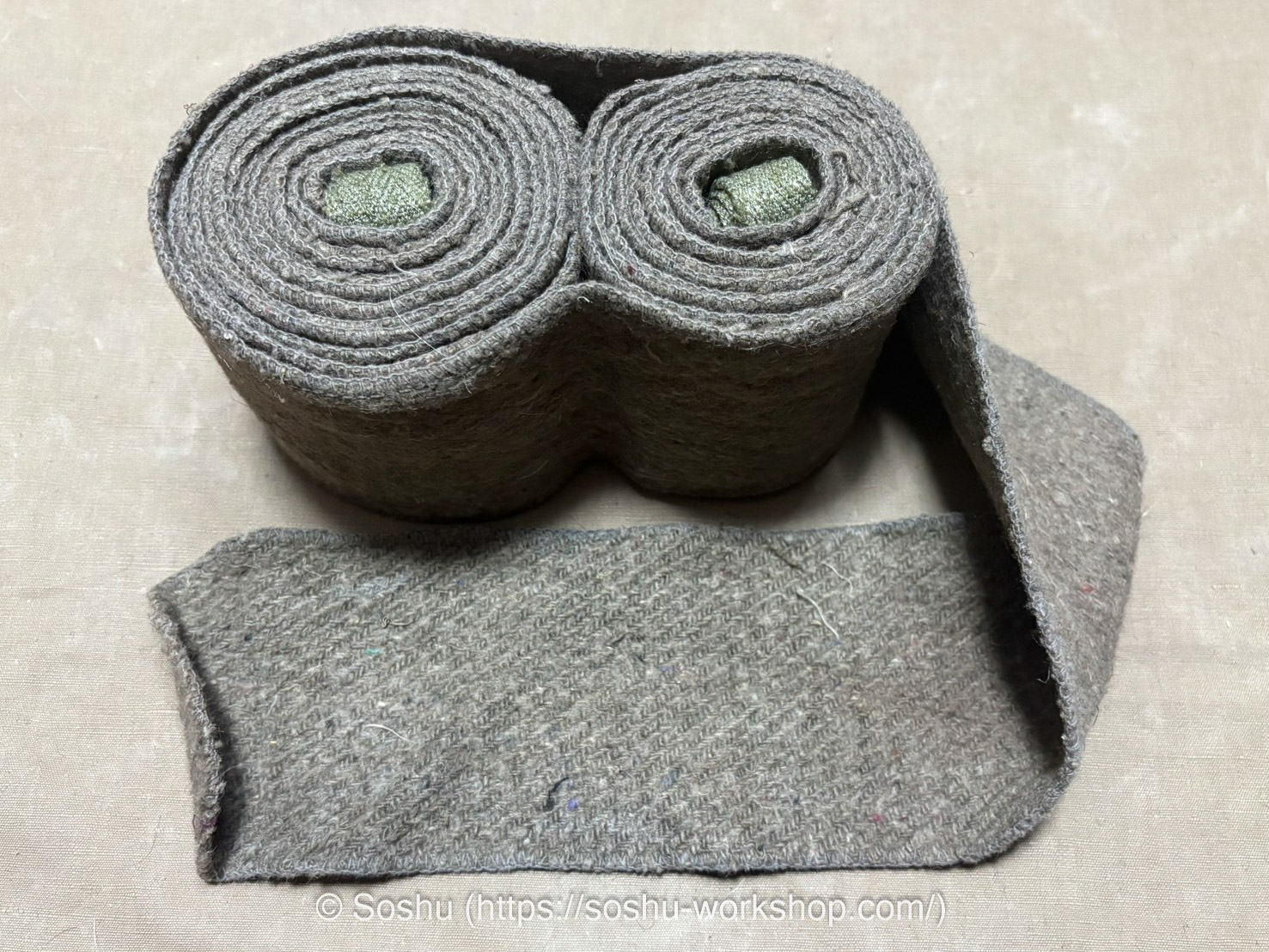
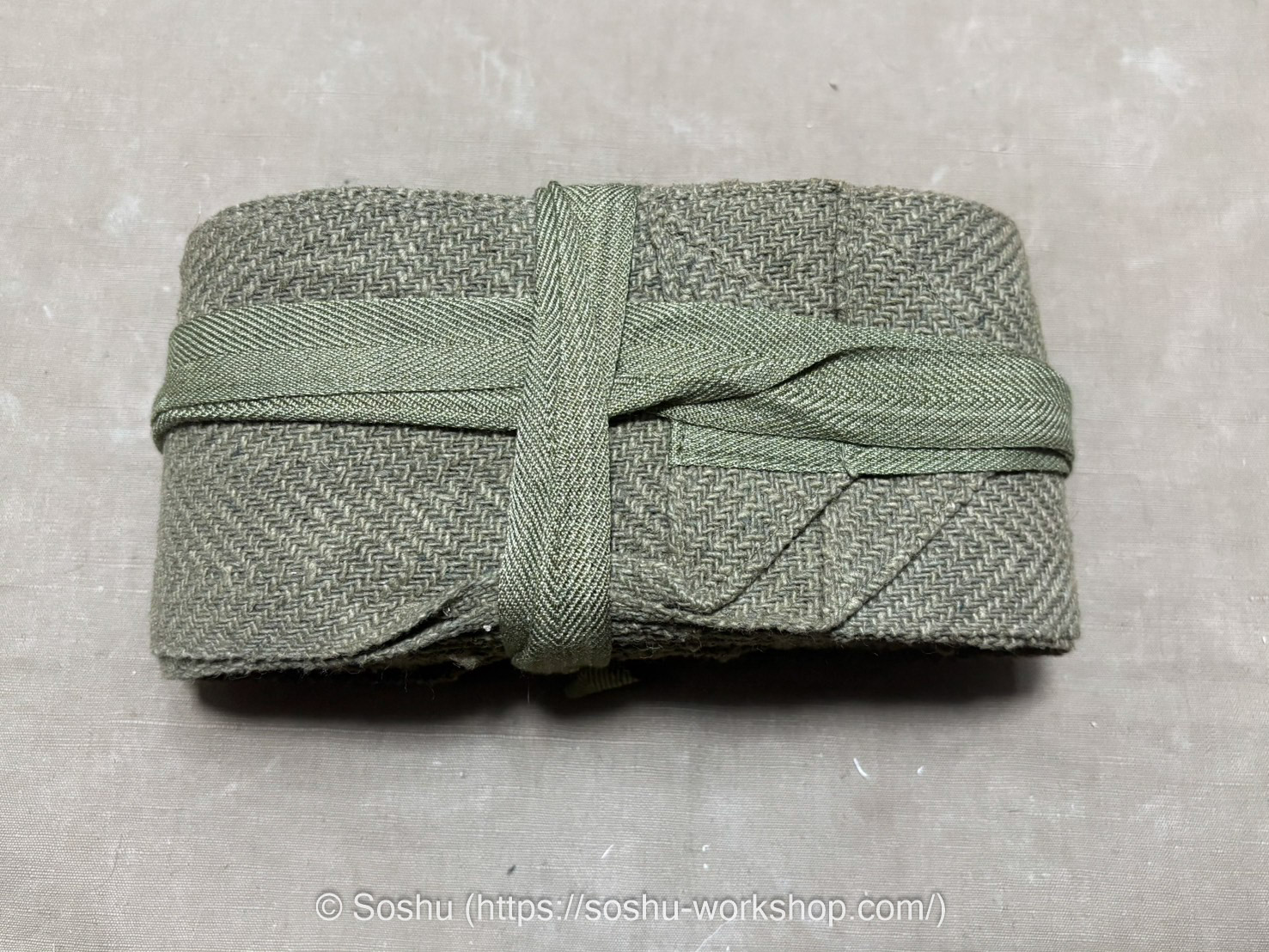
How to wrap the cotton ties for storage
Some of the original cotton ties I acquired were wound in the same manner shown below. Because this identical method was confirmed on items with completely different acquisition histories, it is likely that this was a common—or possibly standardized—practice at the time.
With the usual winding method, the end of the tie ends up at the center, but a distinctive feature of this method is that the end remains on the outside.